
What is a mezzanine system?
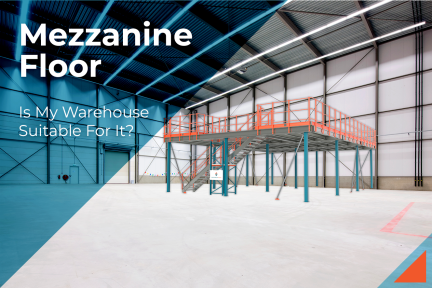
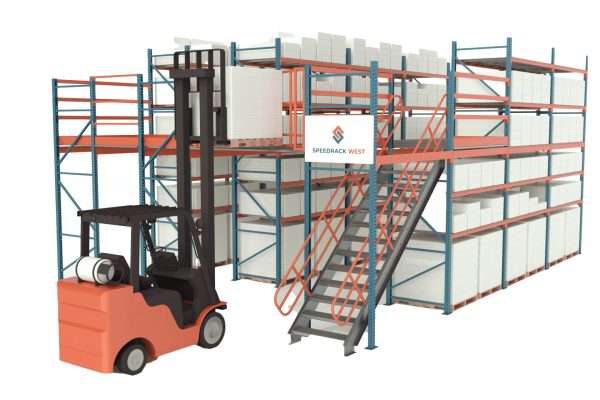
At its core, a mezzanine system is an unbeatable choice for dividing the volume of a room into two or more levels. It doesn’t matter if it’s a warehouse or a manufacturing facility. We know what you’re thinking – regular floor, shelving or industrial hydraulic platforms can also divide space. Cause you’re right. However, the mezzanine alone potentially increases the floor area by over 50% while still allowing the floor to be used for other purposes, driving forklifts or jacks, and placing a conveyor system or docks under the mezzanine.
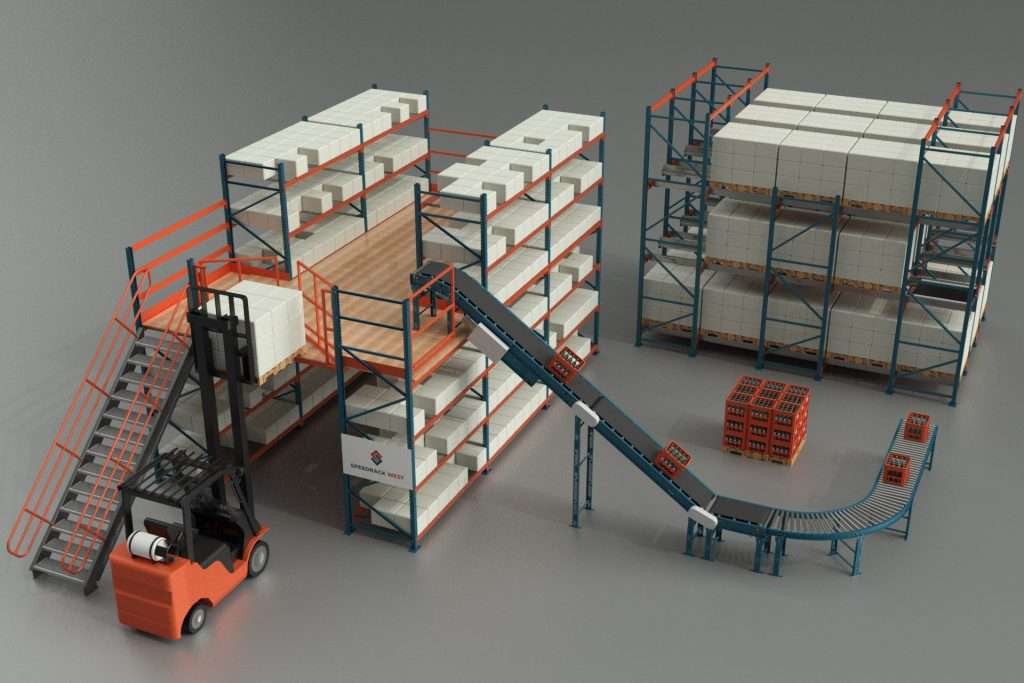
So, in a nutshell, a mezzanine is a structure that can be permanent, temporary, or moveable and allows maximizing the volume of your facility by placing it in different storage areas, including docks, and combining it with other types of equipment, mainly conveyors.
What types of mezzanine structures are there?
Different types of mezzanines: how to choose the best one for you?
Experts state that temporary or permanent structures in warehouses usually are presented by mezzanine floors. When it comes to moveable structure, it can be represented by other equipment, but not a mezzanine floor.
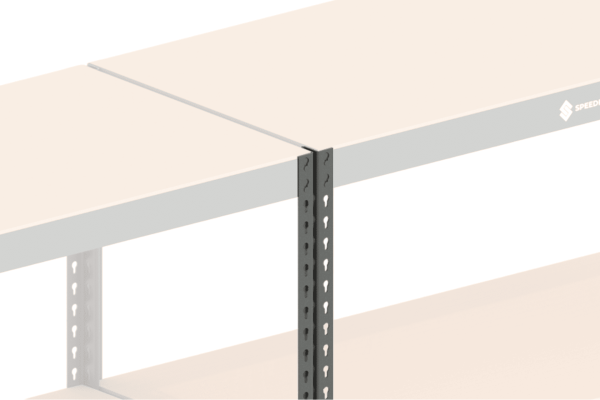
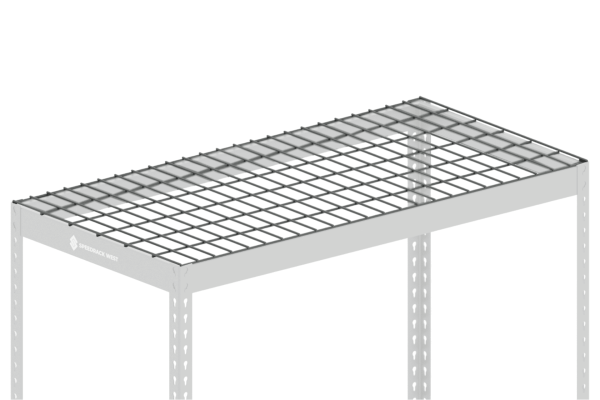
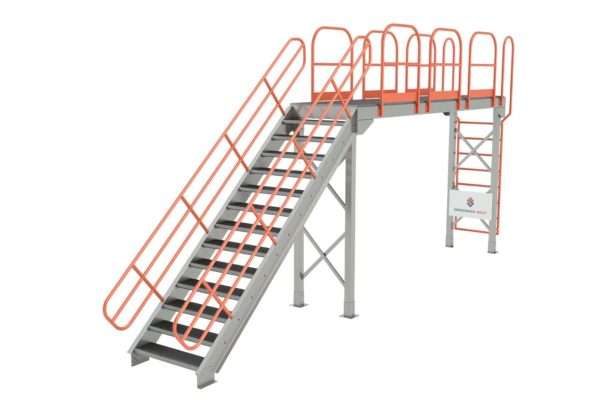
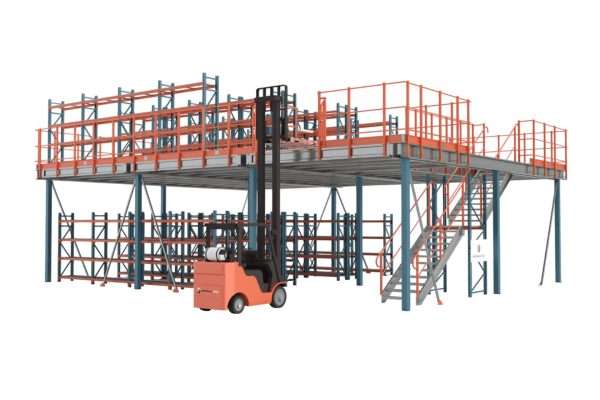
So, mezzanine floors come in different types, each with unique features and benefits. Take a look at the picture below to quickly grasp the basic idea.
Types of Industrial Mezzanine Floor
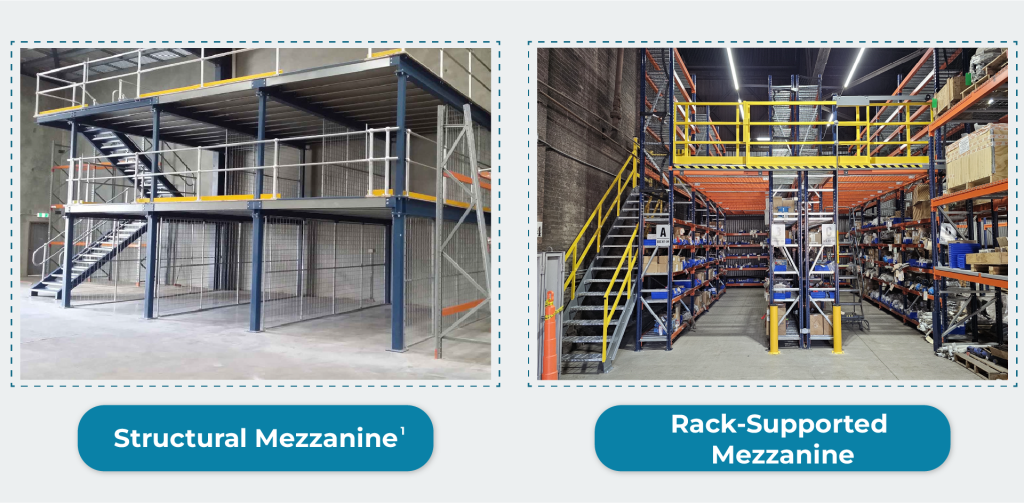
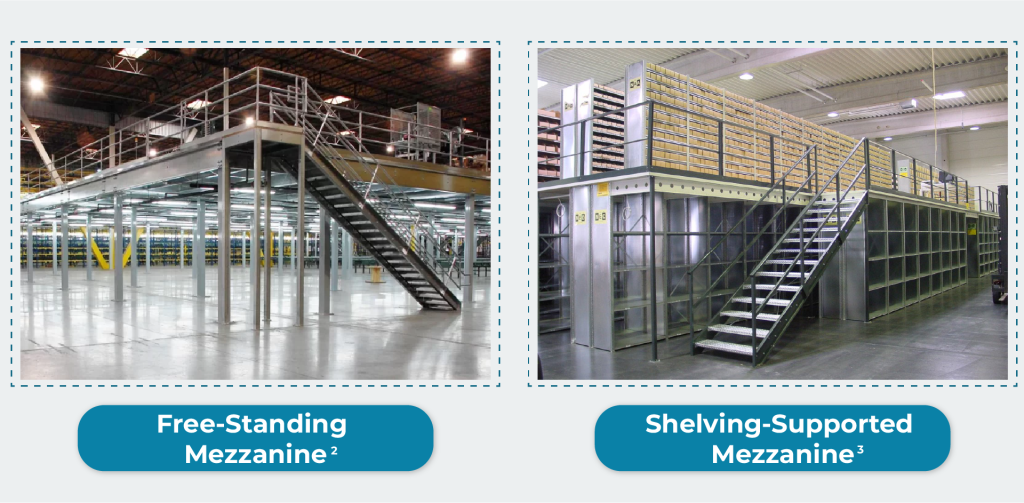
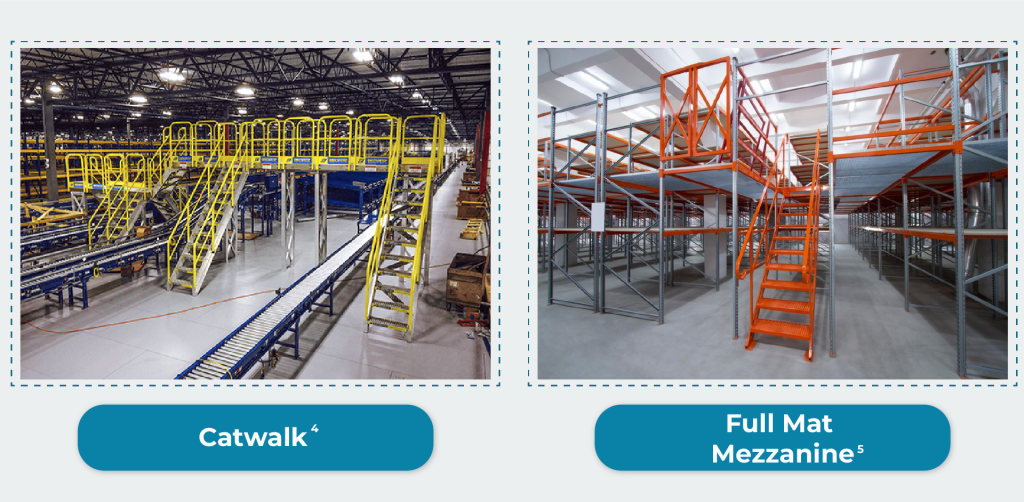
| Name | Purpose | Benefits | Restrictions |
|---|---|---|---|
| Structural Mezzanine | Supports heavy loads in industrial settings. | Durable, strong, and ideal for industrial applications. | Requires steel construction; may be costly and complex to install. |
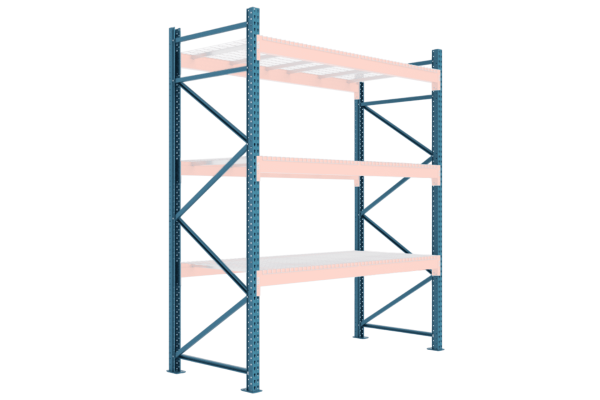
| Rack-Supported Mezzanine | It is integrated within pallet racking; the mezzanine frame is securely bolted to the uprights, and the decking is then installed onto the frame. | Maximizes storage space while utilizing existing racks. | Less flexible; not easily scalable in cross-aisle directions. |
| Free-Standing Mezzanine Or Industrial Work Platforms (IWP) | Independent heavy-duty structure; supports a wide range of applications. | Versatile and adaptable, allowing for conveyors, workstations, offices, or sprinkler systems in joist and girder webbing. | Footings may be required based on mezzanine levels and concrete. Could be pricier than rack-supported mezzanines. |
| Shelving-Supported Mezzanine | Creates additional storage above existing shelving units. | Ideal for storing small items and providing order-picking access. | Limited to areas with pre-existing shelving; may require structural analysis for load-bearing. |
| Catwalk Platforms | Provides access to machinery or equipment for monitoring and maintenance. | Compact design; facilitates safe and efficient access to elevated areas. | Must comply with OSHA standards for equipment-focused catwalks or IBC for other applications. |
| Full Mat | It is mostly installed over existing shelving or rack system, it is mostly utilized for office space, etc. | It combines the benefits of free-standing mezzanines and catwalks. | Additional safety equipment is required. |
Not sure which mezzanine fits your space best?
Our team can help you choose the right type based on your layout and load needs.
Additional Notes on Compliance:
- OSHA Requirements: Catwalks for equipment access must adhere to OSHA guidelines.
- IBC Requirements: Mezzanines serving less than 49 occupants need one means of egress, while larger mezzanines require two or more exit stairways. Ships ladders and permanent ladders are not acceptable as egress under IBC.
- IBC Section 505.2: A mezzanine is considered part of the story below it.
Assessing the Feasibility of Installing a Mezzanine Floor
Before diving into the process of installing a mezzanine structure in your warehouse, take a moment to evaluate its feasibility. Use the questions below to determine if your space and planning are on track.
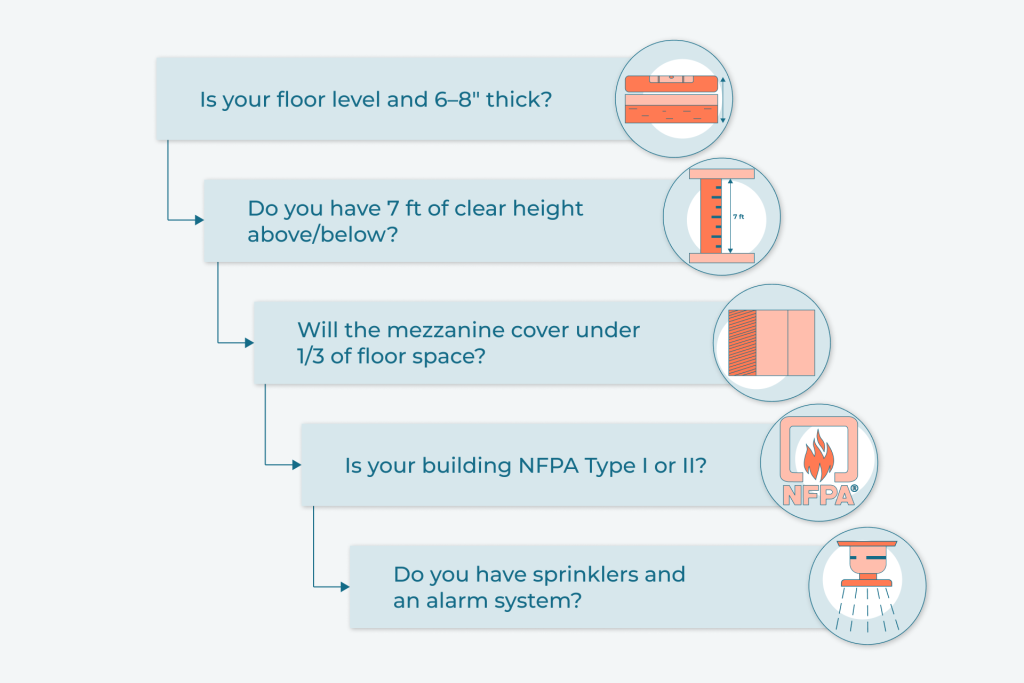
1. Do you have an even and adequately reinforced floor (at least 6–8 inches thick) in your warehouse?
Do not skip this question. This is important because the International Building Code (IBC) parameters defining the allowable minimum load in pounds per square foot (PSF) distributed over the platform must be met. Take a look at Chapter 16, Table 1607.1, paragraph 31. This contains the parameters of the minimum uniformly distributed live loads, and minimum concentrated live loads due to the occupancy of use.
2. Can you ensure a clear height of at least 7 feet both above and below the mezzanine floor?
Why so? The International Building Code recommends this parameter by considering the height of the workers.
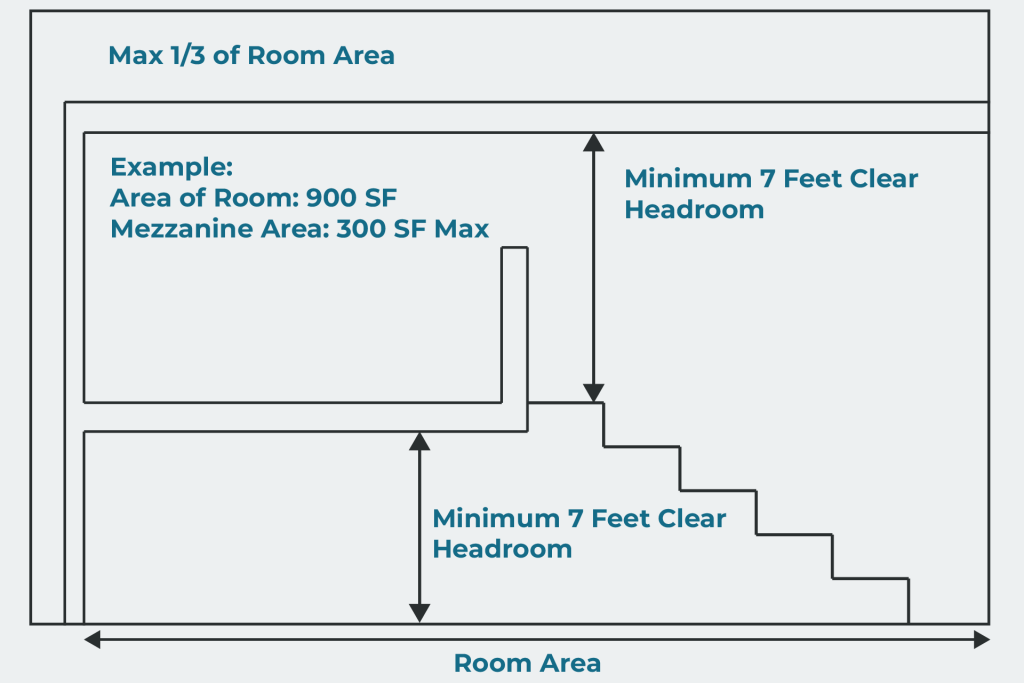
3. Whether this is enough for your needs if your mezzanine will take up no more than 1/3 of the room’s floor space?
Notice that the mezzanine’s space must be 1/3 of the room’s floor or less. Can be more if you use specific materials or have a sprinkler system.
4. Is your building or structure classified as NFPA Construction Type I or II?
In case you responded with “No idea” to question 4, you can quickly verify your building type below.
According to the International Building Code 2024: The aggregate area of mezzanines in buildings and structures of Type I or II construction for special industrial occupancies in accordance with Section 503.1.1 shall be not greater than two-thirds of the floor area of the room.
5. Are you ready to equip the facility with an automatic sprinkler system and an approved emergency voice/alarm system as required?
You can only travel 150 feet to one exit in buildings without sprinklers or 200 feet in buildings with sprinklers. You should contact the fire department in your area and work together with your contractor to avoid problems.
NFPA Construction Types
| Type | Description | Examples/Specifications |
|---|---|---|
| Type I | Noncombustible or limited-combustible construction with a high level of fire resistance, typically concrete construction. | Commonly used in high-rise buildings and structures requiring significant fire resistance. |
| Type II | Noncombustible or limited-combustible construction with lower fire resistance than Type I, typically steel construction (with or without fireproofing). | Often found in commercial buildings where steel framing is used. |
| Type III | Exterior walls are noncombustible or limited-combustible, while interior elements (walls, floors, roofs) are wood smaller than Type IV requirements. Known as “ordinary construction.” | Mixed masonry and wood buildings, such as older urban structures. |
| Type IV | Fire and exterior walls are noncombustible or limited-combustible, while other interior elements (arches, floors, roofs) are solid or laminated wood or cross-laminated timber (CLT). Specific dimensional requirements for structural components apply. | – Columns: 8in x 8in (205mm x 205mm) for floors, 6in x 8in (150mm x 205mm) for roofs. – Beams: 6in x 10in (150mm x 255mm) for floors, 4in x 6in (100mm x 150mm) for roofs. – Floors: 3in (75mm) or 4in (100mm) thick. |
| Type V | Structural elements, walls, arches, floors, and roofs are wood or other approved materials. This is the most common type for residential construction. | Examples include single-family homes and small residential structures. |
To wrap up, it’s important to note that while formal planning permission or detailed documentation may not always be required for mezzanine construction, you should still account for general local regulations. These rules can vary and must be considered to ensure compliance with building codes and safety standards.
First, focus on answering “Why” you want to install a mezzanine, rather than jumping to “How” or “Who” will assist you. Understanding your specific needs and goals is crucial for selecting the most suitable mezzanine option. Identifying the purpose—whether it’s for additional storage, workspace, equipment access, or operational efficiency—will guide you toward the right design and features to meet your objectives effectively.
Ready to turn your empty air space into usable floor area?
Get a free quote and see how fast we can design and install your mezzanine.
Used Resources
Products, discussed in the article


Was this helpful?