

Structural Steel Mezzanine Systems
Сustom-designed product to meet your specific needs
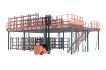
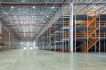
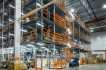
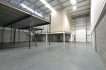
Structural Steel Mezzanine Systems

Send us your request to receive an estimate
Key Features
-

Custom product—contact us today.
-
Customizable steel frame for high load capacity and flexibility.
-
Access options: stairs, ladders, or elevators.
-
Modular design for quick setup and future expansion.
Delivery Terms
-

Order Now
Contact Us for lead times
Contact Us for lead times
-

Custom Options Available
Call us for a customized solution
Call us for a customized solution
-

Nation-wide Shipping
Great rates across the country
Great rates across the country
Delivery Terms
-
Order Now
Contact Us for lead times
Contact Us for lead times
-
Custom Options Available
Call us for a customized solution
Call us for a customized solution
-
Nation-wide Shipping
Great rates across the country
Great rates across the country
Key Features
-
Custom product—contact us today.
-
Customizable steel frame for high load capacity and flexibility.
-
Access options: stairs, ladders, or elevators.
-
Modular design for quick setup and future expansion.
Description
What Is A Structural Steel Mezzanine?
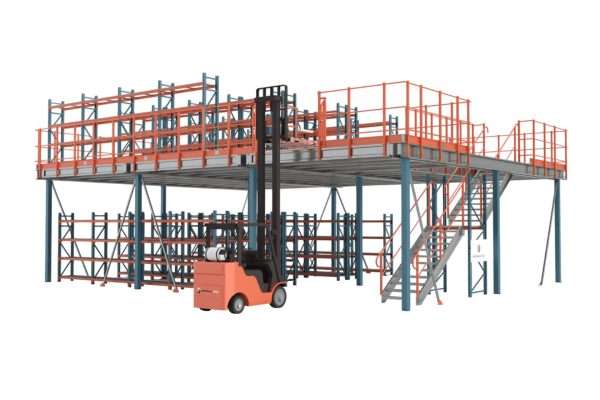
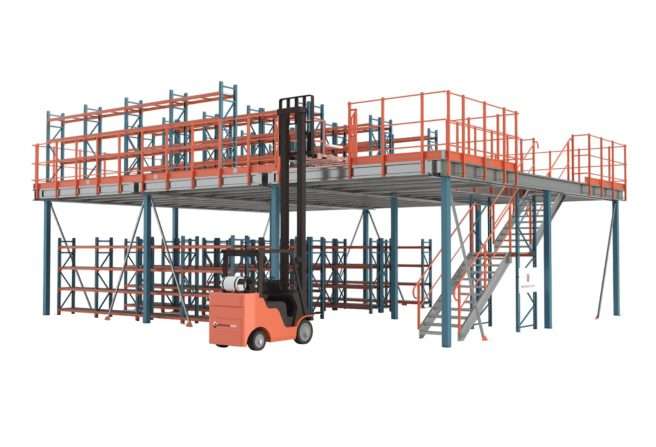
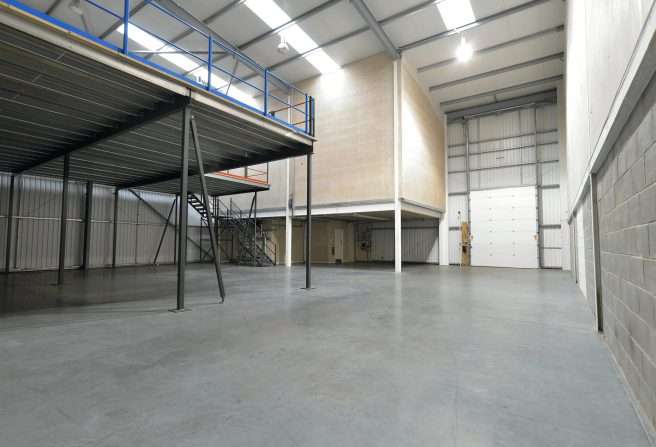
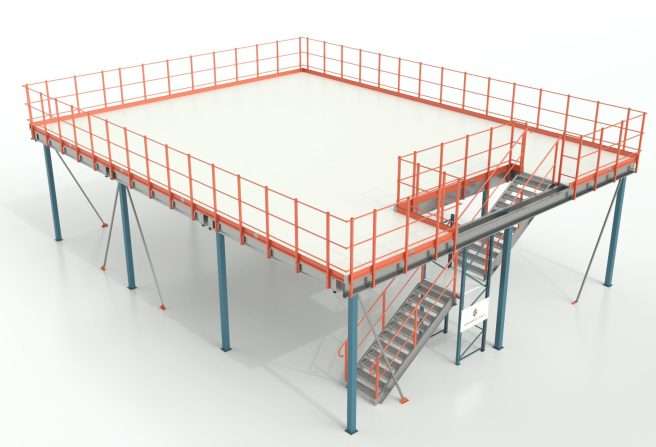
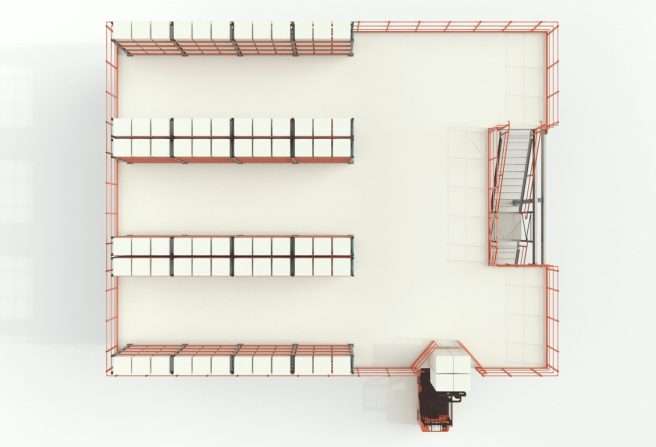
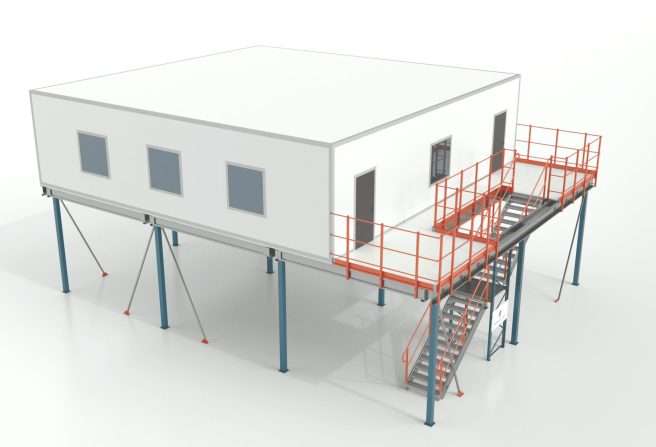
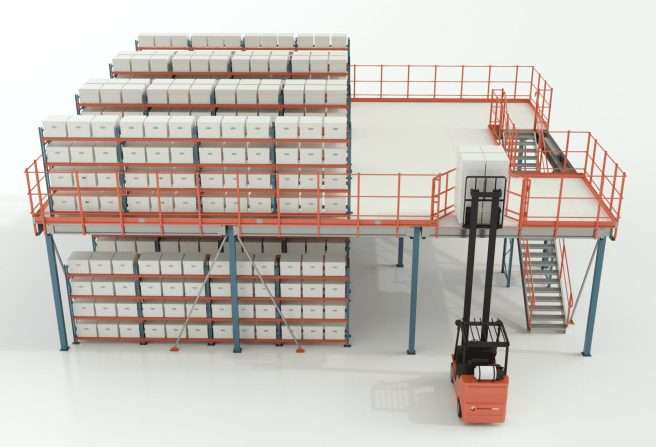
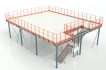
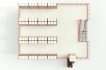
Structural mezzanine systems are intermediate floor structures installed between the main floors of a building. They are typically supported by steel columns and beams and can be customized to support different loads, such as equipment, storage, offices, or production areas. Flooring can be made of steel grating, wood decking, concrete decking, steel plates, resin coated panels and open bar grating. Each warehouse mezzanine project can call for a different floor space material.
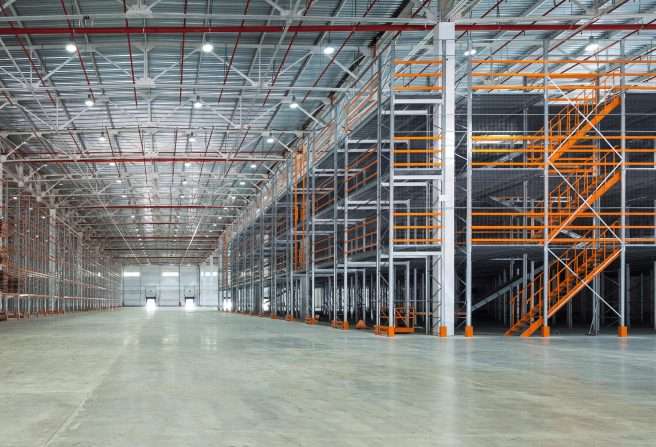
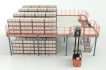
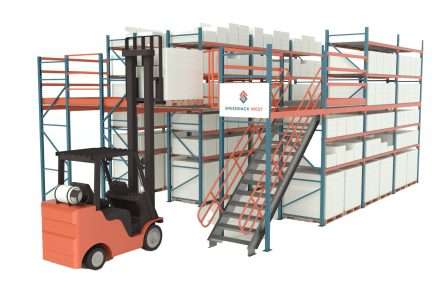
Structural mezzanines stand apart due to their independent steel frame construction, allowing for high load-bearing capacity and maximum customization in size, shape, and usage. They offer unparalleled flexibility in terms of height of a work platform, flooring options, and integration with additional features like offices or machinery. Unlike other mezzanine types, they do not rely on existing shelving or racking for support, making them ideal for heavy-duty applications in diverse industrial environments.
Components of a Structural Steel Mezzanine
A structural steel mezzanine consists of several key components, each designed to provide strength, stability, and functionality:
- Support Columns: Vertical steel beams that bear the load of the mezzanine steel construction and transfer weight to the ground or building foundation.
- Main Beams (Primary Structural Steel Beams): Heavy-duty horizontal steel beams that span between columns and provide the primary load-bearing support for the mezzanine solution.
- Joists (Secondary Beams): Smaller steel beams that run perpendicular to the main beams, supporting the flooring and distributing weight across the structure.
- Decking/Flooring: The surface on which people or equipment move, typically made from materials like wood, steel grating, or concrete, depending on load requirements.
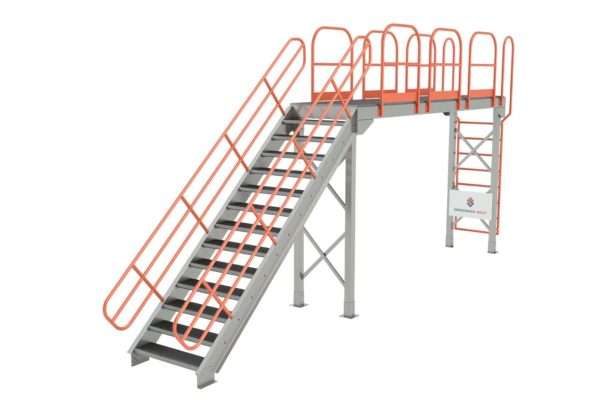
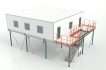
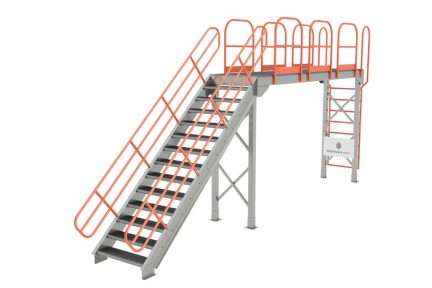
- Stair cases: Provides access to the mezzanine, designed with safety features like railings and non-slip steps.
- Guardrails and Handrails: Installed around the perimeter of the mezzanine to prevent falls and ensure safety.
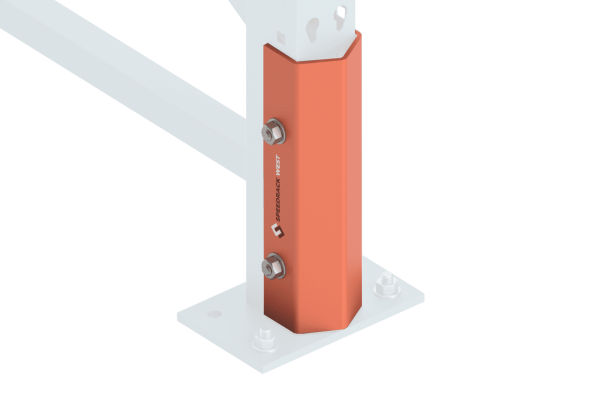
- Base Plates: Steel structure plates that anchor the support columns to the ground or building foundation, providing stability and strength.
- Bracing (Lateral Support): Cross braces or other forms of support between columns or beams that help prevent swaying and maintain the structural integrity of the mezzanine under load.
Mezzanine Floor Construction
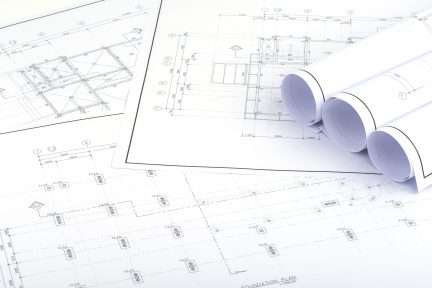
Mezzanine floor construction begins with the installation of vertical steel support columns that anchor the mezzanine and distribute the load to the ground. Horizontal primary and secondary steel beams (joists) are then connected to the columns, forming the skeletal structure of the mezzanine. Flooring materials, such as steel grating, plywood, or concrete, are laid over the joists, providing the walking surface and determining load capacity. Safety features like handrails, staircases, and bracing are added to ensure stability, accessibility, and compliance with building codes. The process is supervised by an engineer keeping seismic precautions in mind.
Metal Decking
Typically made from galvanized steel, it comes in different profiles, such as ribbed or corrugated, designed to increase the structural integrity and distribute weight evenly across the mezzanine. The metal decking is laid directly on top of the mezzanine’s secondary beams (joists) and secured in place, forming a stable platform that can either be the final floor surface or a sub-floor for additional materials like concrete, wood, or resin. Mezzanine construction requires such decking.
Modular Manufacturing
Modular manufacturing allows mezzanine panels built in a very short terms. You can still order a custom mezzanine and work platform, however its fabrication will consist of premade modules.
Modular mezzanines are constructed using standardized components such as steel columns, beams, and decking that are manufactured in advance. This standardization simplifies the design and allows for quicker assembly on-site. The components can be reconfigured or expanded as business needs change, making it easy to adapt to future growth.
The modular approach allows for straightforward installation, often requiring minimal tools and equipment. This makes it possible for a smaller crew to handle the installation efficiently.
Modular mezzanines can be easily expanded or modified to accommodate changing business requirements, such as increased storage needs or reconfiguring workspaces.
Industrial Mezzanine Access Options
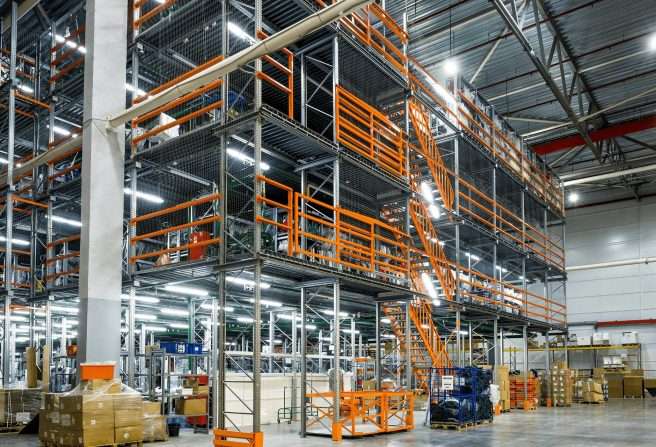
Fixed Staircases: These are the most common access points, designed to provide safe and stable access to the mezzanine. They can be customized in terms of height, width, and railing configurations.
Ladders. Suitable for smaller or less-frequented mezzanines, fixed ladders can be mounted vertically or at an angle to save space. Safety cage ladders are also available.
Elevators and Lifts:
- Freight Elevators: For larger loads or frequent transport of goods, freight elevators offer a safe and efficient way to move items to and from the mezzanine.
- Platform Lifts: These can be installed to transport smaller items or personnel safely and are often more compact than freight elevators.
Catwalks and Walkways:
- Catwalks: Narrow elevated walkways provide access to specific areas of the mezzanine or allow for movement above machinery or storage areas.
- Retractable Walkways: These can be designed to fold or retract when not in use.
Dock Plates and Levelers: For mezzanines used in distribution centers, loading docks with dock plates or levelers facilitate easy loading and unloading of goods.
Structural Mezzanine Accessories
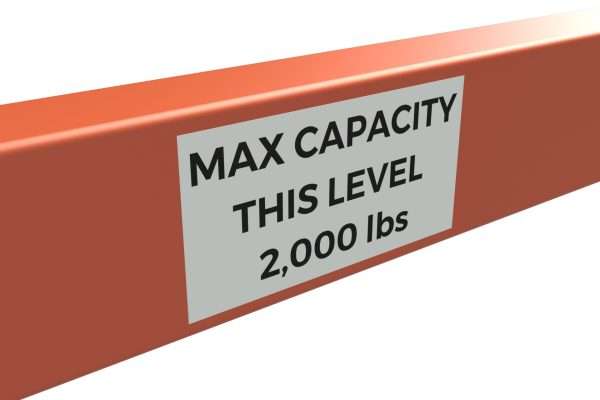
Structural mezzanines can be upgraded and extended with various accessories to improve functionality, safety, and usability. One key accessory is guardrails, which provide a protective barrier around the mezzanine’s perimeter, ensuring safety by preventing falls. Complementing these are handrails, designed to offer additional support for individuals using staircases or accessing different areas of the mezzanine. Lighting fixtures are essential for enhancing visibility on the mezzanine, especially in industrial settings where safety is paramount. Finally, safety signage plays a crucial role in conveying important information, such as load limits and emergency exits, helping to maintain a safe working environment.
Industries utilizing Structural Mezzanine
-
Automotive

-
Warehousing

-
Retail

-
Industrial Engineering

-
Distribution

-
Wholesale

-
Logistics

-
Manufacturing

Want to Make Sure It Fits?

or
Industries utilizing Structural Mezzanine
-
Automotive
-
Warehousing
-
Retail
-
Industrial Engineering
-
Distribution
-
Wholesale
-
Logistics
-
Manufacturing
Want to Make Sure It Fits?
or
Robert Baumgartner says: “Despite picking up this project in the middle of its lifecycle, the transition was flawless thanks to the team’s stellar communication. They exceeded our expectations by delivering the installation earlier than anticipated and hitting every technical requirement. From the sales team’s quick answers to their willingness to make adjustments, the experience was top-tier.”
Consolidated Supply says: “We’re very happy to be your regular client, and it’s always so easy to work with your team”
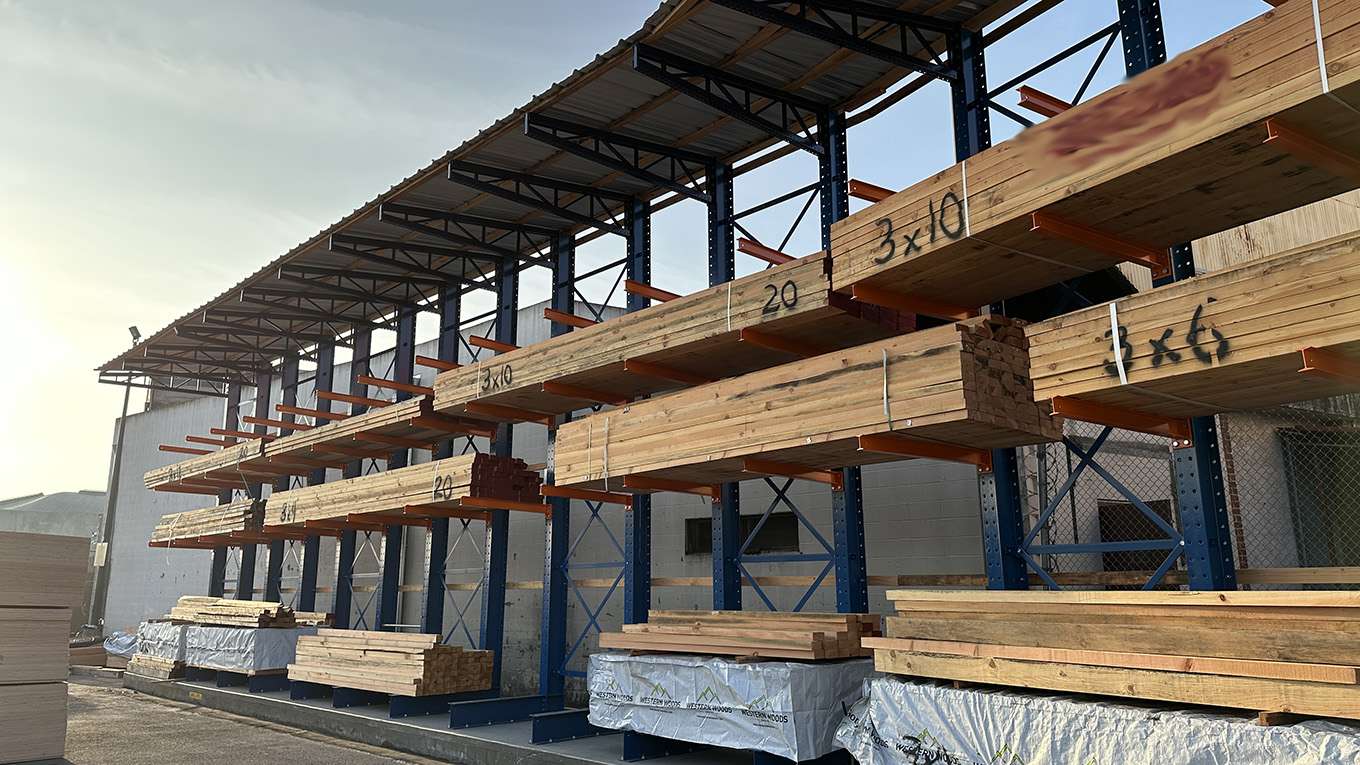
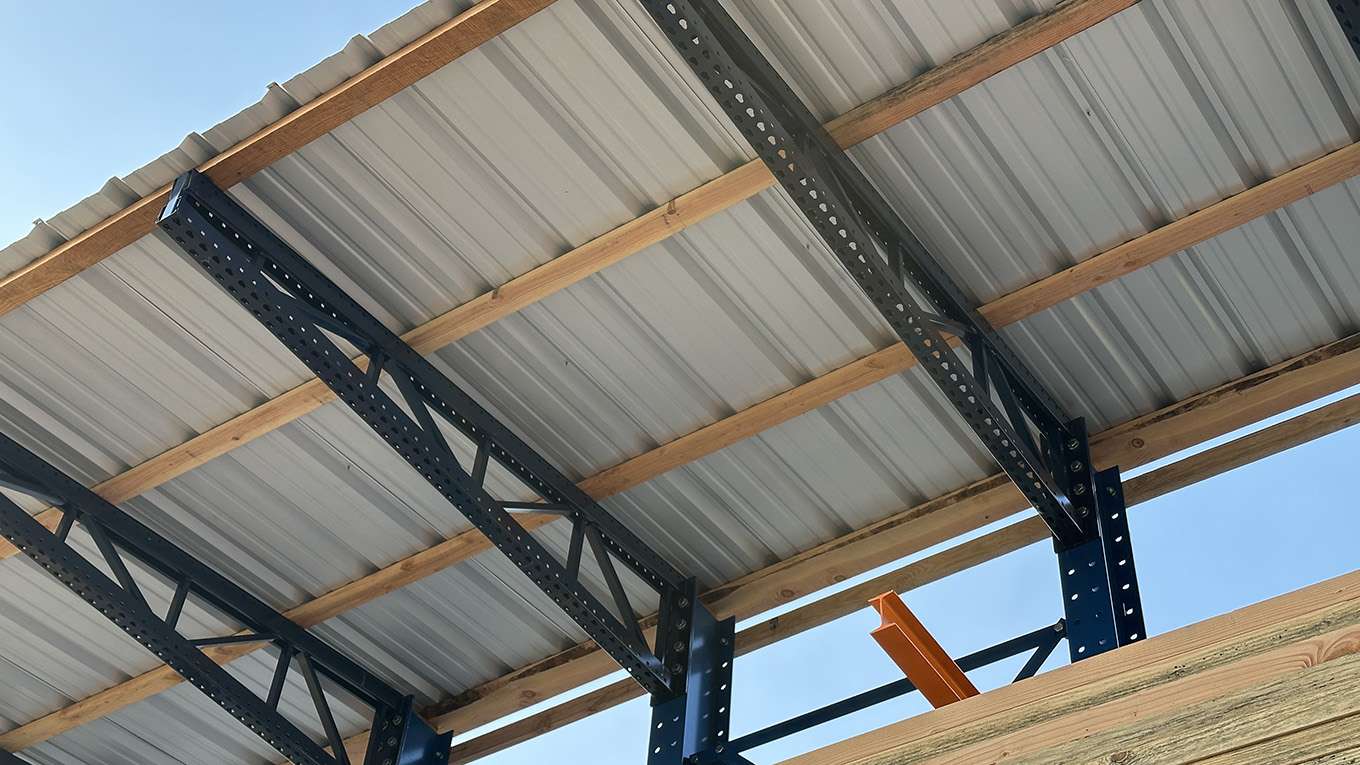
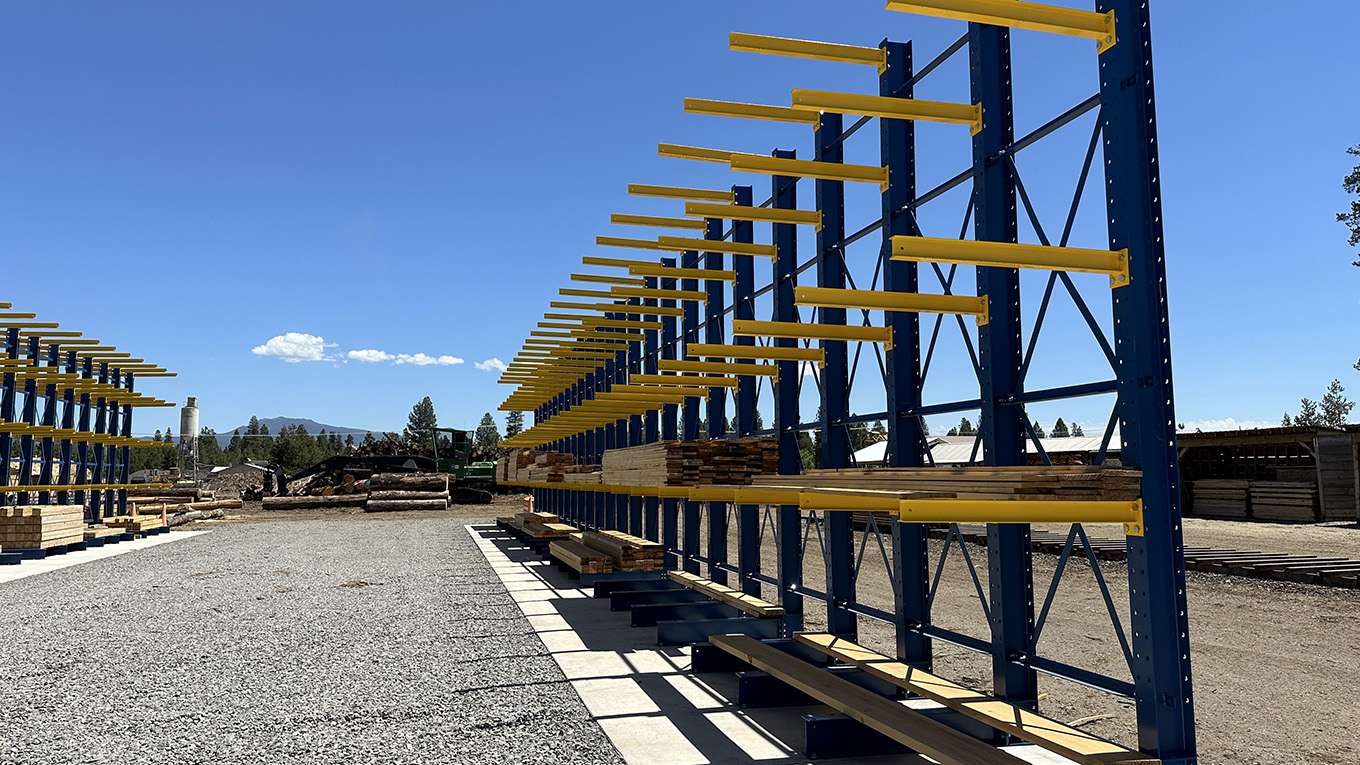
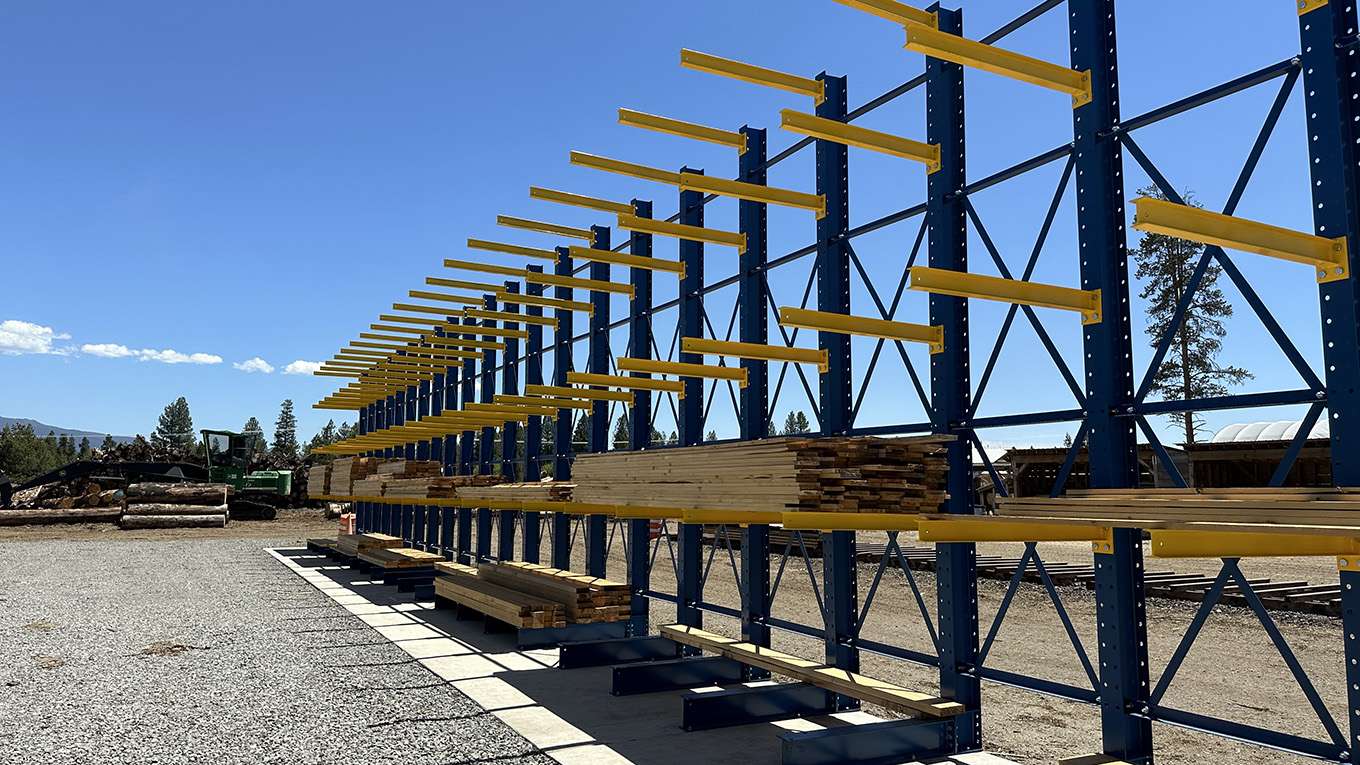
Lumber Company says: “Working with Speedrack West team has been a real pleasure. They made the whole process smooth and straightforward, and we’re 100% planning to come back again—which we actually just did recently.”
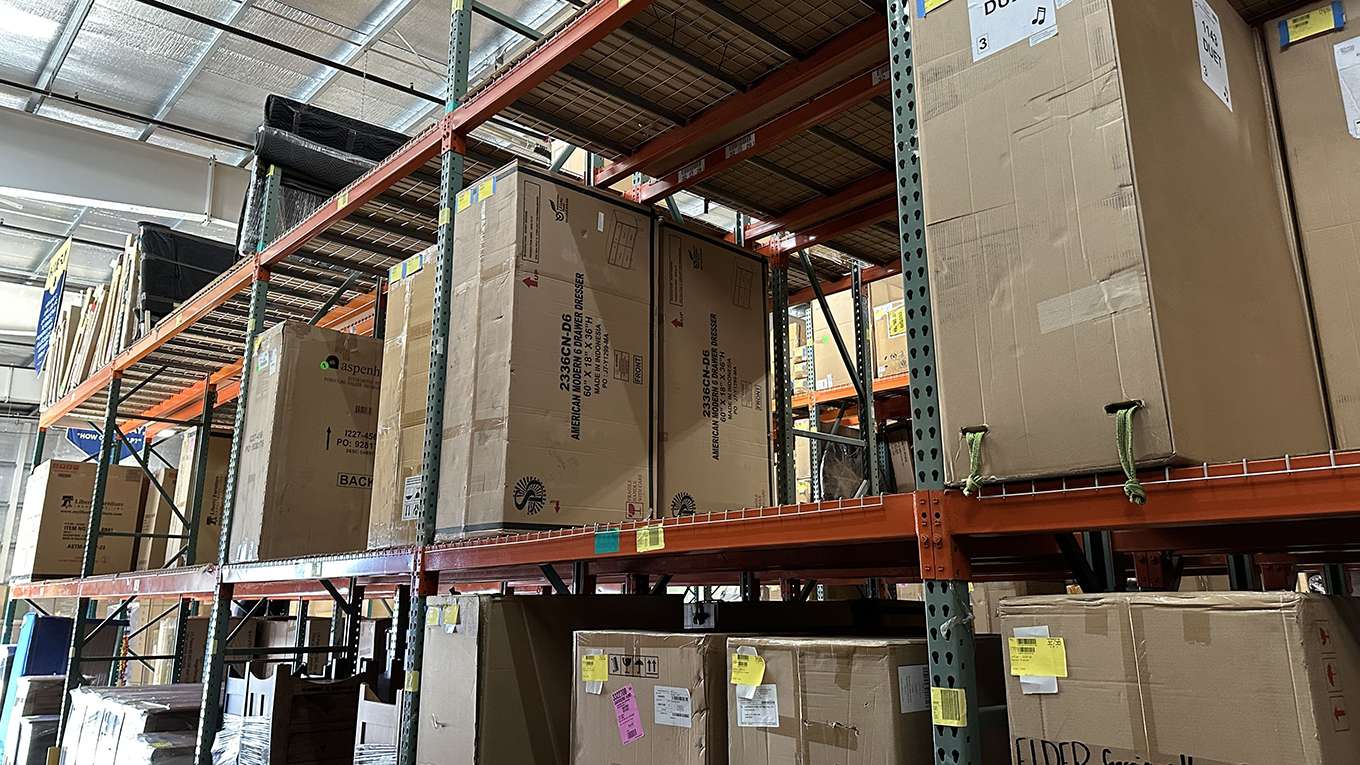
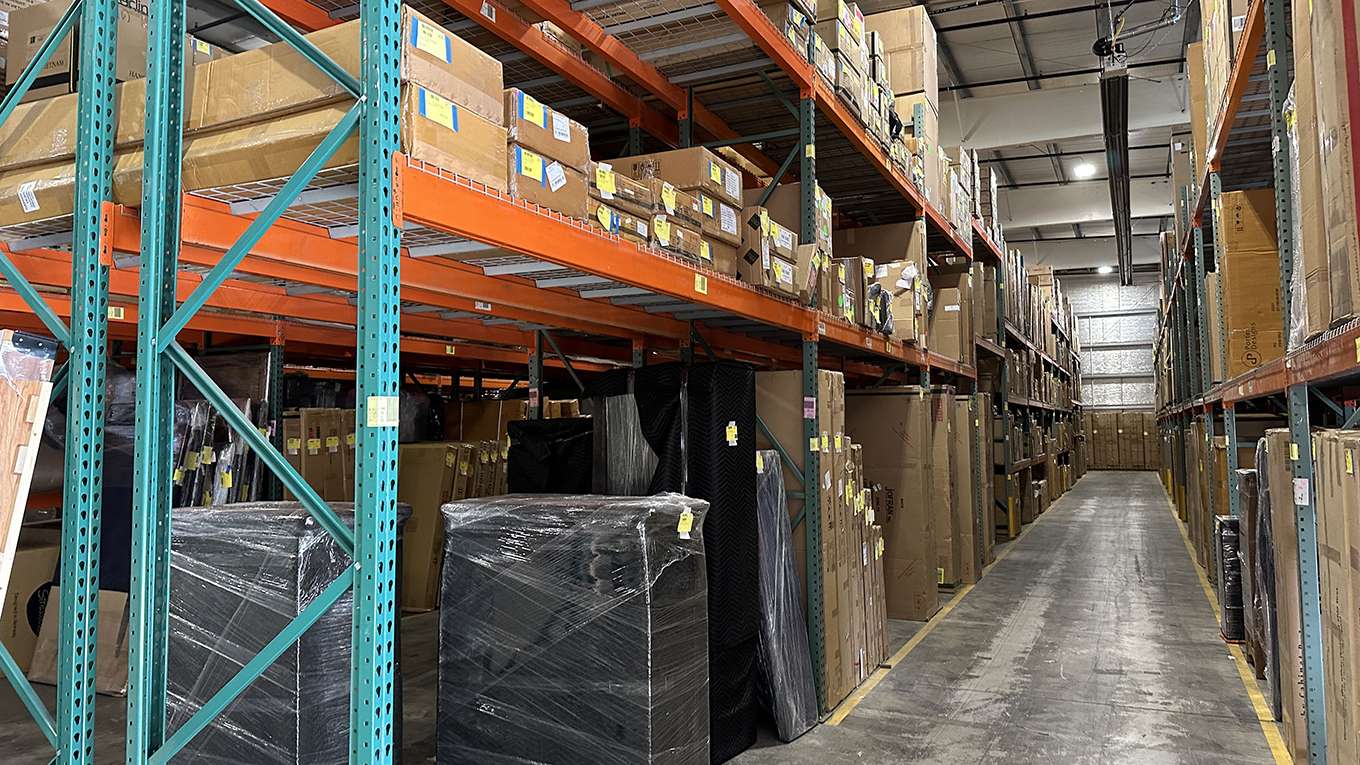
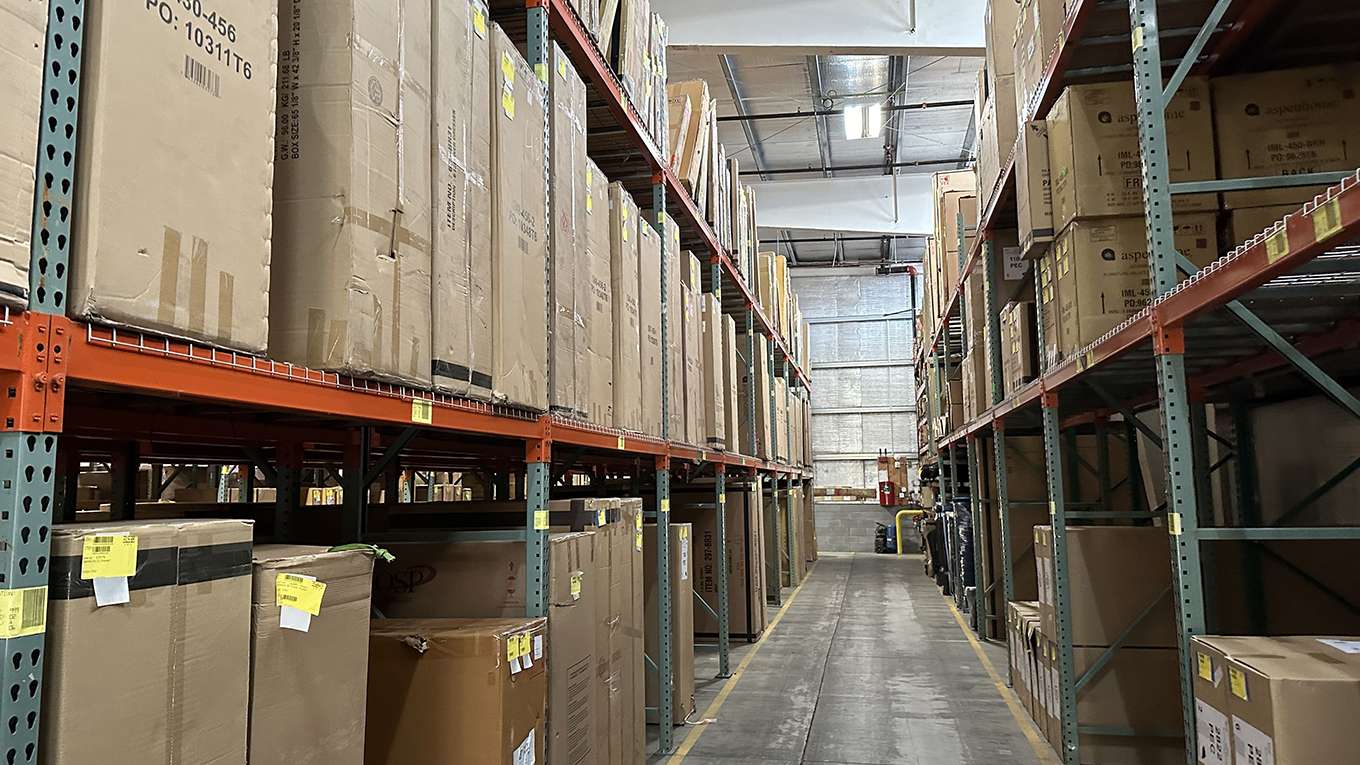
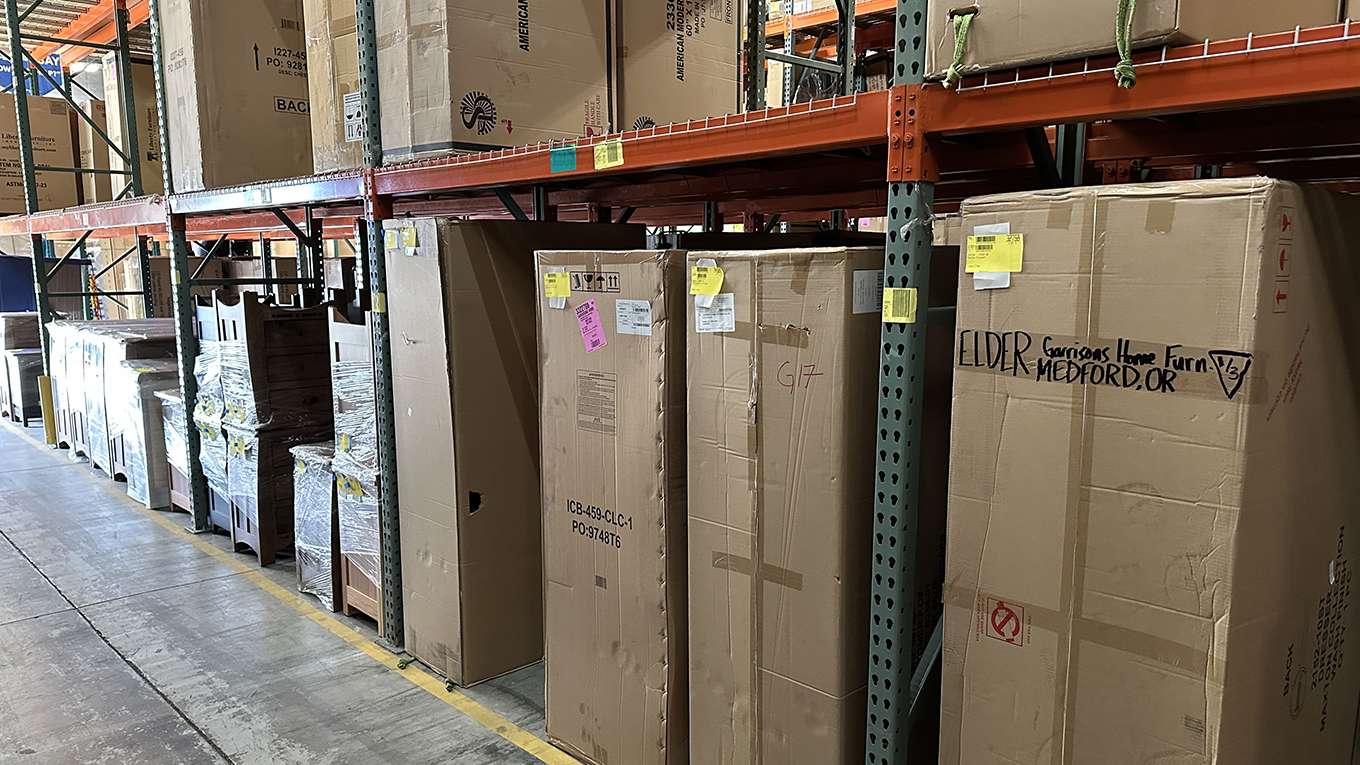
Derek Patterson says: “I would suggest that there should be no hesitation…from placing an order to getting everything delivered in such a timely manner. I had racking within 7 days compared to 4 to 6 weeks elsewhere. The customer service level is fabulous.”
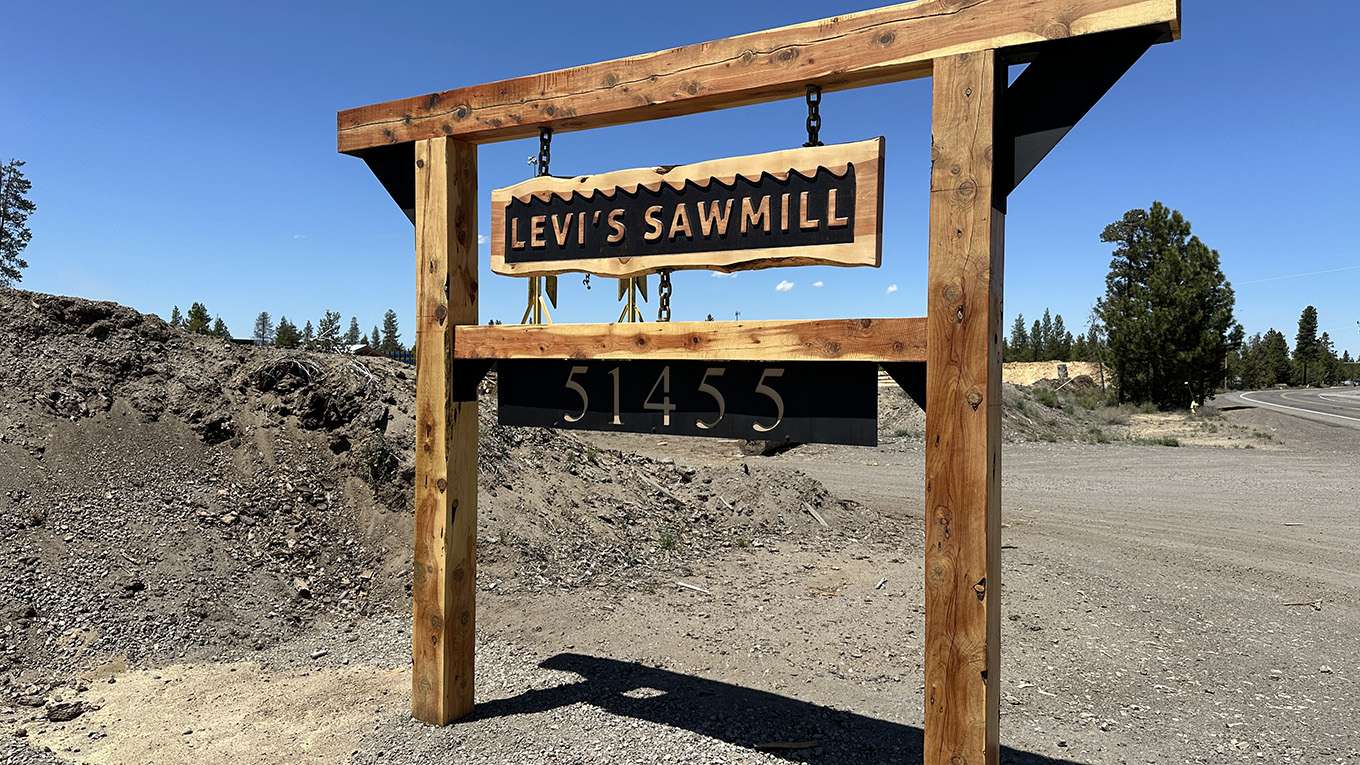
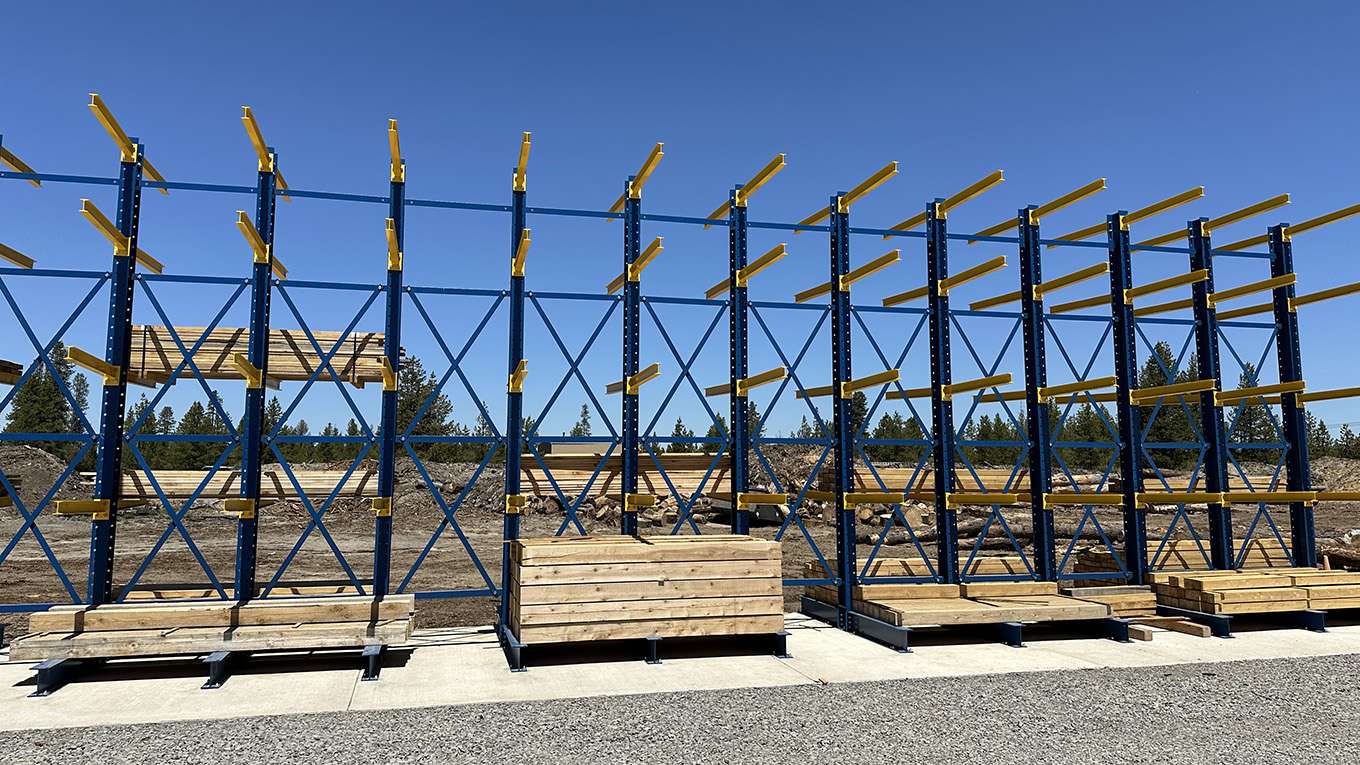
Levi Littrell says: “It’s a very expensive product no matter who you go with. Speedrack West will actually walk you through the steps and give you pricing options. Definitely, you do your research, but most likely you’re going to come back to Speedrack West.”
Gerald Allen says: “I do know that basically got called every day. How’s it going, is everything good? So the attention to detail and the concern for my happiness for lack of better terms was definitely a part of working with your company.”
James Roberts says: “It was vital for us to go with your company. With your guys’ company’s versatility to accommodate our needs from rack sizing to structural weight capacity.”
The Brands Behind the Racks









Related Products
Robert Baumgartner says: “Despite picking up this project in the middle of its lifecycle, the transition was flawless thanks to the team’s stellar communication. They exceeded our expectations by delivering the installation earlier than anticipated and hitting every technical requirement. From the sales team’s quick answers to their willingness to make adjustments, the experience was top-tier.”
Consolidated Supply says: “We’re very happy to be your regular client, and it’s always so easy to work with your team”
Lumber Company says: “Working with Speedrack West team has been a real pleasure. They made the whole process smooth and straightforward, and we’re 100% planning to come back again—which we actually just did recently.”
Derek Patterson says: “I would suggest that there should be no hesitation…from placing an order to getting everything delivered in such a timely manner. I had racking within 7 days compared to 4 to 6 weeks elsewhere. The customer service level is fabulous.”
Levi Littrell says: “It’s a very expensive product no matter who you go with. Speedrack West will actually walk you through the steps and give you pricing options. Definitely, you do your research, but most likely you’re going to come back to Speedrack West.”
Gerald Allen says: “I do know that basically got called every day. How’s it going, is everything good? So the attention to detail and the concern for my happiness for lack of better terms was definitely a part of working with your company.”
James Roberts says: “It was vital for us to go with your company. With your guys’ company’s versatility to accommodate our needs from rack sizing to structural weight capacity.”
The Brands Behind the Racks
Installation &
Tear Down
Our in house installation crew do their job promptly and professionally. We can also help with moving or tearing down your old rack system.

Reviews
Leave a review!
Sign In