

-
Warehouse Racking
Warehouse Racking See all
-
Conveyors
Conveyors See all
-
Shelving
Shelving See all
-
Mezzanines
Mezzanines See all
-
Accessories
Accessories See all
-
Safety Products
Safety Products See all
Warehouse Racking
Explore our extensive selection of warehouse racking, designed to meet your specific storage needs. From Selective Pallet Racking for easy, direct pallet access, to Cantilever Racks perfect for long, bulky items. Browse categories including Stacking Racks, high-density Pushback Racks, efficient Gravity Flow Systems, and space-saving Drive-In Racking. Find the right warehouse rack system today!

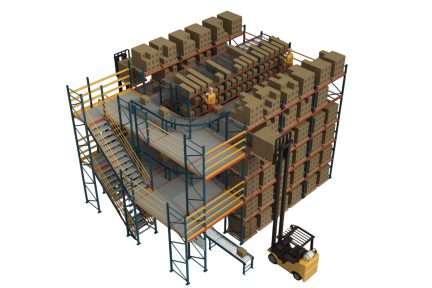
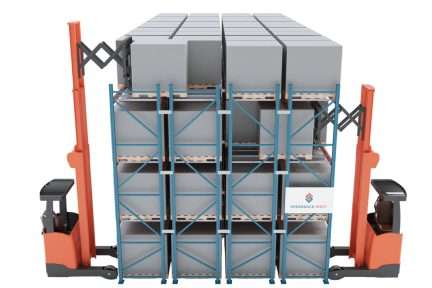
Warehouse Rack Systems
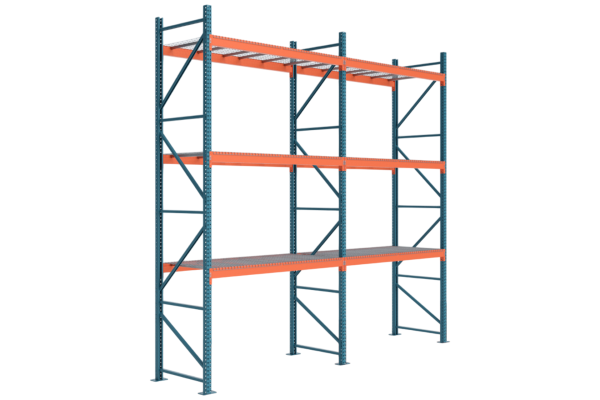
Pallet Racking
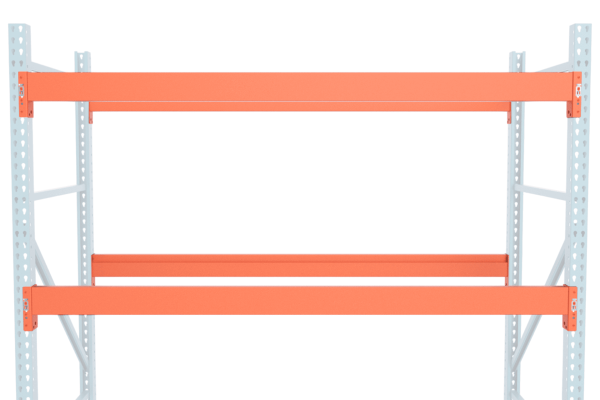
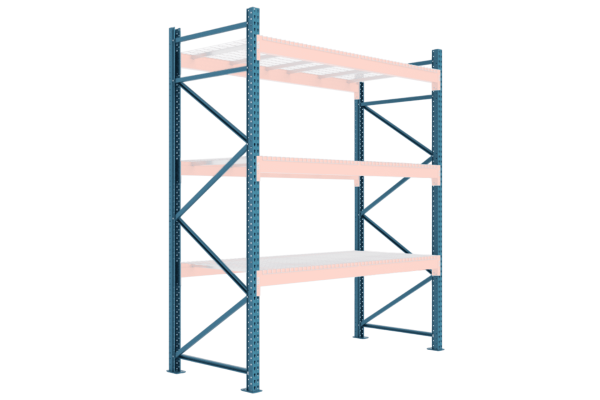
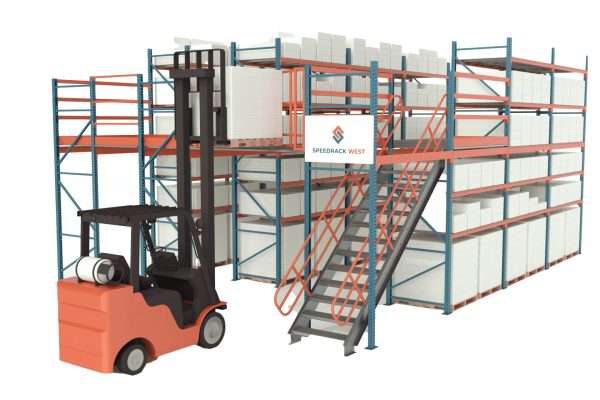
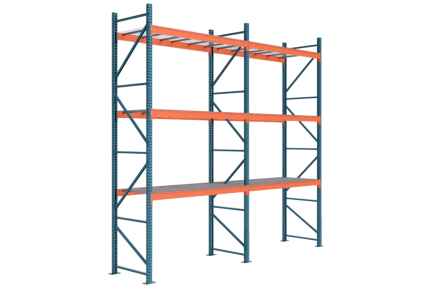
Pallet rack system is the most widely used storage system in warehouses. It allows pallets to be stored horizontally across rows and vertically along levels, offering direct access to each pallet.
Primarily used in warehouses with a high SKU variety and moderate to high turnover. Ideal for operations requiring easy, individual pallet access, such as retail distribution, manufacturing, and general warehousing.
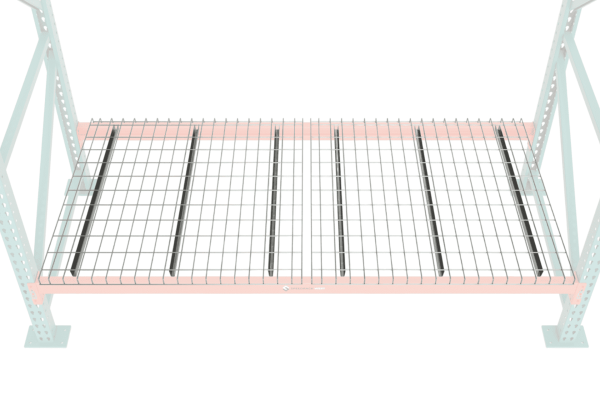
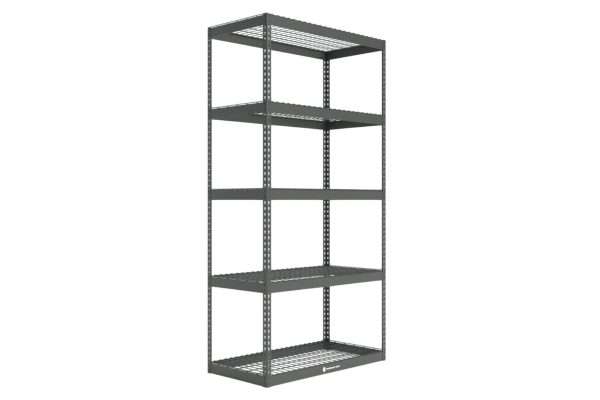
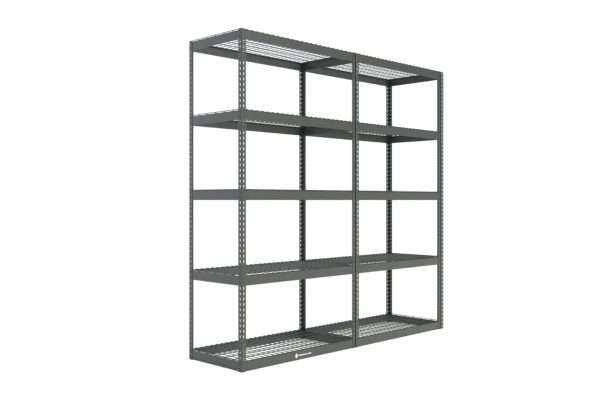
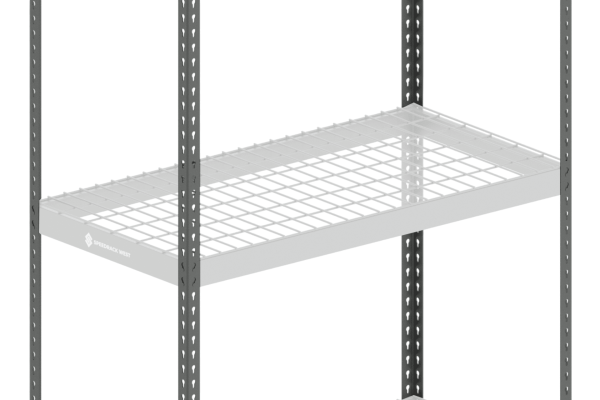
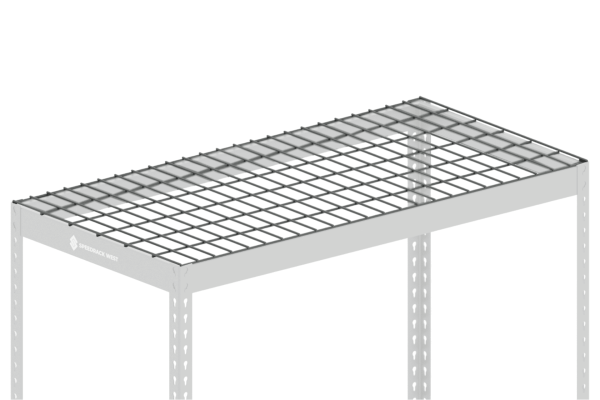
Typically constructed from structural steel or roll-formed steel, pallet racks consist of upright frames and horizontal pallet rack beams. The racks are adjustable in height and spacing, making them adaptable to different pallet sizes. Frames generally range from 8 to 30 feet high and can hold loads up to several tons per level. Standard aisle widths vary, but for selective racking, they typically accommodate standard forklifts with aisles around 10-12 feet wide. Wire deck is a metal mesh that sits on the beams of the pallet rack, creating a stable surface for supporting pallets and other non-palletized goods.
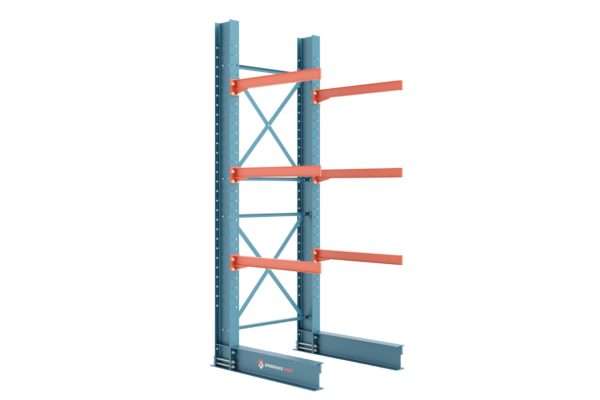
Cantilever Racking
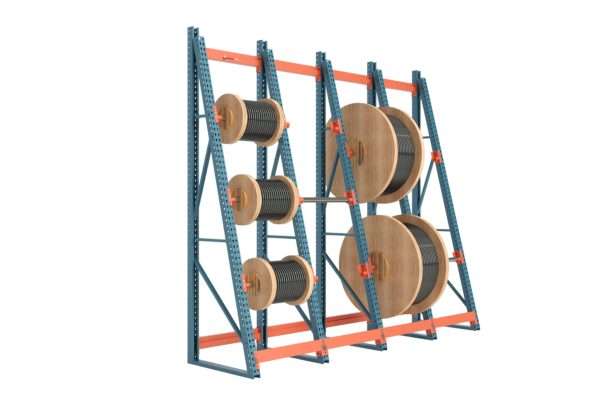
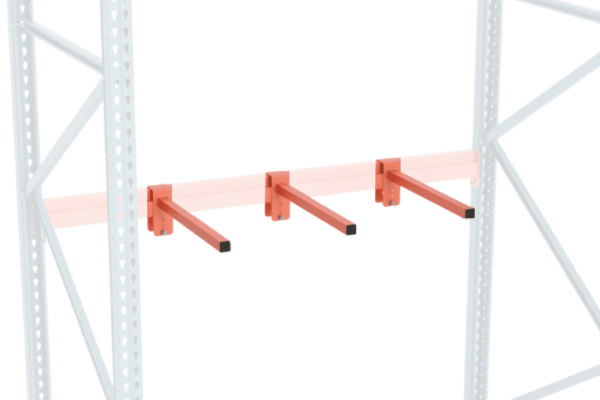
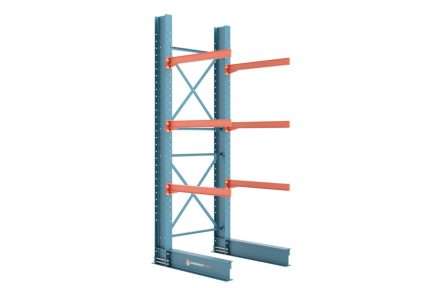
Cantilever racking is a storage system with horizontal arms extending from vertical columns, designed to store long, bulky items without vertical obstructions.
Best suited for storing items like lumber, pipes, metal sheets, furniture, and other long, heavy items. Common in construction supply warehouses, lumber yards, and hardware stores.
Cantilever racks are made from heavy-duty steel, with uprights ranging from 8 to 20 feet high. Horizontal arms, which hold the load, extend from the upright columns and can vary in length based on storage needs. The base of the system provides stability and can be single or double-sided for accessibility. Arm load capacities can vary, but industrial cantilever racks can hold thousands of pounds per arm. Spacing and arm length are customizable for the specific items being stored.
Stacking Racks
Stacking racks are portable racks that can be stacked on top of one another, forming temporary or flexible storage units. They are versatile and allow for efficient floor space utilization.
Commonly used for seasonal inventory, overflow storage, or where rack configurations may need to be changed regularly. Suitable for warehouses with changing layouts, construction sites, and manufacturing plants.
Stacking racks are usually constructed from steel with four corner posts that allow for stacking multiple units. They can support a range of weights depending on the material and design, with typical capacities ranging from 1,000 to 4,000 pounds. These racks often come in dimensions that accommodate standard pallets and can be customized in height or width based on specific requirements. The racks may have side frames or removable posts for added stability.
Pushback Racking
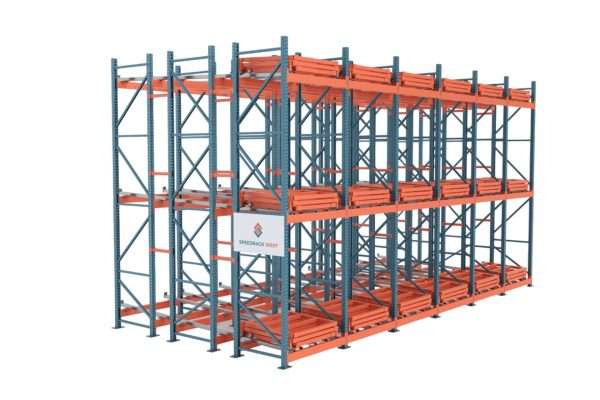
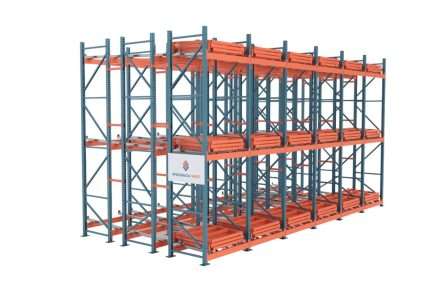
Pushback racking uses a series of nested carts on inclined rails, allowing pallets to be pushed back as new pallets are loaded, creating a high-density storage solution.
Ideal for warehouses with limited SKU variety and high-volume items. Common in food distribution, beverage warehouses, and facilities that need high storage density without full FIFO requirements.
Pushback racks are constructed with steel frames, tracks, and cart systems, typically installed in depths of 2-6 pallets per lane. Each level of a pushback rack has sloped rails with carts that automatically move pallets forward using gravity when items are removed. Standard load capacities per pallet position are generally around 1,500 to 3,000 pounds. The system can accommodate a range of pallet sizes but is optimized for similar-sized pallets to ensure smooth cart movement.
Gravity Flow Racks
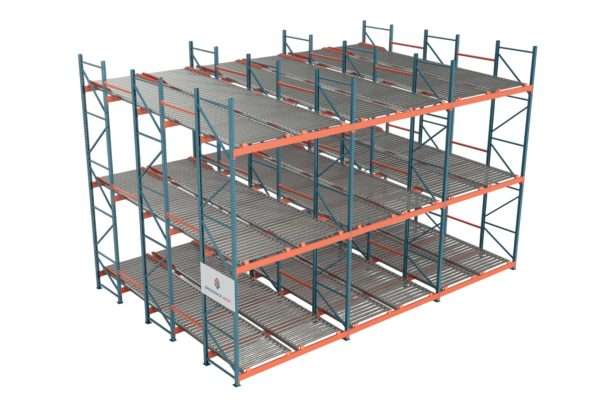
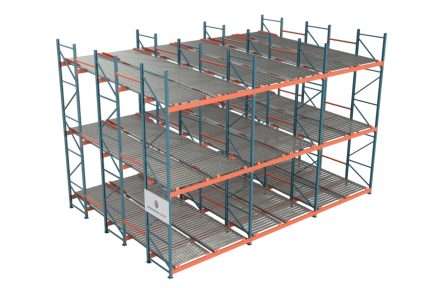
Gravity flow racking, also known as pallet flow racking, is a high-density storage system that uses inclined rollers or wheels to automatically move pallets to the front of the rack, providing FIFO access.
Commonly used for high-turnover inventory with expiration dates, such as food and pharmaceuticals, and in distribution centers that require FIFO product flow.
These racks feature a structural steel frame with inclined roller beds or wheel tracks that create a gravity-fed system. Pallets are loaded from the rear and move forward to the picking side as items are removed. Gravity flow racks can range in depth from 2 to over 20 pallets per lane, depending on space and volume needs. Load capacities depend on the roller type and design, typically supporting 2,000 pounds or more per pallet position. Track angles are carefully calibrated to ensure controlled movement without excessive speed.
Drive-In Racking
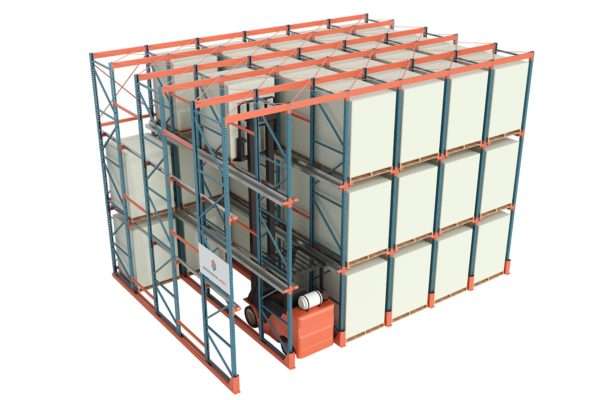
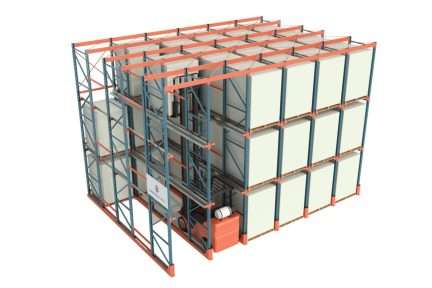
Drive-in racking is a high-density storage system in which forklifts drive directly into the storage lanes to load and unload pallets. It follows a first-in, last-out (FILO) method of storage.
Ideal for bulk storage of identical items, such as cold storage facilities, large-volume goods, and products with limited SKUs. Often used in industries like food, beverage, and manufacturing.
Constructed with heavy-duty steel, drive-in racks feature tall upright frames and support rails along the sides for forklifts to drive through. Pallets are loaded in a back-to-front configuration, with typical heights ranging up to 40 feet or more. Drive-in racks can support heavy loads, typically up to 2,000 pounds per pallet position. Aisles are only as wide as the forklift, increasing density. Drive-in racks are designed for durability, as they undergo more frequent forklift contact, and they require precise alignment for safe and efficient operation.
Frequently Asked Questions (FAQ)
- What accessories are available for pallet racking systems?
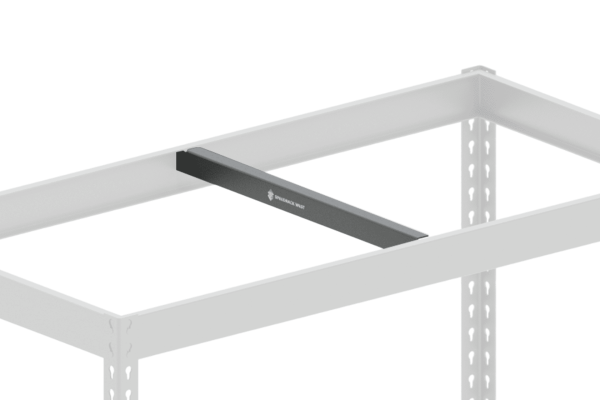
Pallet rack accessories include wire mesh decking (such as waterfall wire decking), pallet rack column protectors, cross bars, and add-on units. These accessories enhance storage safety and flexibility, supporting different warehouse storage needs, including heavy-duty applications. - How can I optimize my warehouse with pallet racking?
To maximize vertical space and optimize storage, you can add upright frames of different heights and use pallet rack shelving that supports various load capacities. Teardrop-style pallet racks, along with heavy-duty accessories, are especially beneficial for industrial applications. - What is teardrop pallet rack shelving?
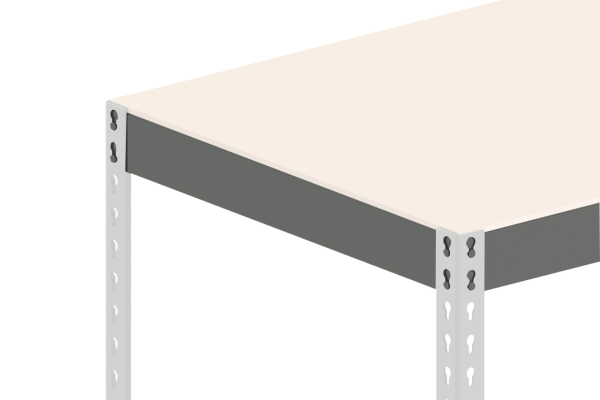
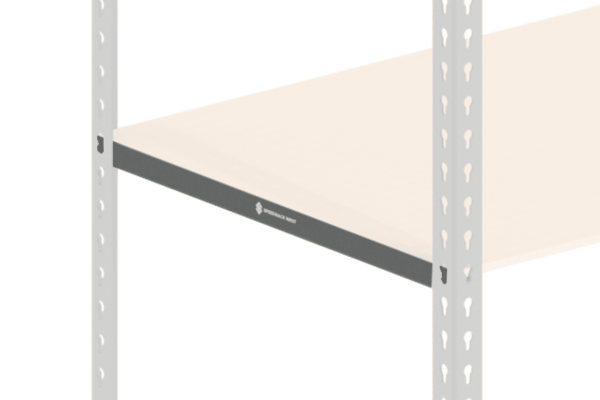
Teardrop pallet rack shelving features teardrop-shaped holes in the upright frames, allowing for quick assembly and adjustability without the need for bolts. This style is versatile, suitable for warehouse pallet racks, and available in different sizes to meet specific storage needs. - Are there different styles of pallet racks?
Yes, common styles include pallet racking (ideal for direct access to each pallet), drive-in racks for dense storage, and pushback racks for high-density storage. Teardrop-style racks are among the most popular, known for their compatibility and adjustability. - What types of pallet rack shelving are available for heavy loads?
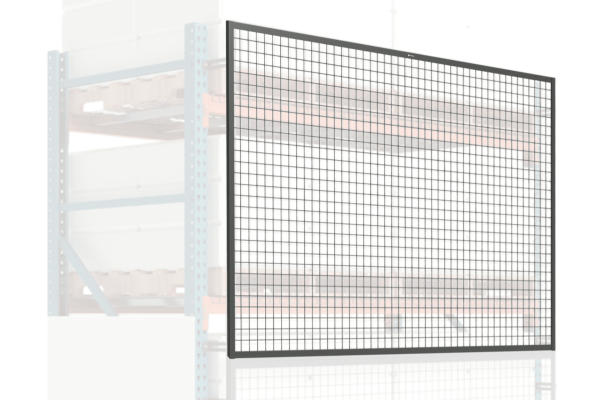
Heavy-duty pallet racks and steel pallet racks are specifically designed to handle heavy loads. We also offer wire mesh decking for extra support, making it suitable for industrial pallet storage needs. - How does wire decking work in pallet racking systems?
Wire decking, often made from durable wire mesh, sits on the beams of a pallet rack to create a solid, even surface. It’s perfect for enhancing safety, providing extra support for pallets, and is commonly used in warehouse pallet rack systems. - What are pallet rack column protectors, and why are they essential?
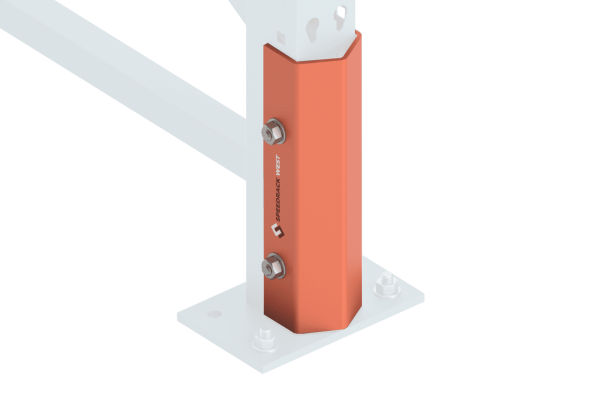
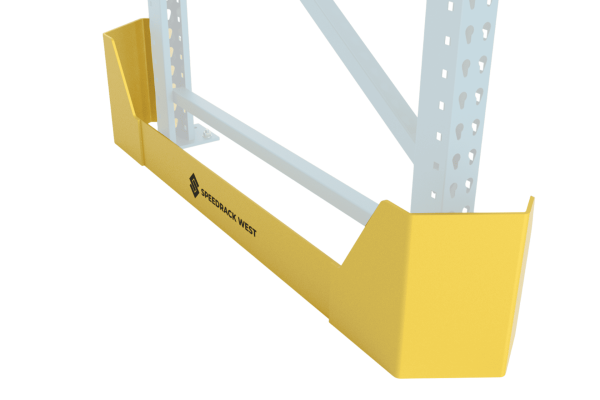
Pallet rack column protectors are safety accessories designed to prevent damage to the uprights from handling equipment, such as forklifts. They help maintain the integrity of the racking structure, especially in high-traffic areas. - Can pallet racks be customized for specific storage needs?
Yes, pallet racks offer a variety of accessories, such as metal shelving, cross bars, and back-to-back configurations to meet almost any storage requirement. This customization supports different inventory types and enables an efficient layout for distribution centers. - Are warehouse pallet racks suitable for heavy-duty applications?
Yes, heavy-duty pallet racks are built for industrial and high-load applications. These racks are made of steel and designed to handle heavy pallet loads, making them ideal for large-scale storage solutions. - What shelving options are available for teardrop pallet racks?
Teardrop pallet racks support metal shelving, wire mesh decking, and additional accessories like waterfall wire decking for more versatility in load support. Add-on units are also available to expand and customize your pallet rack system. - What type of handling equipment is needed for pallet racks?
Forklifts are commonly used to load and unload pallets from pallet racks. New forklifts and other handling equipment can improve warehouse efficiency and help manage palletized loads on selective and teardrop pallet racks. - What factors should I consider when choosing a pallet rack system?
Key considerations include the type of load, required capacity, available vertical space, and specific warehouse needs. Accessories, like wire decking, column protectors, and various pallet rack units, also play a role in optimizing your warehouse layout. - How do pallet racking systems support inventory management in distribution centers?
Pallet racks allow efficient use of vertical space and help organize a large inventory of pallets. This structure enables quick access and precise handling, making it ideal for distribution centers that handle a huge inventory with specific access needs.