
Why Contracts for Mezzanine Systems Are Different
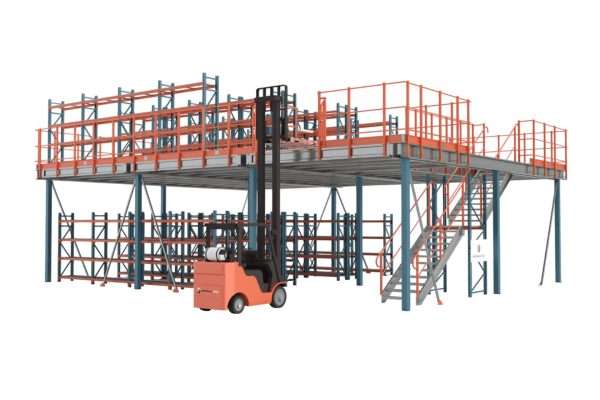
When you install a mezzanine floor system, you’re not just adding a raised platform. You’re building a structural addition governed by U.S. mezzanine construction standards and the same building codes that apply to permanent construction.
Mezzanines must meet IBC, seismic, and fire safety requirements, especially in high-risk areas. And not all suppliers handle mezzanine code compliance the same way:
- Some only provide layout drawings.
- Others handle both design and installation.
- A few offer full-service solutions, including warehouse mezzanine engineering and mezzanine permit requirements support.
That’s why it’s critical to understand the nuances of what you’re responsible for. The contract you sign directly affects whether your system passes inspection, stays on budget, and gets approved.
What You Are Responsible For
Even with a great supplier, certain responsibilities fall on you. Don’t assume the contract covers them. If you want your mezzanine to pass inspection and function safely, you need to come to the table prepared—starting with accurate documentation. Here’s what you need to nail down:
Load Ratings
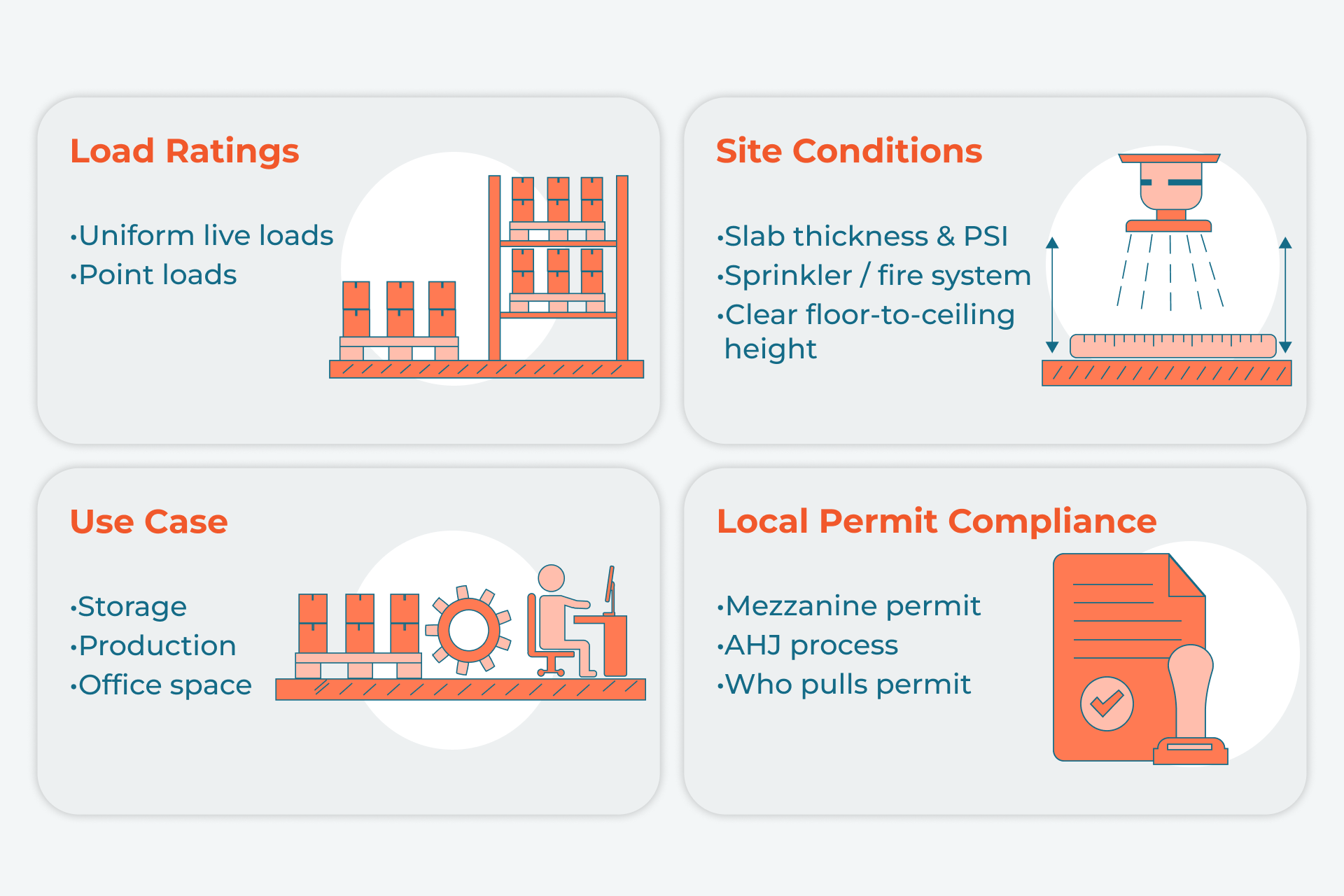
You must provide the correct mezzanine load capacity information. This includes:
- Uniform live loads – weight distributed evenly across the platform (e.g., pallets, storage).
- Point loads – heavy, concentrated weight (e.g., equipment or racking).
If you’re unsure about the load requirements, have your team or a competitor double-check it. The wrong load spec could mean structural failure—for example, overloading a light-duty mezzanine designed for office use with heavy pallet racking.
Use Case
What’s the mezzanine for?
- Storage
- Production
- Office space
Each use case affects the required load capacity, design, materials, and fire safety features. Your use case and load ratings go hand in hand—changing one may impact the other.
Site Conditions
Your mezzanine design must match your site’s physical limits. Be prepared with:
- Mezzanine slab thickness and PSI rating
- Sprinkler/fire suppression system details
- Clear vertical height between floor and ceiling
These factors determine mezzanine slab requirements, anchoring design, structural feasibility, and compliance with code.
Local Permit Compliance
Do I need a permit for a warehouse mezzanine? In most U.S. jurisdictions, permits are required for mezzanine installations. It’s usually your responsibility to check with the local authority (AHJ) and understand the permitting process. Determine if the city/county has an online permit application. Some cities require permits online, some are optional, and some require in-person. Some suppliers may assist, but don’t assume it’s included unless clearly stated in the contract.
Get Your Mezzanine Right the First Time
Send us your load ratings, use case, and site conditions. Our team will walk you through any gaps, review your layout, and include PE-stamped drawings in a code-compliant quote you can take to your AHJ.
What the Supplier Typically Handles
A good supplier takes care of critical technical elements, but you need to confirm these are included:
Structural Engineering & Drawings
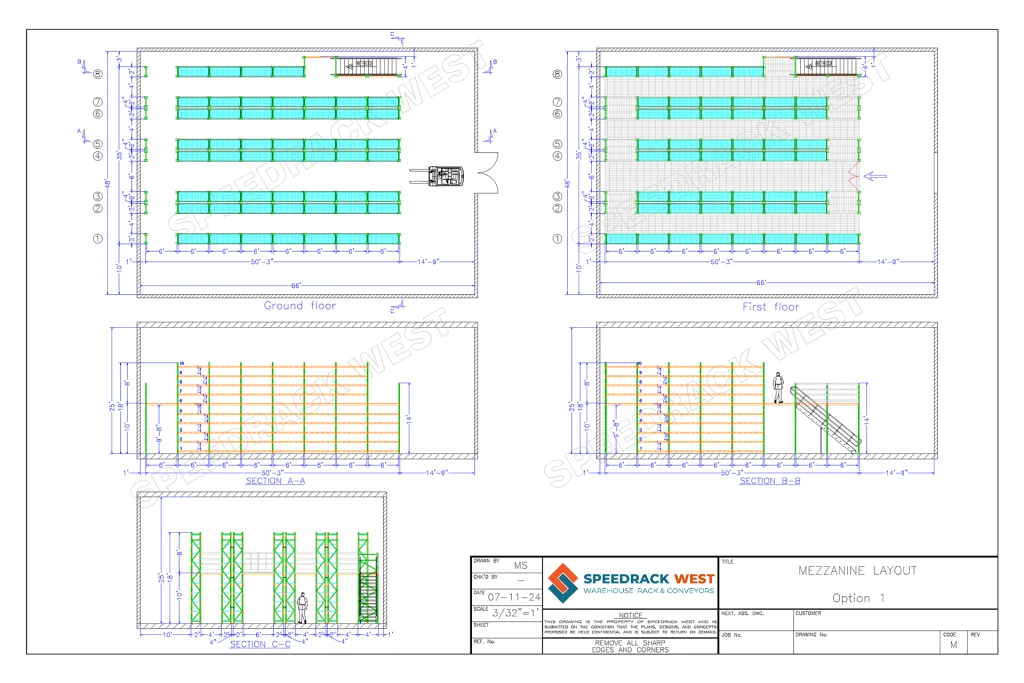
Suppliers should provide stamped drawings by a licensed Professional Engineer (PE) ready for permit submission. Without PE-stamped plans, your project risks permit rejections, failed inspections, or costly redesigns. If your contractor isn’t licensed to provide them, you’ll need to hire a third-party engineer—adding time, expense, and liability.
How to Verify a PE License? Each U.S. state maintains its own database of licensed Professional Engineers through its State Board of Professional Licensing. These tools allow you to:
- Verify a PE’s license status
- Check their engineering discipline (e.g., structural, civil, mechanical)
- See any disciplinary actions or restrictions
You can find these databases directly through your state’s licensing board or via the National Society of Professional Engineers (NSPE)¹.
Material Specifications
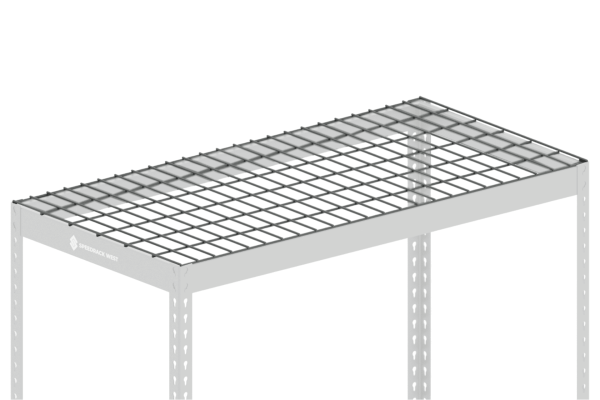
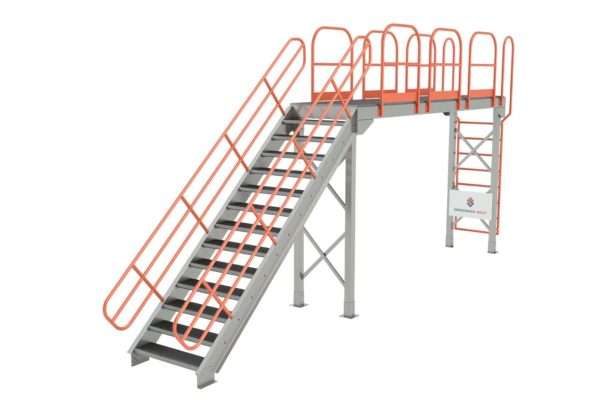
This includes steel components, flooring types, stairways, and guardrails selected to meet your project’s specific requirements.
Contractors should not require you to use certain materials without clearly explaining why one option is better than another. A good supplier will offer different material choices and help you compare them based on functionality, budget, and code compliance.
Sample Mezzanine Material Specification (for illustration only):
| Structural Steel Components | ‣ Columns: HSS 6″ × 6″ × 3/16″, ASTM A500 Grade B ‣ Primary beams: W10 × 22, ASTM A992, shop-primed ‣ Joists / secondary beams: C8 × 11.5, 16″ o.c. ‣ Connections: A325 high-strength bolts, slip-critical where noted |
| Decking / Flooring | ‣ Deck type: interlocking punched steel deck panels, 12 ga, galvanized ‣ Surface: perforated, slip-resistant walking surface ‣ Live load rating: 125 psf (storage mezzanine) ‣ Finish: factory-primed / galvanized steel (no plywood topping) |
| Stairways | ‣ Stair width: 48″ clear between handrails ‣ Treads: open grating, 10″ run, 7″ rise ‣ Handrails: 42″ high, steel, continuous top rail ‣ Landings: 4′ × 4′ minimum at top and bottom |
| Guardrails & Fall Protection | ‣ Guardrail height: 42″ top rail, 21″ mid-rail ‣ Toeboard: 4″ steel toeboard along open edges ‣ Pallet gate: swing-gate, 60″ opening, self-closing |
| Code & Compliance Notes | ‣ Designed to IBC 2018, Risk Category II ‣ Seismic design category: D, site-specific ‣ All welds by certified welders; PE-stamped calculations and drawings provided |
Anchoring Design
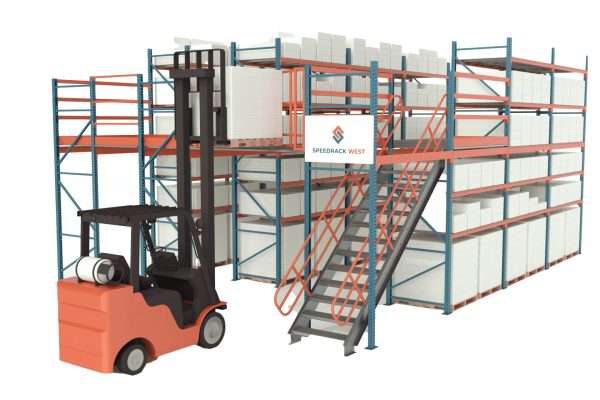
Mezzanines—especially those built on pallet rack systems—must always be anchored. Anchoring is a code requirement and essential for obtaining the permits.
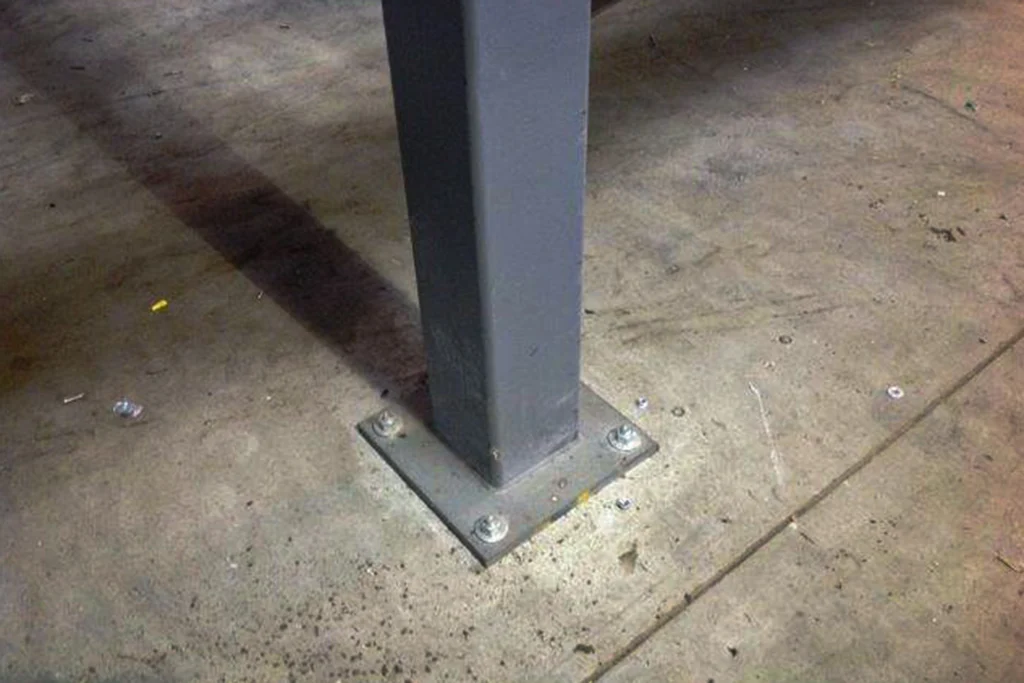
While the supplier will provide the anchoring design, calculations, and drawings, it’s your responsibility to verify that your slab can support the load. Ignoring slab conditions can lead to failed inspections or structural issues.
Installation and Freight Scope
Some suppliers bundle this; others don’t. Always confirm exactly what’s included in your quote to avoid unexpected costs. While the supplier typically arranges freight, you’re responsible for inspecting the shipment upon delivery. Check the kit for any missing or damaged components before installation begins.
If delivery is handled by subcontractors, ask how the shipment will be verified and who is responsible for confirming the completeness of the kit. On your end, make sure you have precise material specifications to cross-check against what arrives. This helps prevent delays or confusion during installation.
Gray Areas You Must Clarify in the Contract
Here’s where most projects go sideways — not from bad intentions, but missed details.
What Can Go Wrong If You Don’t Review These
Skipping these checks can derail your project:
Additional Questions to Ask Before Signing
Before you sign a mezzanine system contract, ask:
For a deeper dive into vetting suppliers, see our in-depth article: 15 Questions to Ask Before Buying a Mezzanine System
Work With a Vendor That Covers It All
At Speedrack West, we make it fast, easy, and right. Our team:
Want One Vendor for Design, Permits & Install?
Skip juggling suppliers, engineers, and installers. We’ll engineer your mezzanine, support permits, and spell out scope, freight, and installation in one clear, code-compliant contract.
Used Resources
Was this helpful?