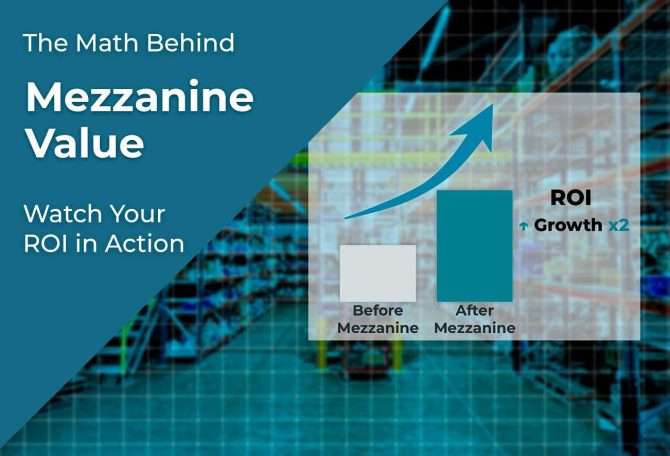

We get it. So here’s the direct answer you came for—plus a bit of helpful context to guide your decision.
Why ROI Matters When Choosing a Mezzanine
When it comes to return on investment (ROI), we work with a basic formula:

But here’s the challenge: both key components—gains and investment—aren’t always easy to pin down. Gains depend on a mix of factors like market demand, pricing, and our own costs. While we can estimate the initial investment (let’s say roughly $150 per square foot¹) and calculate expenses, the potential gains remain uncertain.
That’s why it’s not really a matter of expenditures. We’re willing to accept the cost, as long as the value is clear.
Here’s a simple analogy: Imagine watering a garden. You could use a spoon—it’s cheap and might conserve water—but it takes forever, and the plants may not survive. Or, you invest in a hose. It costs more upfront and uses more water, but it gets the job done efficiently and leads to a full, healthy harvest.
Now, imagine you want to expand your garden. Does your previous approach still make sense? Can it scale with your new goals?
The real question is: Are your costs productive or counterproductive? And more importantly, will they deliver measurable value in the near term?
Real-Life Cost: Mezzanine System Comparison²
| Mezzanine Type | Cost per Sq. Ft. | Description / Features |
|---|---|---|
| Basic Steel Mezzanine | $30–$60 | Standard structure and installation; suitable for most general warehouse needs. |
| Heavy-Duty Steel Mezzanine | $60–$100 | Engineered for high load capacity; ideal for heavy equipment or dense storage. |
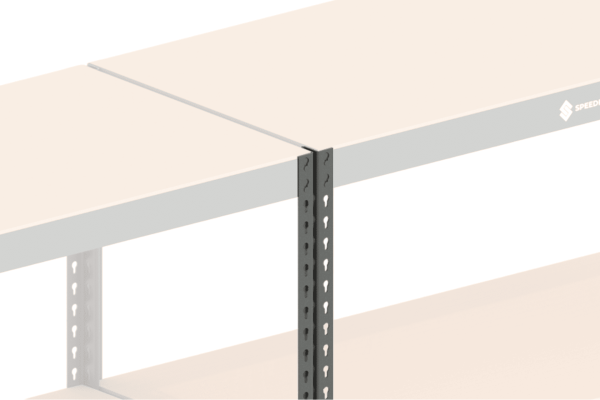
| Wooden Mezzanine | $20–$50 | Budget-friendly mezzanine structure; less durable and best for lighter loads or temporary use. |
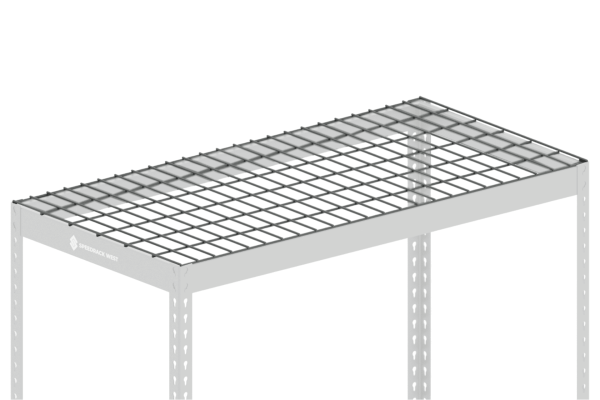
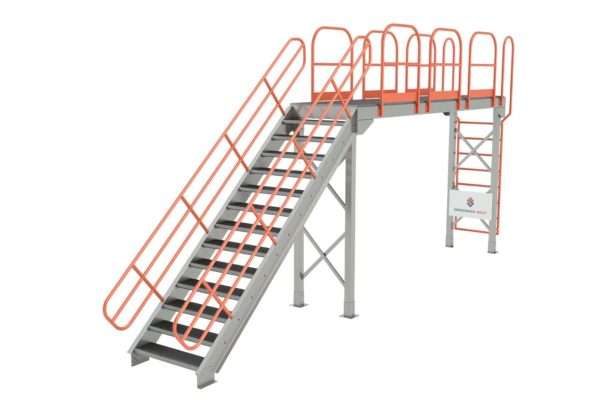
| Custom Designs | $100–$200+ | Multi-level layouts or added features (e.g., stairs, railings, custom finishes). Tailored to unique requirements. |
Please note: Final costs for mezzanine materials may vary depending on your location, the country of origin, and factors such as design, materials used, and where the mezzanine is manufactured or delivered from
Mezzanine System ROI: Simple Calculation Example
A leading e-commerce marketplace faces surging order volumes and increasingly tight fulfillment timelines. The warehouse operation is complex, managing over 275,000 SKUs across a diverse product range, including electronics, clothing, cosmetics, food items, and building materials. Each product category requires specific handling and storage conditions.
Order Profile and Operational Challenges
- Order Mix: Approximately 40% of orders are single-line, meaning each order contains just one SKU and must be picked and processed separately. Multi-line orders are picked together in a single tote, then sorted by order during packing.
- Order Size: Most orders contain only 2–3 SKUs, with no clear “core” assortment-no single product dominates the order mix.
- Storage Duration: Goods may remain in the warehouse from several hours to several weeks before shipment, depending on demand and product type.
- Delivery Model: The majority of orders are shipped via courier directly to customers’ homes, driving the need for rapid and accurate fulfillment.
- Scalability: Peak periods require the warehouse to scale up operations quickly, but expanding the building’s footprint is not feasible.
Pain Points Without a Mezzanine System
Operating on a single-level warehouse layout presents several critical issues:
- Wasted Vertical Space: The facility’s height is underutilized, limiting storage capacity.
- Inefficient Picking: Workers must travel long distances to locate and pick items, especially with such a broad SKU assortment and scattered inventory.
- High Labor Costs: Manual picking per unit, especially for single-line orders, results in a high share of wages within total goods cost.
- Capacity Constraints: Limited storage space leads to frequent stockouts and shipping delays, undermining customer satisfaction and competitive advantage.
Mezzanine ROI case study
| Metric | Before Mezzanine | After Mezzanine |
|---|---|---|
| Storage Capacity | 100,000 SKUs | 275,000+ SKUs↑ |
| Space Utilization | ~55% | ~90%↑ |
| Picking Time per Order | 18–25 mins | 10–12 mins↓ |
| Labor Cost per Pick | $2.95 | $1.49↓ |
| Daily Orders Processed | ~8,000 | ~15,000↑ |
| Orders Shipped Within 1 Hour | ~60% | ~92%↑ |
| ROI Payback Period | — | ~2.5 years |
Note: Average picker salary in the U.S. = $34,117/year³
This equals about $16.40/hour. Assume an average picker works 2,000 hours/year (approx. 40 hrs/week × 50 weeks). Now let’s estimate how many picks per hour a picker can make.
Before maximize warehouse footprint:
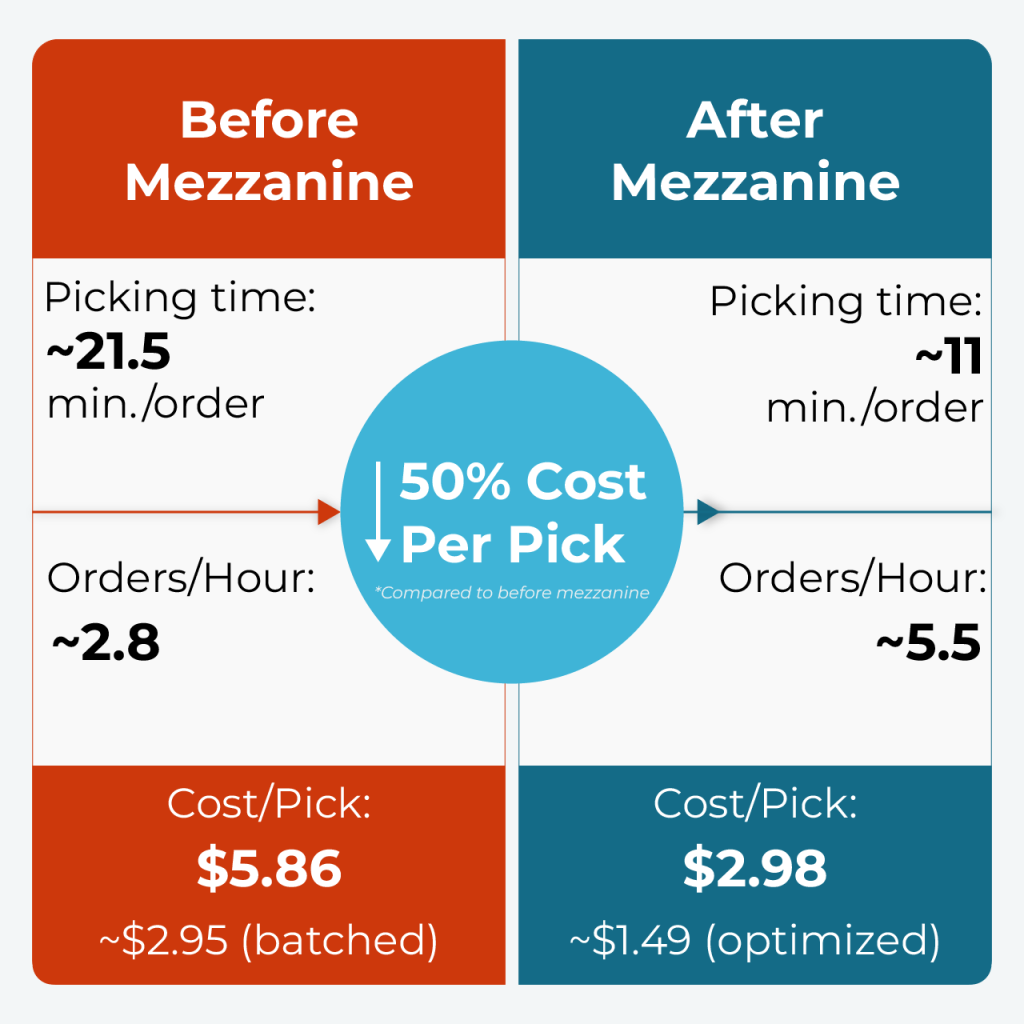
- Picking time per order: 18–25 minutes (avg. ~21.5 mins). That means ~2.8 orders/hour.
- Let’s assume 1 SKU per order (due to single-line dominance), so 2.8 picks/hour.
- Labor cost per pick = $16.40 / 2.8 ≈ $5.86
- Effective cost with batching and overlap (oтe trip = many pics) reduced to $2.95
With Mezzanine Floor:
- Picking time per order drops to ~11 mins. That’s ~5.5 orders/hour.
- Labor cost = $16.40 / 5.5 ≈ $2.98
- Further optimized with conveyors/zone pick/batching drops to ~$1.49
- Raw math is high, but real-world ops (batch picking, zone picking, conveyors, etc.) drive the effective cost per pick way down.
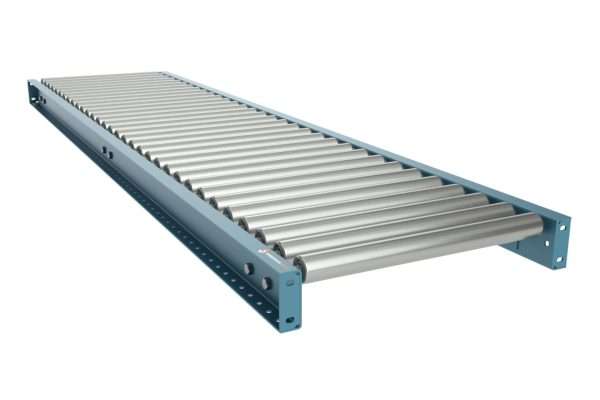
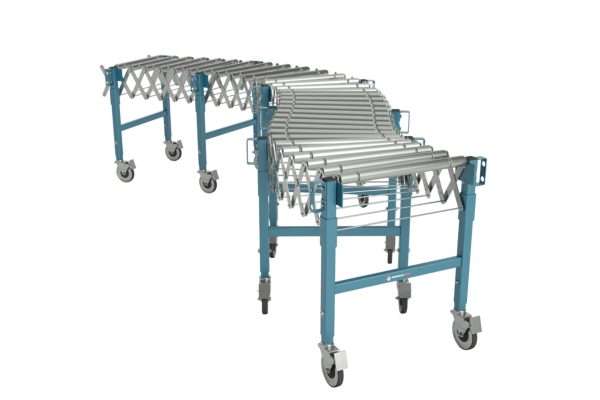
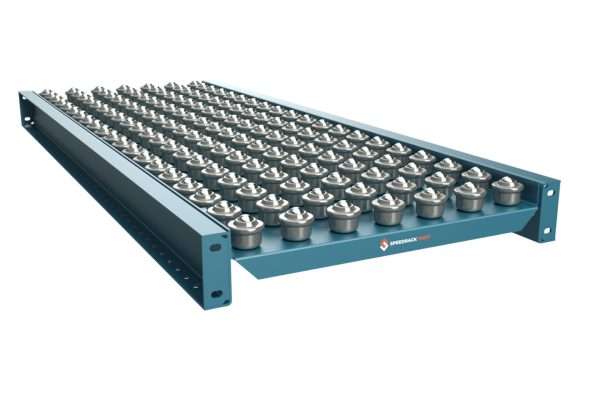
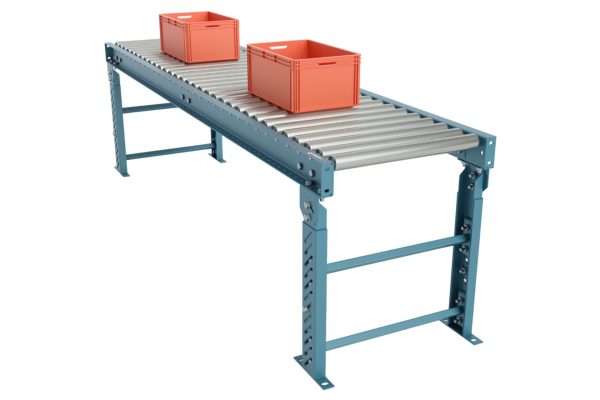
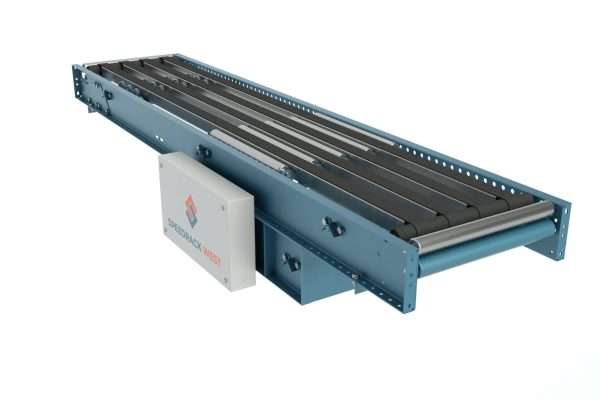
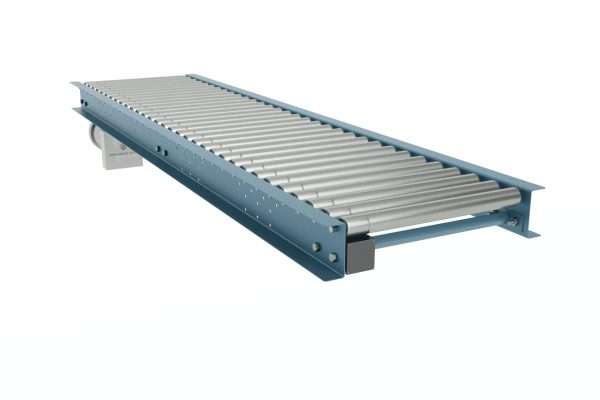
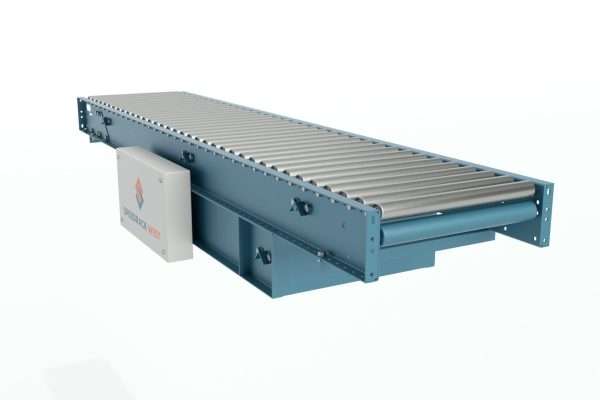
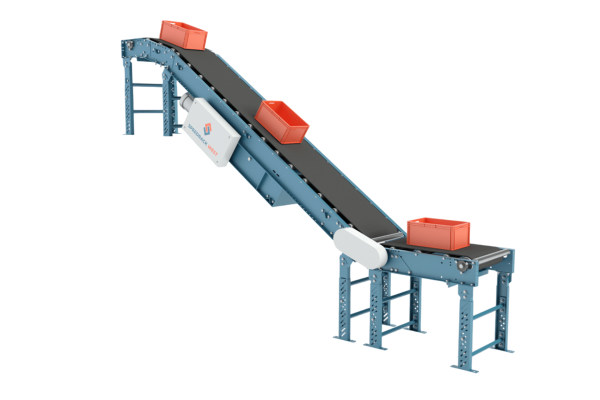
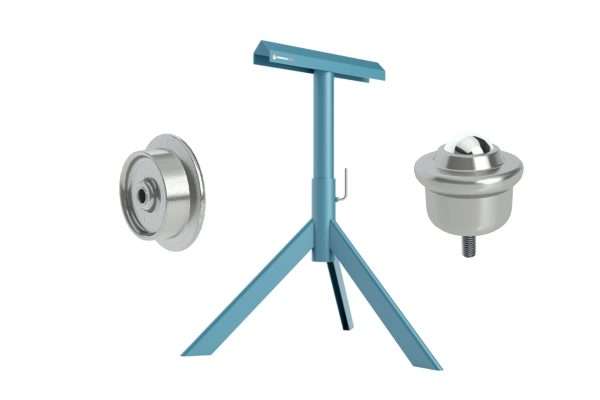
Yes, mezzanines are often integrated with conveyor systems or other “goods-to-person” systems, which can vary in type. You can operate with a gravity conveyor and spare the electricity, or spiral conveyors that maintain five or more mezzanine levels. It’s up to you.
See results like these in your warehouse.
Find out how much time and cost you could save with a mezzanine.
Maximizing Space Utilization With Mezzanine: Multi-Level Mezzanine with Conveyor Integration for Auto Parts Warehouse
Imagine a fast-moving distribution center that handles thousands of items daily for several fashion retail brands. Orders are flying in from online, in-store, and everywhere in between. The warehouse is under pressure to speed up order processing. So, how to separate product flows more efficiently, if it even sounds intense? Fortunately, there is a clear path forward: rethinking the entire order fulfillment system.
How does a mezzanine improve warehouse efficiency?
The heart of the solution is a shift to a Goods-to-Person model and revisiting warehouse CAD layouts. Instead of warehouse staff walking long aisles to find items, the items should move to them. Simple in theory, powerful in practice.
To make this work, you can design a continuous, end-to-end process—from receiving goods to final shipment—using two key technologies: a mezzanine floor and an integrated multi-conveyor setup.
Is a mezzanine system a good investment?
Definitely! Here is why.
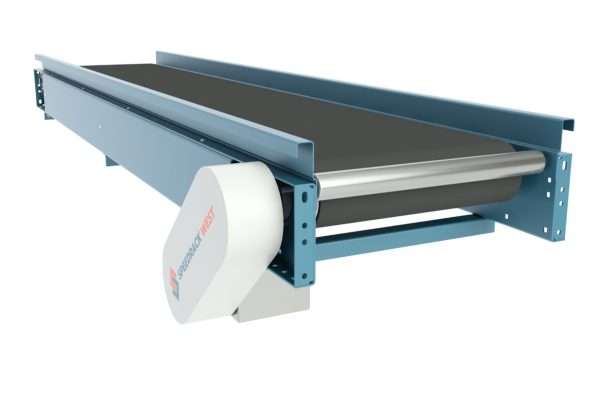
First, install a mezzanine floor and conveyors to route items instantly. Belt conveyors move incoming goods to the mezzanine storage floors. Zonal roller conveyors send plastic bins with high-priority items straight to the packing area via cross-dock.
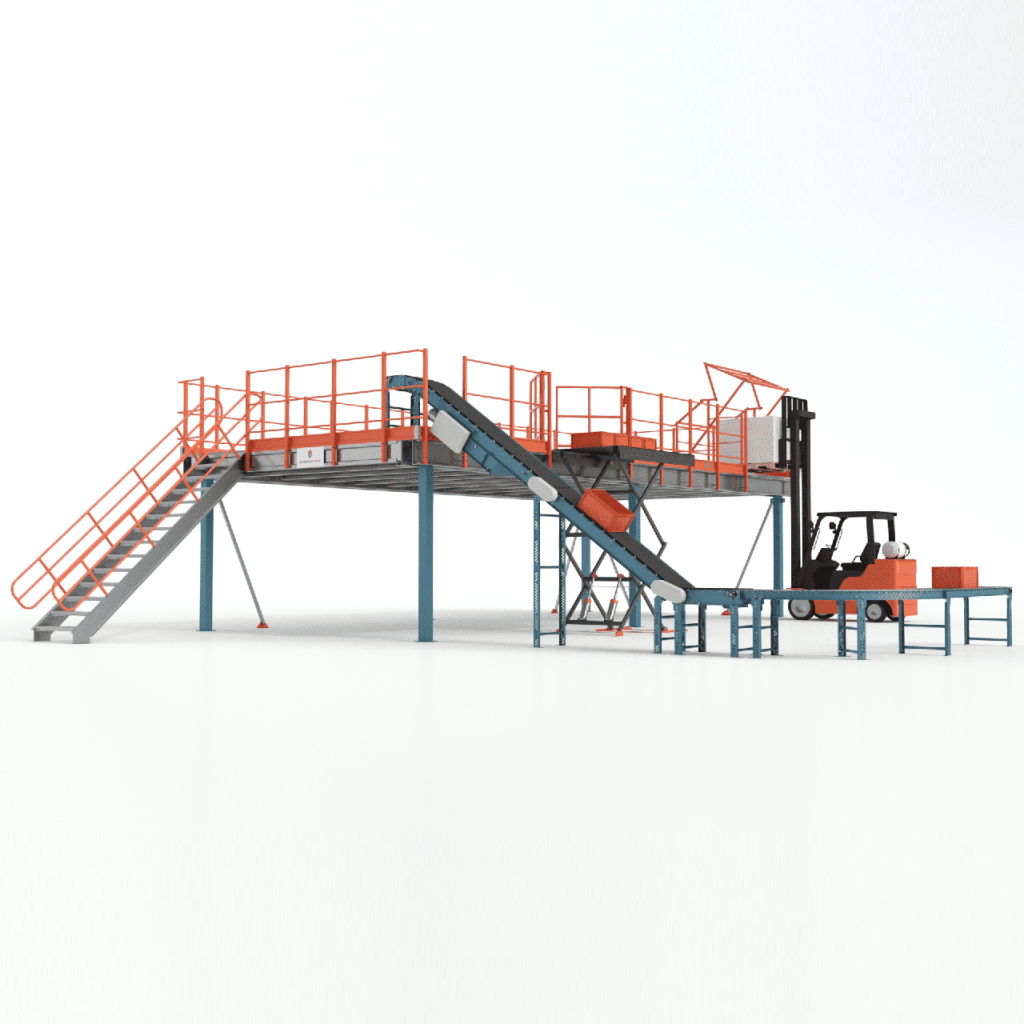
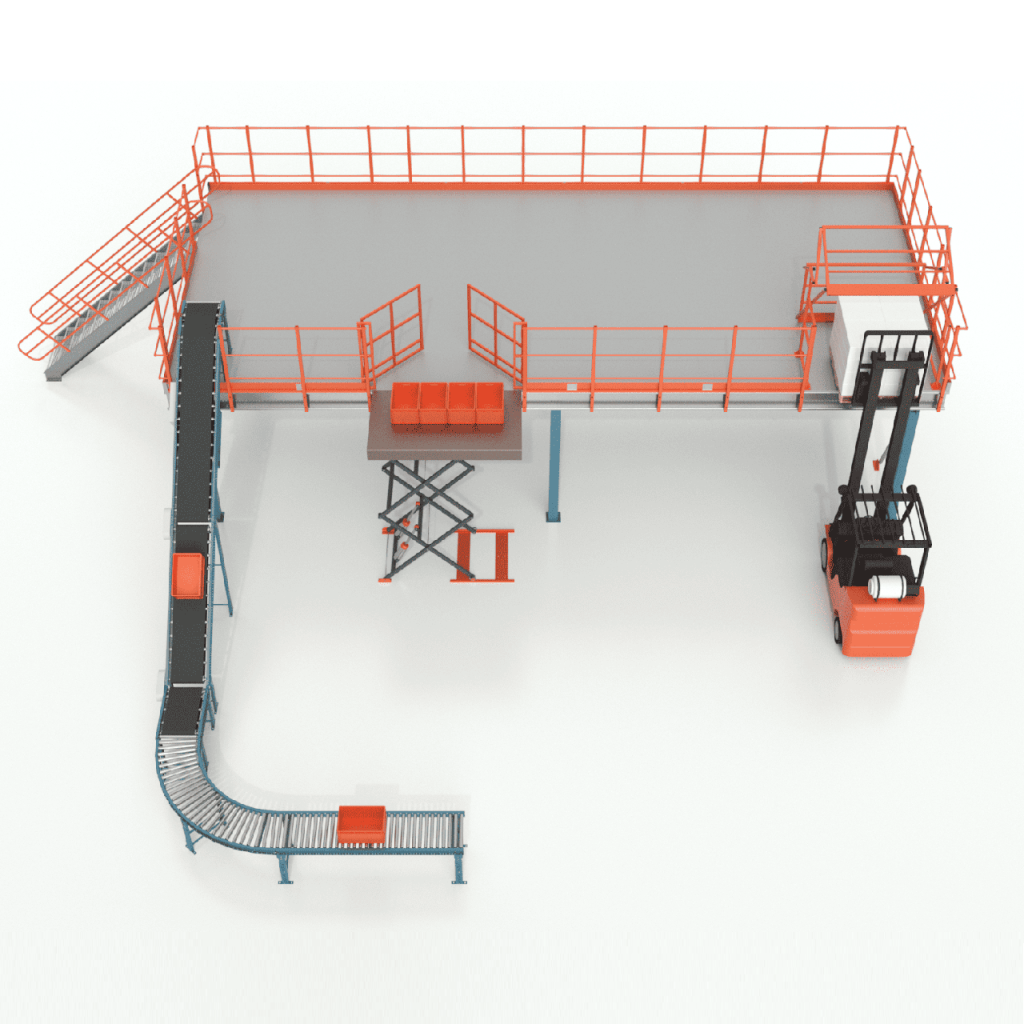
Then, set up smart receiving workstations. Operators now stay in one place, working at ergonomic desks. As goods arrive, they’re quickly sorted and sent off in the right direction—either to storage or straight to packing (if the item’s already sold).
How does a mezzanine improve warehouse efficiency?
The mezzanine gives you vertical space; the conveyors give speed and separation. Together, they eliminated the need for forklifts or walking long distances. Every product now flows smoothly—whether it’s going into storage or directly out the door. No stops, no bottlenecks.
The Outcome
- A fully integrated, nonstop fulfillment flow
- Clear separation between storage and shipping paths
- Faster order processing
- Better use of warehouse space
This case proves that with the right layout and tech, investment in even the busiest warehouses can bring great results.
Space Optimization Without Relocation
Mezzanines Increase Usable Square Footage
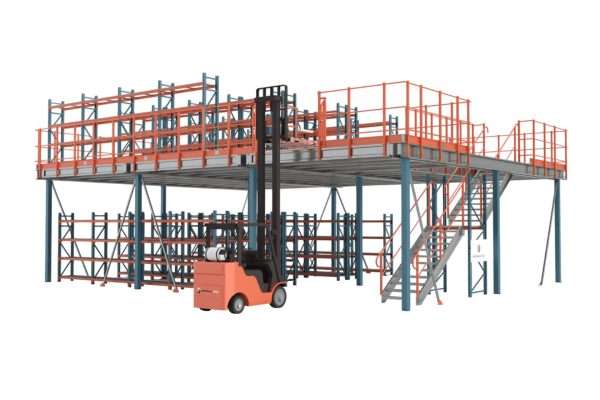
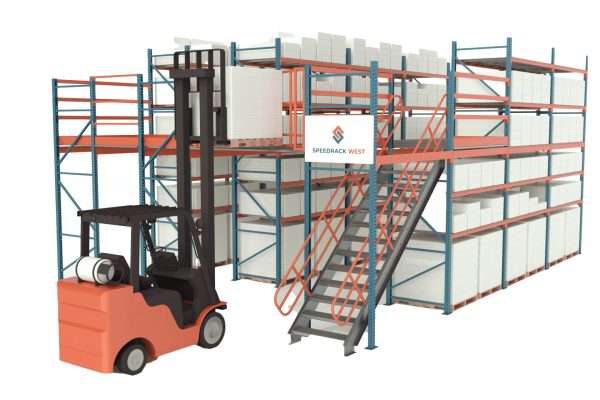
Industrial mezzanine systems allow warehouses to capitalize on unused vertical space, effectively doubling or tripling storage capacity without expanding the building’s footprint. This approach is particularly beneficial for facilities constrained by zoning regulations or high real estate costs. Let’s dive deeper.
Cost Comparison: Mezzanine vs. Moving or Leasing New Warehouse Space
Constructing a mezzanine typically costs between $60 and $70 per square foot⁴, depending on design complexity and materials used. We explore the key elements that affect mezzanine floor costs in our article How Much Does a Mezzanine Floor Typically Cost?
In contrast, building a new warehouse can range from $55 to $70 per square foot, but excluding additional expenses such as land acquisition, permitting, and potential downtime during relocation. Therefore, mezzanines offer a cost-effective alternative to new construction or leasing additional space.
Real Estate Savings Over 5–10 Years
Skipping the hassle of new construction or moving means businesses can save a lot on real estate costs over the next 5 to 10 years. That’s a typical mezzanine payback period. You’ll pay less in property taxes and utilities, and you’ll avoid all the extra costs that come with relocating—like permits, moving crews, and downtime that eats into productivity.
Cost Snapshot: Mezzanine vs. New Warehouse
Mezzanine Construction: $60–$70 / sq ft
New Warehouse Build: $55–$70 / sq ft + land, permits & downtimeMezzanines offer comparable build cost — without the hidden expenses of relocation or construction delays.
Durability and Maintenance Costs
When you’re considering a warehouse expansion without construction, durability is key. A high-quality mezzanine system typically lasts 30 years—or even longer with proper care. That kind of lifespan positions it as a true capital investment, especially when compared to traditional construction or warehouse relocation.
What really adds to the mezzanine long-term value is the low cost of upkeep. Unlike heavy construction projects that come with high ongoing maintenance, a mezzanine has fewer moving parts and fewer surprise expenses. Plus, the installation process is quick and minimally disruptive. That means no long shutdowns, no massive operational delays—just a fast path to a more efficient space.
The result is a cost-effective warehouse expansion that supports scalable warehouse solutions and high-density storage for years to come.
How to Estimate ROI for Your Project
So, how do you calculate ROI on a mezzanine floor? The basic formula is simple and is shown above.
But the real value lies in the details. To calculate your mezzanine system ROI accurately, consider these key factors:
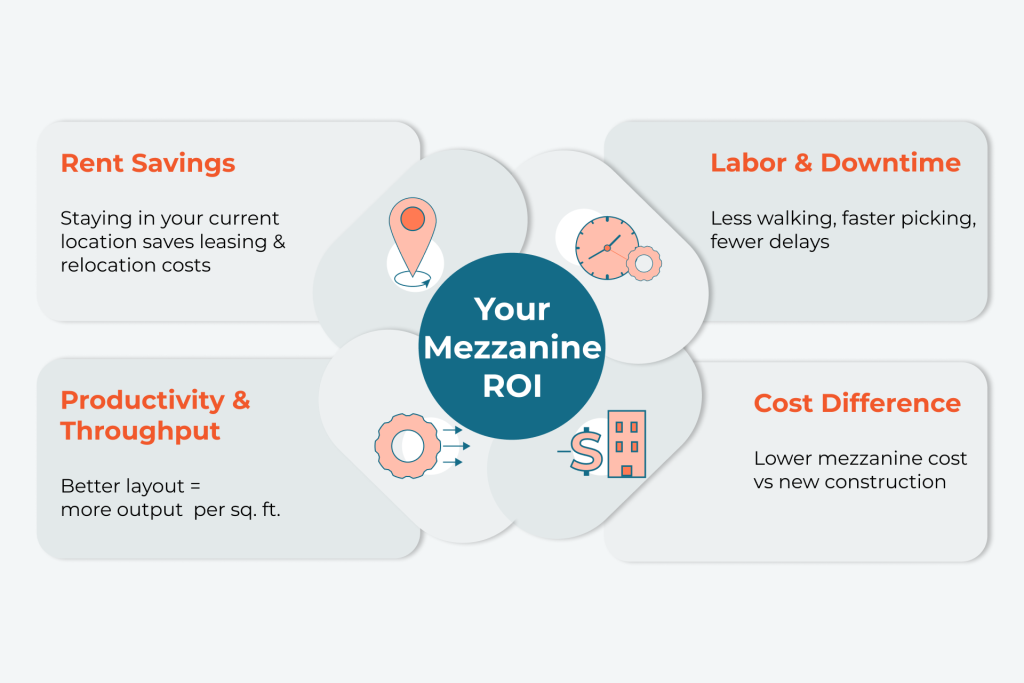
With the right layout, a mezzanine can pay for itself faster than you think. The payback period for a mezzanine will depend on the use case and maintaining occupancy, but it often compares very favorably to traditional methods of warehouse expansion.
Need help running the numbers? Speedrack West can help you estimate your mezzanine installation ROI based on your specific layout, inventory, and growth goals.
Final Thoughts: Is a Mezzanine a Smart Investment?
If you’re still asking “Is a mezzanine system a good investment?”—the answer, for most growing warehouses, is a solid yes.
A mezzanine offers unmatched warehouse mezzanine investment value: it increases storage density, enhances layout flexibility, and improves operational efficiency without major construction or relocation. It supports your warehouse growth strategy while helping you maximize warehouse footprint and avoid relocation costs.
In short, the return on investment mezzanine solutions offer is about more than square footage—it’s about long-term gains, scalability, and smart planning.
Ready to see your real ROI?
Talk to Speedrack West and get a custom mezzanine ROI estimate for your facility.
Used Resources

Was this helpful?