
How It Works
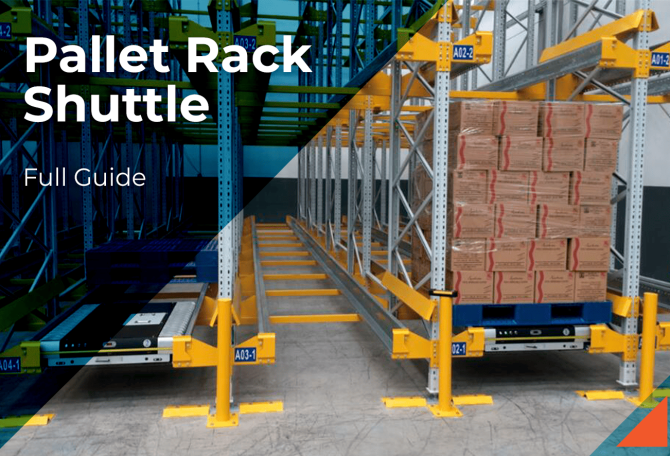
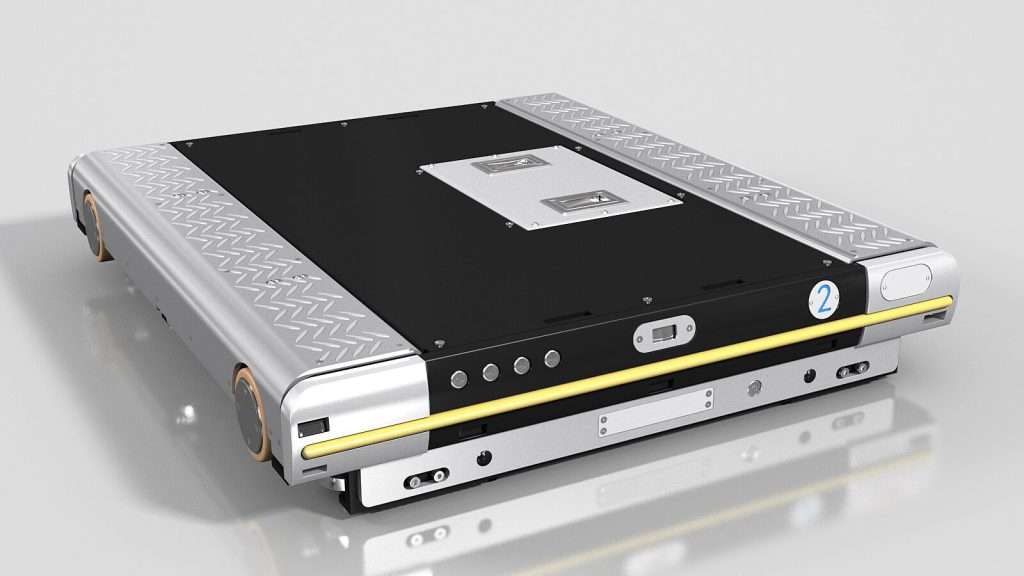
At the heart of the advanced Pallet Rack Shuttle System is the Shuttle Car. The low-profile car is designed to conveniently pass underneath pallets.
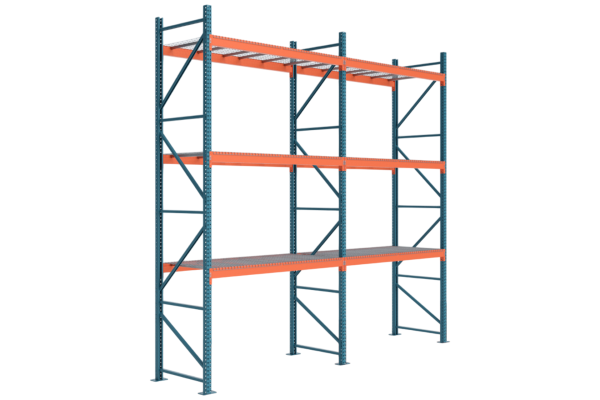
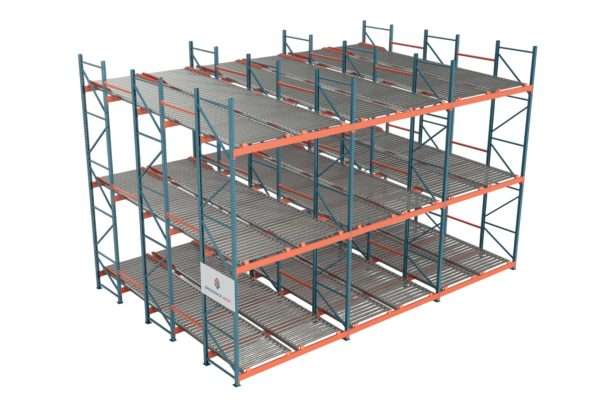
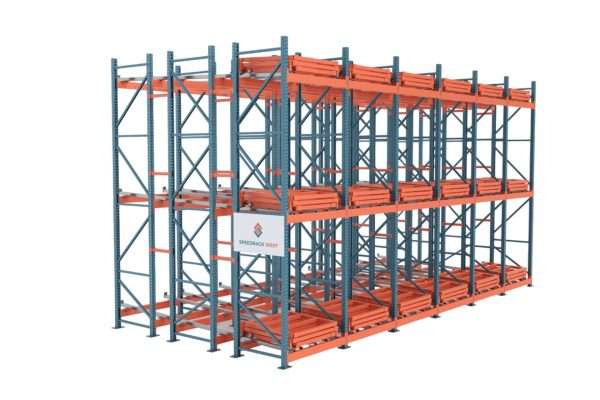
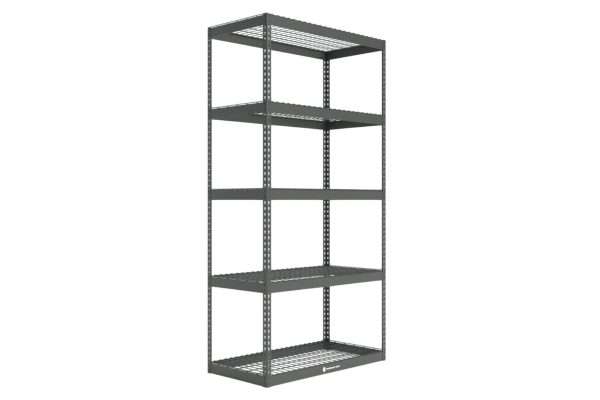
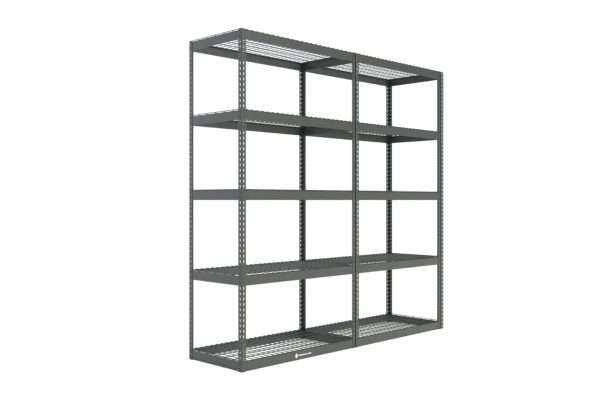
Pallets are stored on specially designed pallet racking that is outfitted with guide rails and tracks to accommodate the Pallet Shuttle Car.
When the car arrives at the desired pallet, a platform raises to support the pallet and elevate it a few inches. The shuttle car then smoothly transports the pallet to the front of the racking system for easily removal of a pallet.
The shuttle car is battery powered, which helps reduce emissions in your warehouse. The storage system comes complete with a battery, charger and remote control.
Key Specifications
- Maximum Load Capacity: 3,300 lbs
- Speed: 5 ft / second (no load), 3 ft / second (with load)
- Pallet sizes: Compatible with most common pallet sizes in the USA
- Battery: 48V, 30AH
- Run Time: At least 8 hours on a single charge
- Charge time: 3 hours
- Battery Life: 1000 charge cycles
- Noise level: < 60db
Additional technical specifications available upon request.
Safety Features
The Shuttle Car is outfitted with numerous sensors to detect pallets and obstacles. When sensors detect an obstruction in the path, the shuttle will come to a stop and sound an alarm to notify users of an issue.
The car also contains resistance sensors. When storing pallets close together, the car will detect when two pallets are touching and gracefully releases the pallet.
Benefits of a Pallet Rack Shuttle System
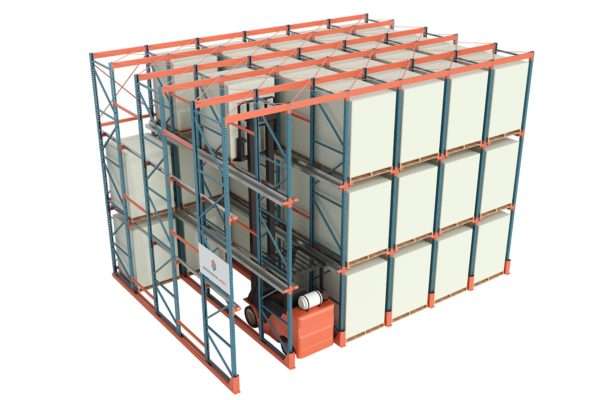
The Pallet Rack Shuttle is sometimes compared to a drive in / drive thru racking system because it allows a similar storage density. However, the shuttle provides significant advantages over other racking systems.
Safety
To retrieve pallets stored in the middle of a drive-in rack system, the forklift operator has to drive down a very long and narrow racking aisle, lift the pallet, and then reverse back out of the long and narrow racking aisle.
Have you ever seem what happens when a forklift operator makes a mistake and accidentally bumps into pallet rack? The whole warehouse can fall down, and people can get seriously injured or die.
Forklift operators can make simple mistakes like that even with normal aisles. The risk of an incident goes up as they drive deeper into the racking system.
The risk is further increased because the place where a user is most likely to make a mistake is when they are deep inside the racking system. This puts the operator at even greater risk if an accident were to happen – they would buried deep inside a collapsed rack system.
Risks are greatly reduced by using a Pallet Rack Shuttle System.
- Forklift operators do not need to drive down narrow aisles to retrieve a pallet
- Forklifts stay in normal aisles where operators are most familiar and comfortable
- In the event of a racking incident, the employee would not be deep inside the racking system
Efficiency of a Shuttle Rack
The shuttle system provides significant efficiency gains.
Drive Distance
Forklifts only need to come to the correct bay. The shuttle car then retrieves the pallet. Secondly, it brings the pallet to the front of the rack. The pallet is loaded by the forklift. The forklift saves time and fuel by not having to drive down a deep rack aisle.
Time
While the forklift removes one pallet (ie, for loading on a truck), the shuttle car can go to retrieve the next pallet and bring it to the edge of the rack system. This makes it much quicker to unload a bay of pallets using the Pallet Rack Shuttle System.
Automated Storage & Retrieval System
(AS/RS)
A mechanized rack system that automates storing and retrieving pallets, eliminating or minimizing forklift aisle entry.
Pallet Shuttle
(Shuttle Cart)
A battery-powered electric vehicle that travels along rails inside rack lanes to move pallets autonomously .
Rail-Guided Shuttle System
Synonym for pallet shuttle systems; features rails within lanes guiding shuttle movement .
Shuttle Entry
(Channel)
The lane or channel within racking where forklifts load pallets and the shuttle operates.
LIFO
(Last-In, First-Out)
Inventory method where the most recently stored pallet is the first to be retrieved—common with shuttle systems .
FIFO
(First-In, First-Out)
Inventory method where pallets are retrieved in the same order they were stored; requires dual-access lanes.
Deep-Lane Storage
Long, uninterrupted rack lanes designed to hold multiple pallets using shuttle technology.
Was this helpful?