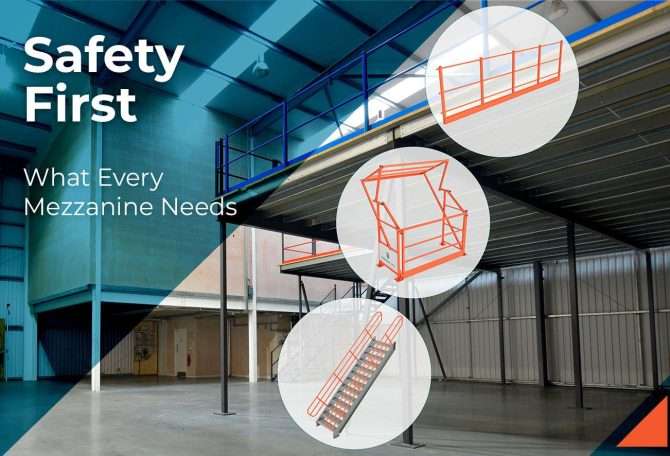

Stairs & Stairways
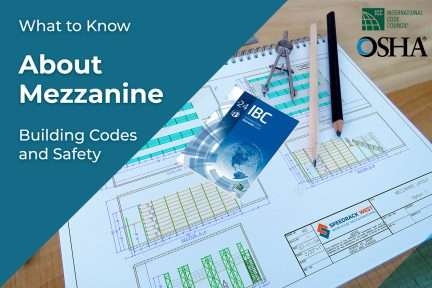
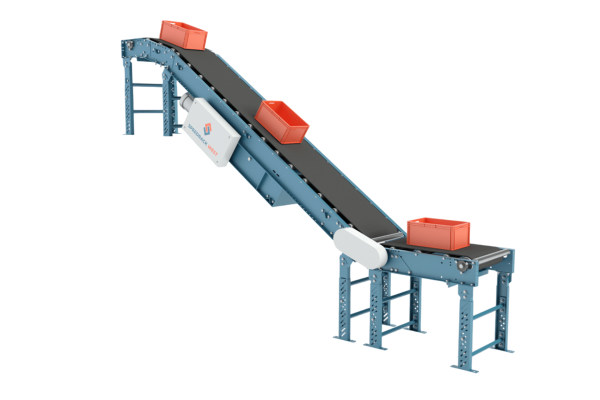
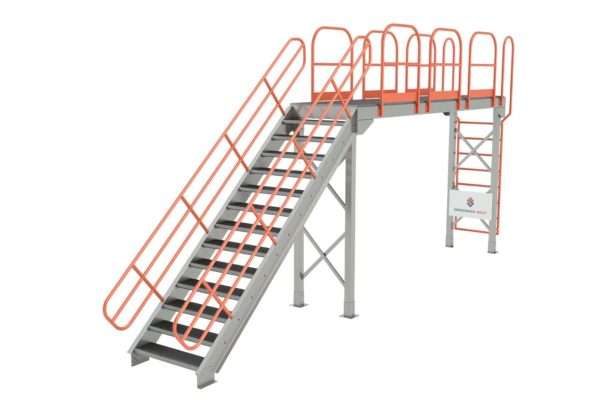
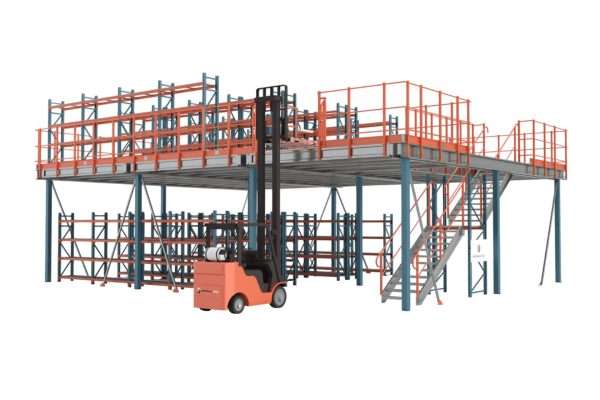
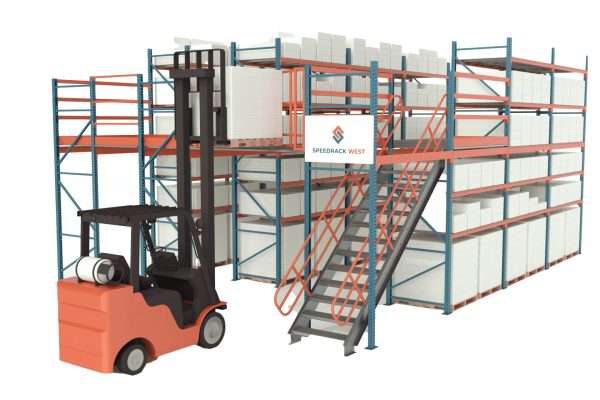
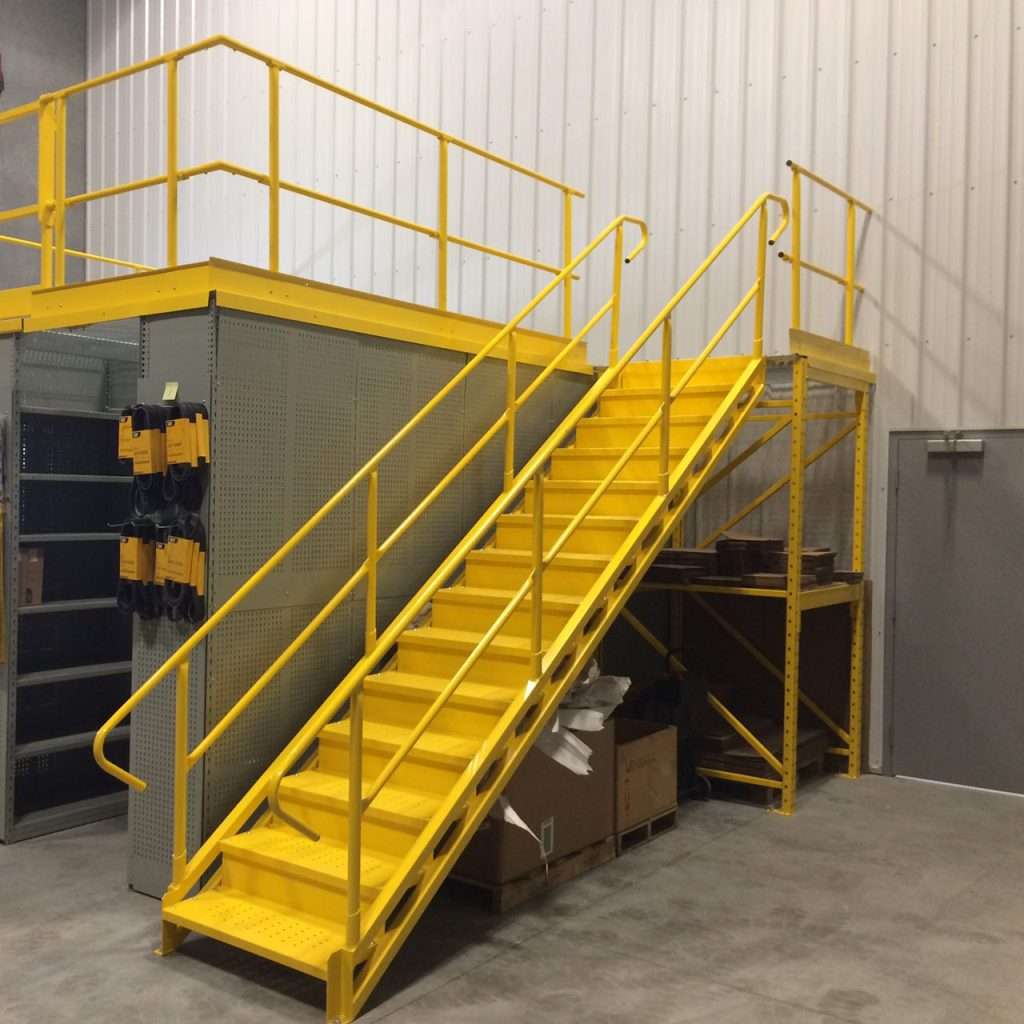
A mezzanine is more than just a platform that divides a facility’s space into multiple levels. Its primary function is to support your operations—whether that means providing additional office space for employees, expanding shelving storage, or maintaining efficient picking processes with conveyors. First things first, you need a reliable way to transport both products and workers to the mezzanine levels. This can be achieved through conveyors, lift tables, or stairs. However, stairs are mandatory according to OSHA and IBC requirements.
OSHA standard 1910.21 includes definitions of various safety devices applicable to all industrial workplaces. It covers all walking-working surfaces. Let’s dig into this Standard.
“Stair rail or stair rail system means a barrier erected along the exposed or open side of stairways to prevent employees from falling to a lower level. Standard stairs means a fixed or permanently installed stairway. Ship, spiral, and alternating tread-type stairs are not considered standard stairs.”
To understand the stair rise and tread dimensions, clarify the stair angle against the table in 1910.25. Standard stairs have angles of 30 – 50. Less than 30 is a ramp, and over 50 is a ship and alternating tread-type stairs.What about the IBC regulations? IBC standards describe the requirements for commercial stairs in public spaces instead of industrial. You can use the following standards 1011.5.2 and 1011.6 to learn more about riser height, tread depth, and stair landing.
Stairways: Comparison of two standards
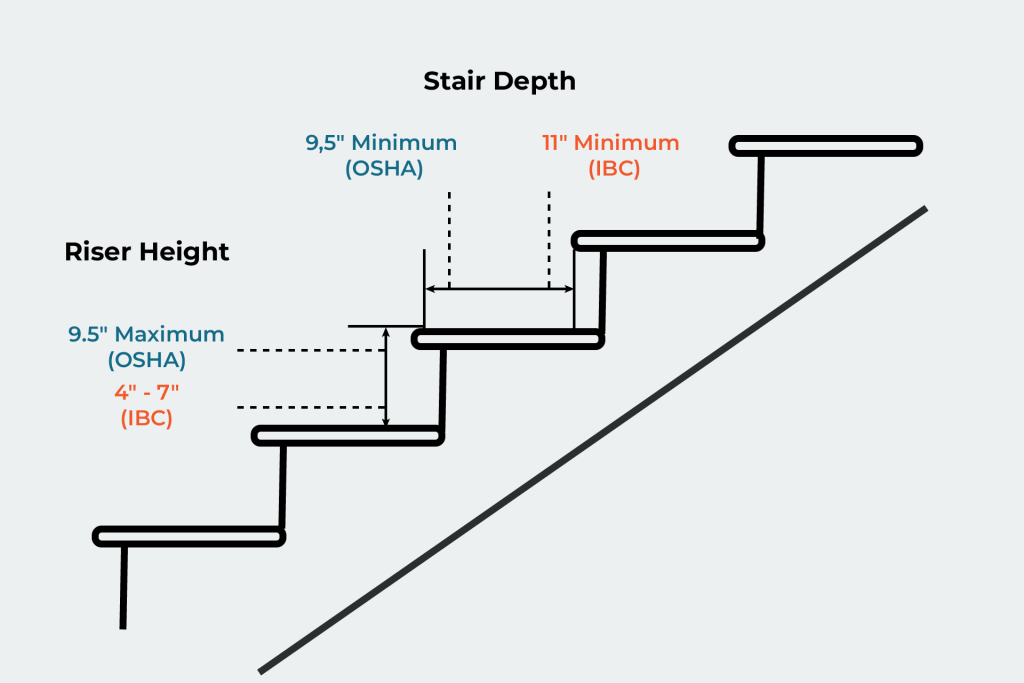
| Compliance | Stair Depth | Riser Height |
|---|---|---|
| OSHA | 9.5″ Minimum | 9.5″ Maximum |
| IBC | 11″ Minimum | 4″ – 7″ Minimum – Maximum |
As for handrails and guardrails. They are required for open-sided walking surfaces, including stairs and elevated platforms. According to IBC standards, stairways must not have gaps between handrails or guardrails large enough for a four-inch sphere to pass through. This measurement is designed to keep a child’s head from fitting through any part of the stairs, landing, or platform.
Guardrails & Handrails
Proper mezzanine guardrails and handrails prevent falls and provide support for employees moving across elevated platforms. Guardrails are required along open edges to prevent accidental falls. Handrails assist employees when using stairs or ramps, improving stability. The distinguishing feature is that OSHA 1910.29 (b) requires handrails to be on one side of the stairs, while IBC 1011.11 states that handrails must be on both sides of IBC stairs.
They must meet OSHA 1910.29, IBC 1011.11, IBC 1014.2 (which states that handrail height must not be less than 34 inches or more than 38 inches), and 1015.3 (guardrail height must not be less than 42 inches in height).
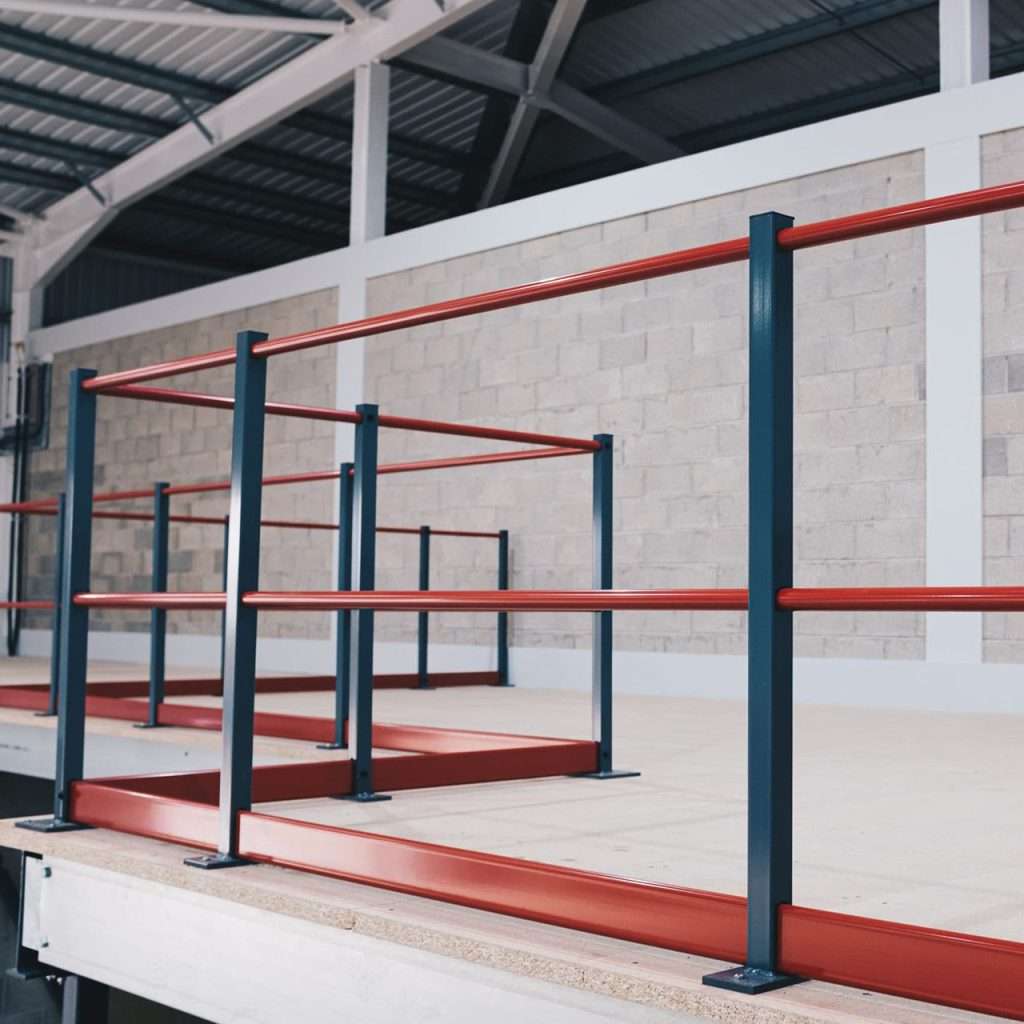
Guardrails: Comparison of two standards
| Compliance | Handrail Height | Guard Height |
| OSHA | 30″ to 38″ 36″ to 38″ — may also serve as guard (stair rail system) | 42″ — plus or minus 3″ 36 to 38″ (stair rail system) |
| IBC | 34″ to 38″ | 42″ minimum |
Safety Gates & Edge Protection
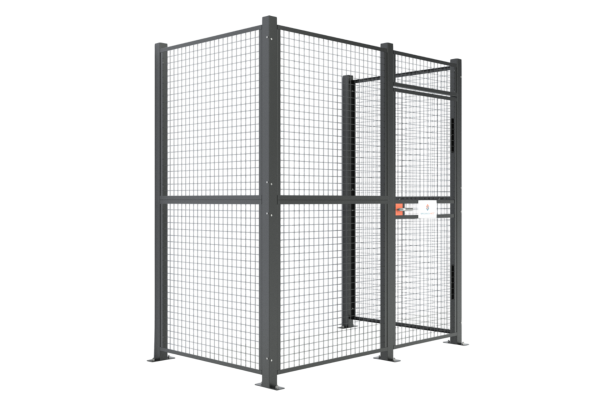
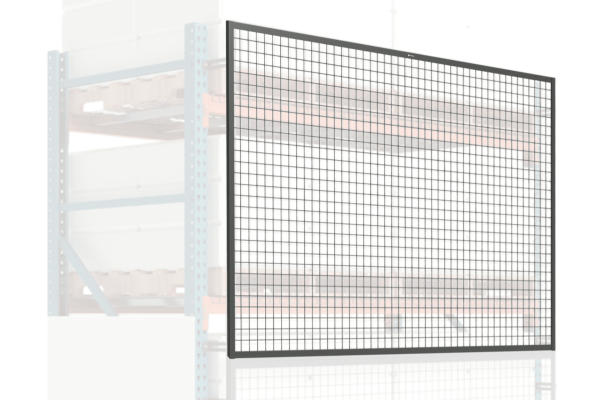
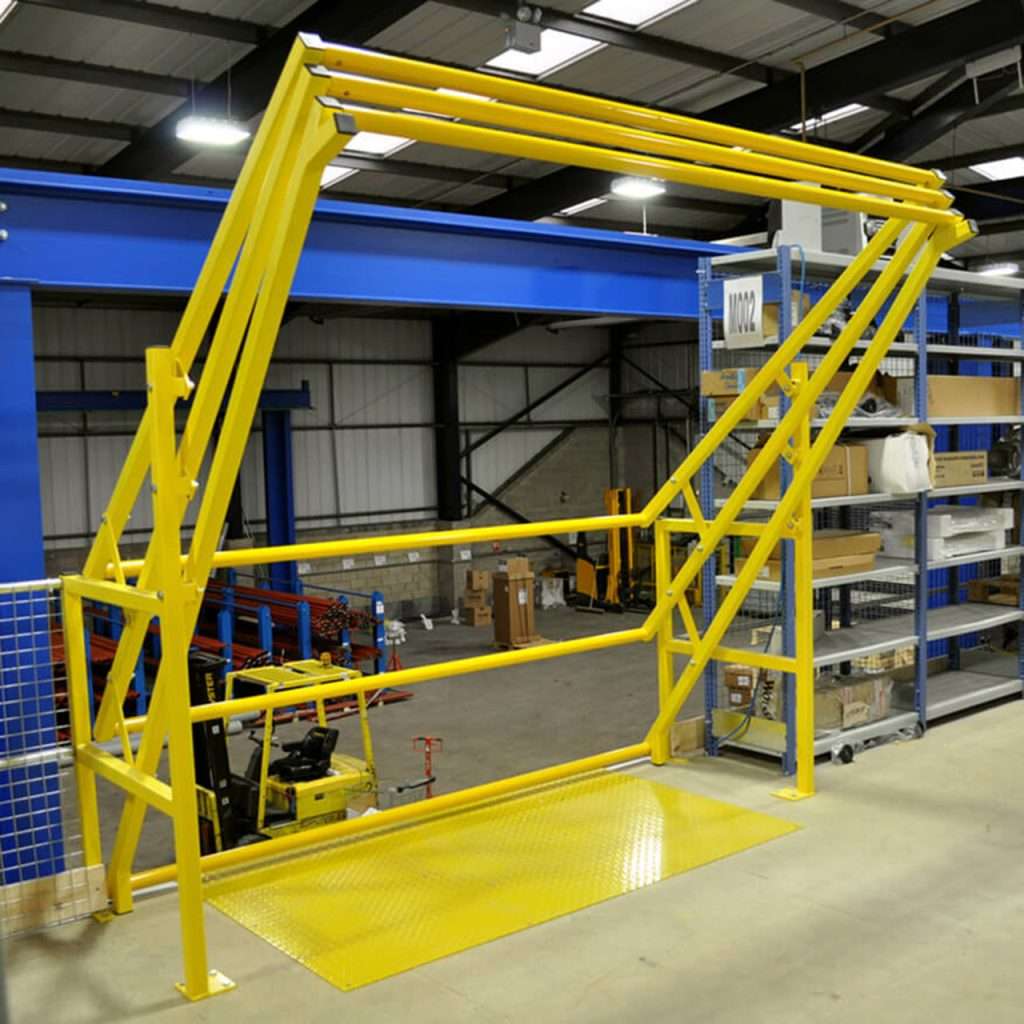
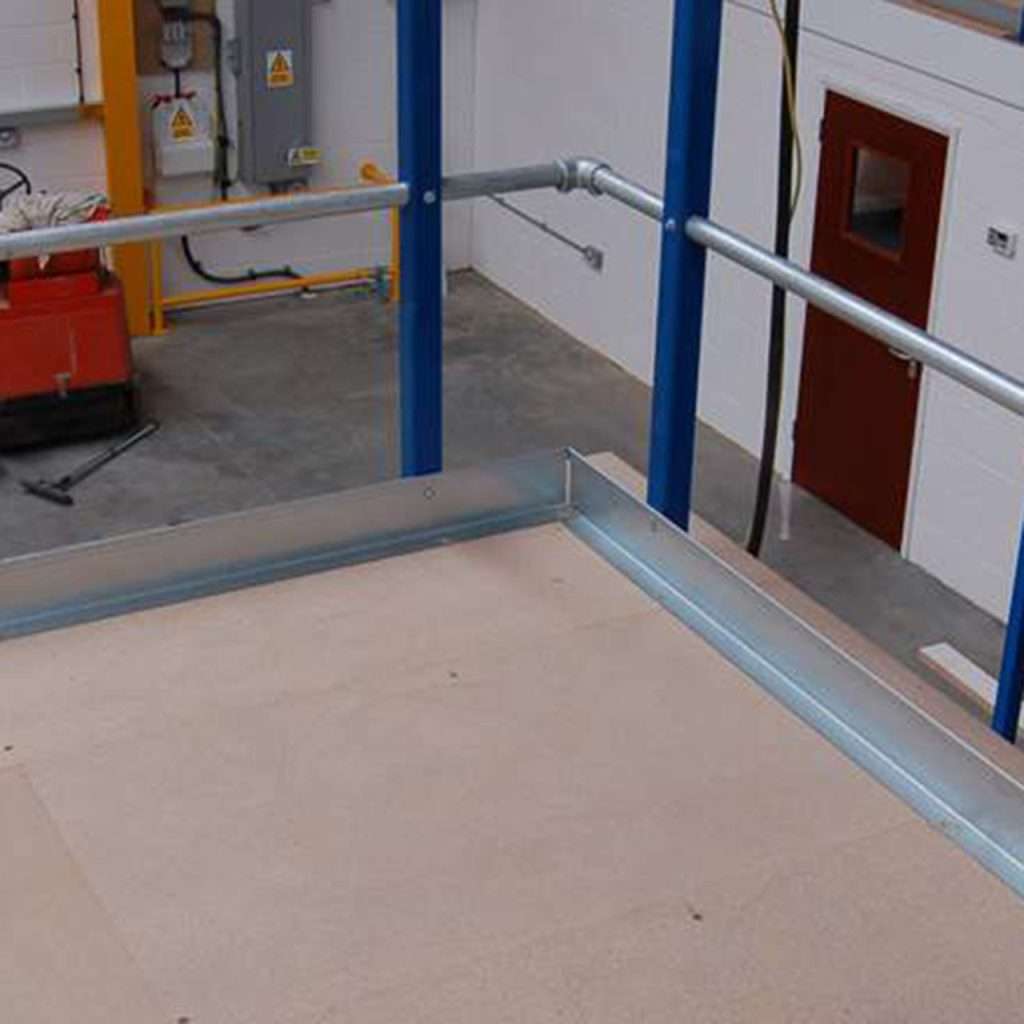
Pallet rack mezzanine safety gates and edge protection prevent unauthorized access and accidental falls when loading/unloading goods. Swing & Sliding gates control access while ensuring easy material handling. Self-closing safety gates automatically return to a closed position after use. Kick Plates are installed on all outside edges of the floor, under the handrails, to prevent objects from slipping off the mezzanine edge.
Fall Protection Systems
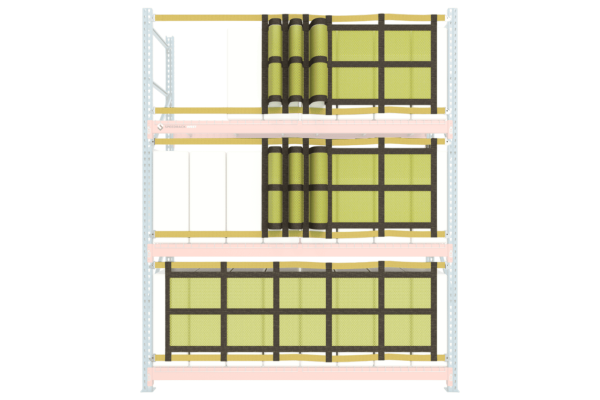
A comprehensive pallet rack mezzanine fall protection plan includes both passive and active measures. Safety netting is installed under mezzanines to catch falling objects and reduce injury risks. Lifeline & Harness systems are used in high-risk areas where guardrails are insufficient. Anti-slip flooring ensures traction in high-traffic zones to minimize slips and falls. Anti-slip stair nosings for a horizontal, protruding edge of a stair where most foot traffic occurs. They are specifically designed to assist visually impaired users under AS1428.4.
Fire Safety Compliance
A fire safety system is mandatory for pallet rack mezzanines to increase the protection of employees and inventory. Implement the following measures:
- Sprinkler Systems to suppress fires before they spread.
- Smoke detection & alarm systems provide early warning for evacuation.
For more details, refer to IBC Fire Safety Compliance: IBC 903 for fire sprinkler requirements and IBC 1009.3, 1009.4 or 1009.5 for egress pathways.
To wrap up, it’s important to note that while formal planning permission or detailed documentation may not always be required for mezzanine construction, you should still account for general local regulations. These rules can vary and must be considered to ensure compliance with building codes and safety standards.
Mezzanine Safety Features
| Feature | Function | Recommended For | Compilance |
| Stairs & Stairways | Prevents falls and provides lifting | All mezzanines | OSHA 1910.21, 1910.25 IBC 1011.5.2, IBC 1011.6 |
| Guardrails & Handrails | Prevents falls and provides stability | All mezzanines | OSHA 1910.29 IBC 1011.11, IBC 1014.2, IBC 1015.3 |
| Safety Gates | Controls access and secures openings | High-traffic mezzanines | OSHA 1910.23 IBC 1607.8 |
| Safety Netting | Protects from falling objects | Warehouses with overhead storage | ANSI A1264.1 |
| Surface | Reduces slip hazards | Wet or high-traffic areas | OSHA 1910.22 |
| Kickplates | Prevents small objects from falling | Inventory storage mezzanines | OSHA 1910.29 |
| Fire Safety Systems | Fire suppression and evacuation | Facilities with flammable goods | NFPA 13 IBC 903 |
| Emergency Exits | Ensures quick evacuation | All mezzanines | OSHA 1910.36 IBC 1009 |
We understand that every warehouse has unique safety challenges. Our team has likely handled a project similar to yours, and we can replicate and improve upon it while addressing your specific needs. Whether you need a complete mezzanine safety assessment or custom safety solutions, we are ready to assist.
Contact us today for a mezzanine safety evaluation and ensure compliance with all pallet rack mezzanine OSHA requirements, ANSI standards, IBC regulations, and local building codes.
From guardrails to gates, we’ll help you cover every safety detail.
Used Resources
Products, discussed in the article

Regulatory Compliance
Conforms to OSHA, IBC, ANSI, BS EN, and local standards.
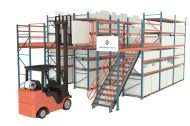
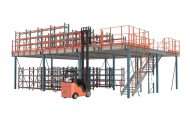
Mezzanine
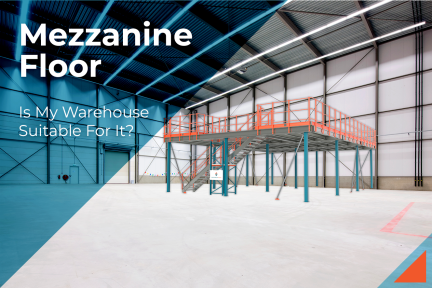
Is an elevated platform installed between the main floor and the ceiling of a warehouse, effectively creating an additional floor within the existing space. This structure utilizes vertical space to provide extra storage, office space, or work areas without the need for costly building expansions or renovations.

Was this helpful?