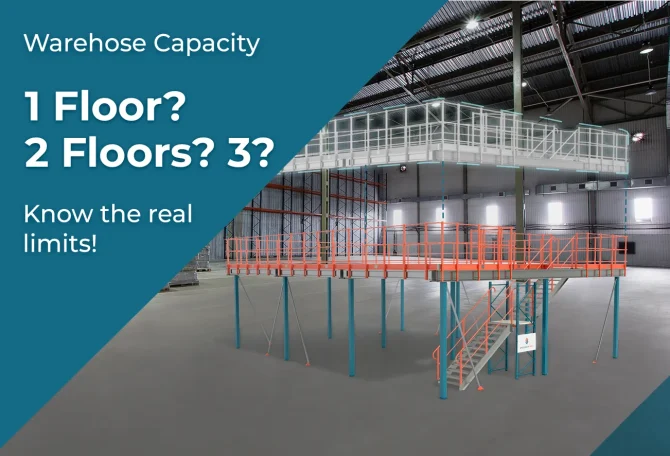

Let’s break down what’s possible, what makes sense, and what you need to keep in mind when planning to add extra floors inside your warehouse.
Can You Add More Than One Floor Inside a Warehouse?
The short answer: yes, but with limitations.
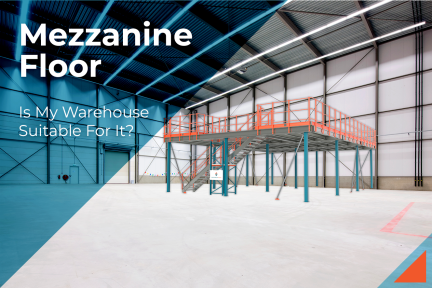
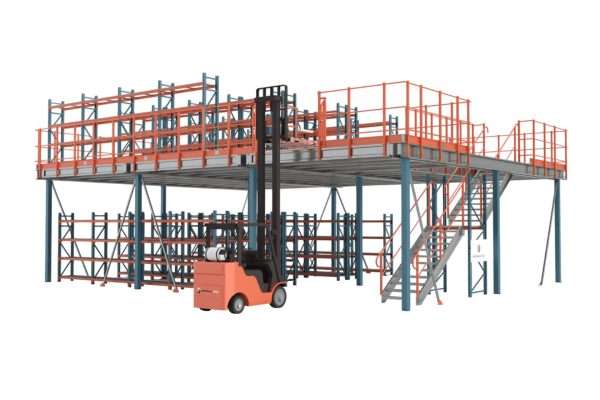
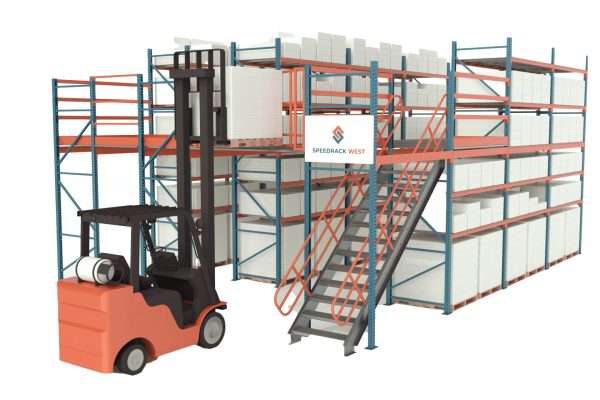
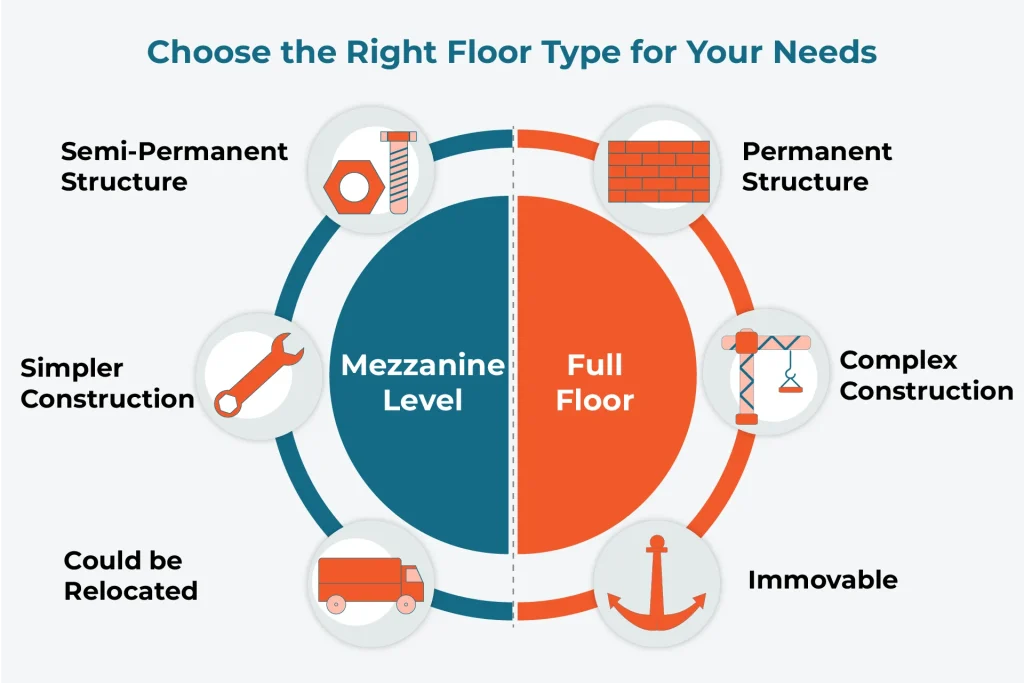
In most warehouse designs, it’s possible to safely add one or more internal levels—usually in the form of a multi-level mezzanine. This is especially useful if you’re looking for a temporary solution that you can take with you in case of relocation. A full floor, on the other hand, doesn’t offer that kind of flexibility. So, what’s the difference between a mezzanine level and a full floor?
- A Mezzanine Level is a semi-permanent, intermediate floor between the ground and the ceiling. Thus, these types of mezzanines are often used for storage or extra workspace. The key advantages? You can remove, reconfigure, or replace it as needed.
- A Full Floor (Structural Mezzanine) is a permanent, load-bearing level that spans the entire footprint of the building. It includes utilities and infrastructure similar to the main floor. Building a full floor is far more complex and requires significant structural planning.
Most warehouses are structurally designed to support one mezzanine level, but not every single one. Actually, there are plenty of examples where owners have added multiple mezzanine floors. Let’s dig into those stories and get inspired!
Real Examples of Multi-Level Mezzanine Use
Example A: Combining Mezzanines with Conveyor Systems
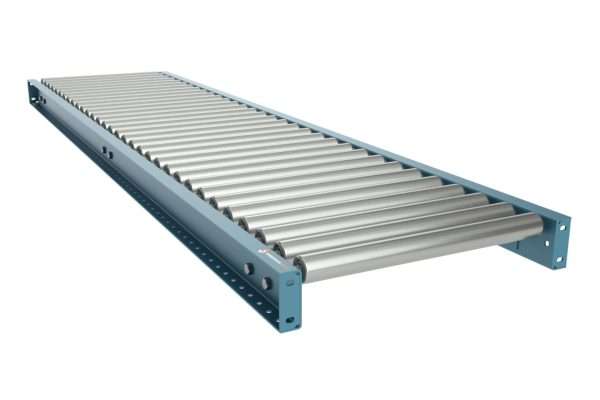
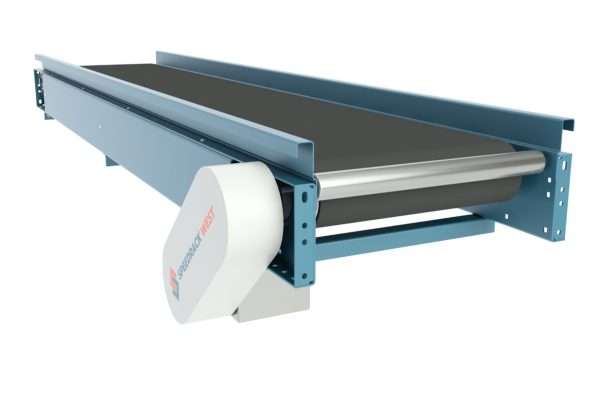
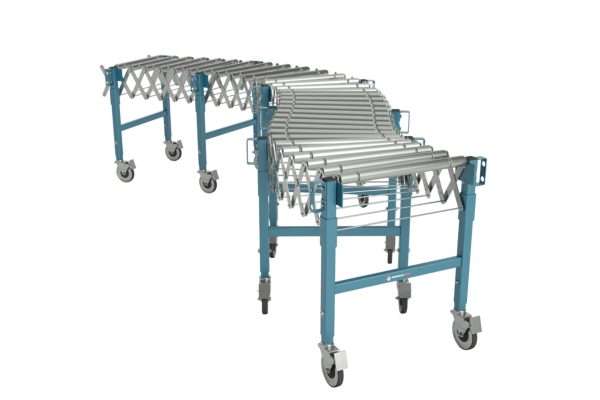
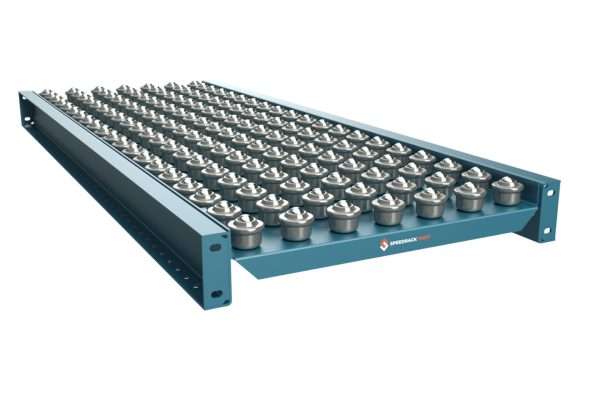
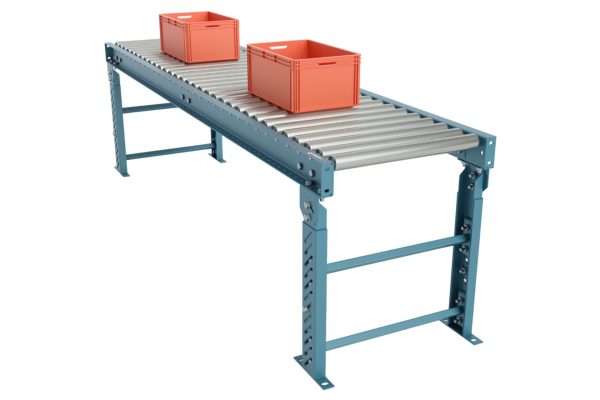
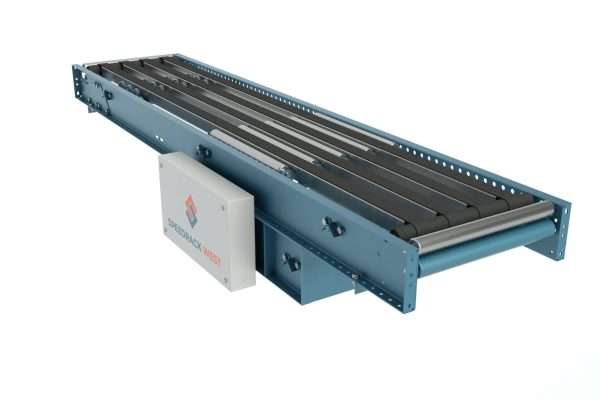
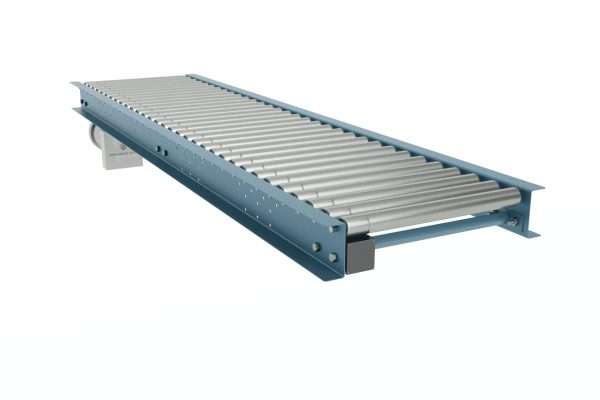
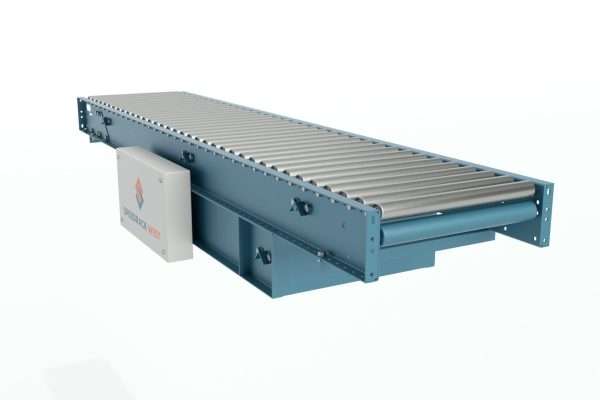
One of the advanced distribution centers needed more space and speed, handling over 150,000 SKUs across 400,000 sq ft. The solution? A series of six custom mezzanine floors across three buildings, and connected them with nearly 5 miles of conveyor belts.
A 66-foot skywalk with a 30-foot unsupported span lets workers move between zones without blocking the floor below. Smart design features like fire-safe flooring, steel grating, and custom stairways made it all efficient and code-compliant.
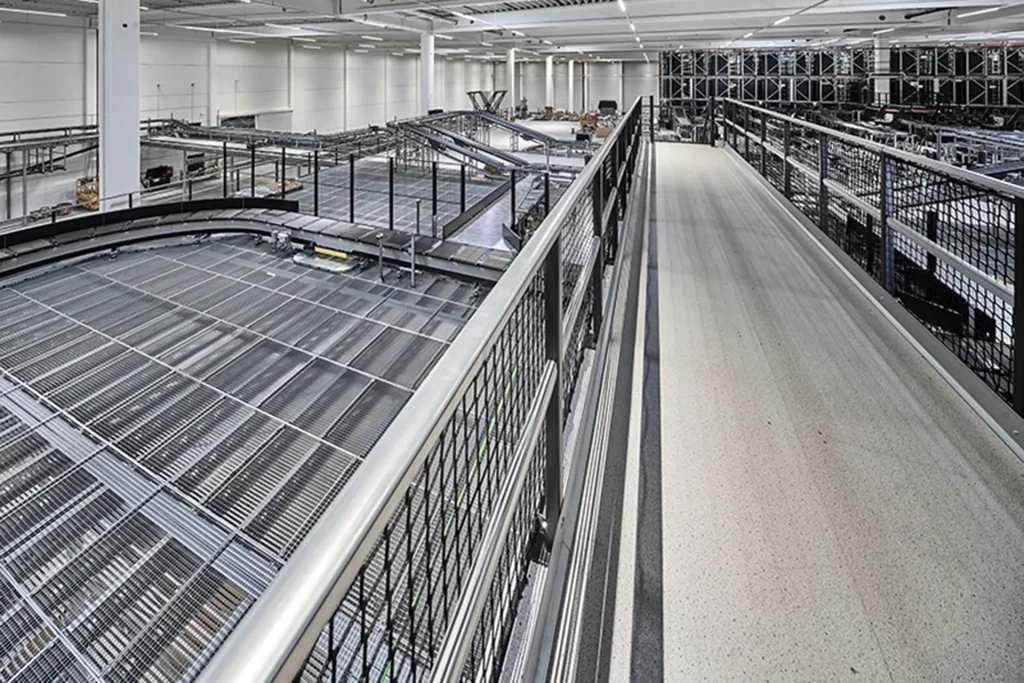
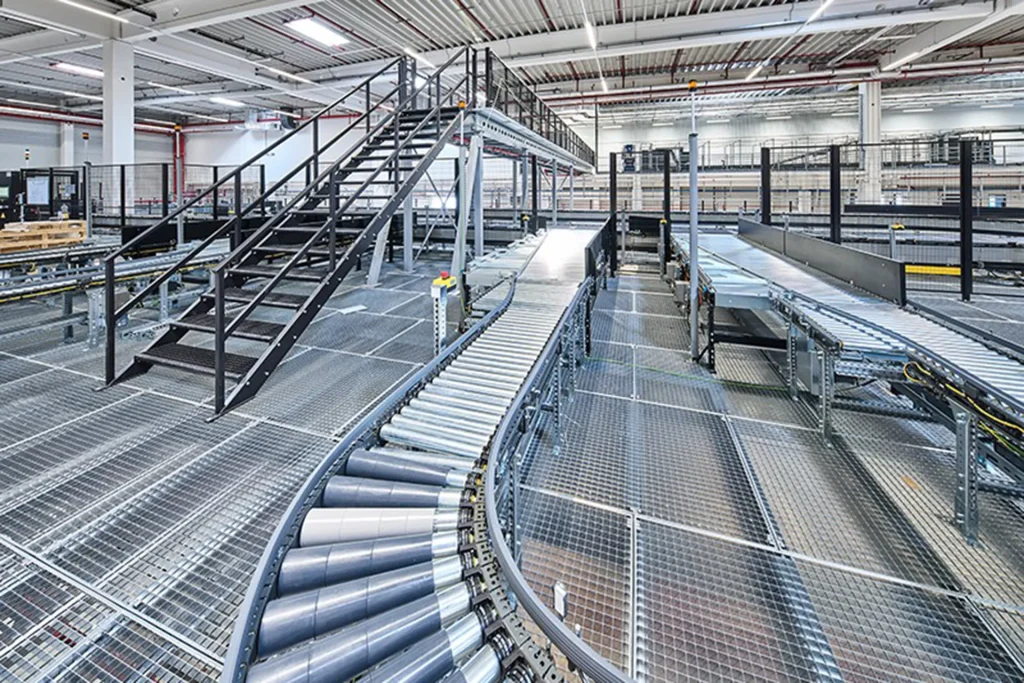
Image Credit: Profielnorm¹
Example B: Picking Mezzanine with Conveyor Loop
In a warehouse with 45 feet of vertical space, Prestige added a two-level mezzanine system covering 53,000 sq. ft., integrated with conveyors for non-stop movement between levels. Heavy-duty floors support racks and high loads, while spiral conveyors, sortation tech, and AMRs keep things fast and automated. Result? A scalable, high-speed fulfillment center built for serious volume.
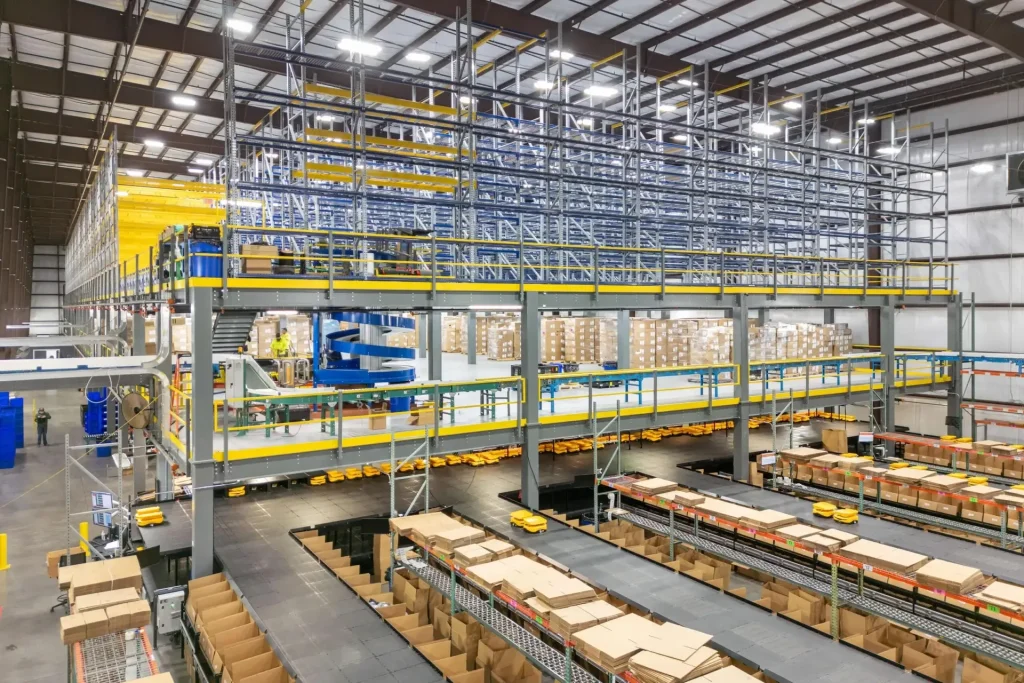
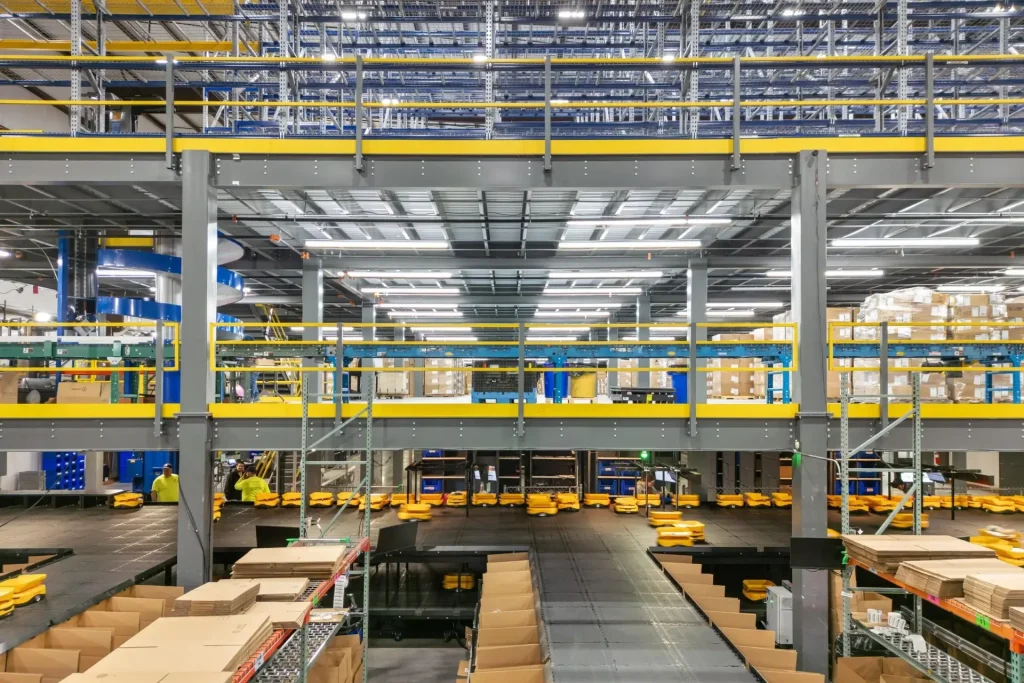
Image Credit: Prestige²
Example C: Smart Tote Movement Across Mezzanine Levels
A warehouse using totes needed a smoother way to move them across floors. The fix? Spiral conveyors, vertical lifts, and powered belts work together to send totes up for storage and down for orders. With smart zones and return loops for empty totes, the whole system runs on autopilot. Workers walk less, pick faster, and everything flows better without taking up extra space.
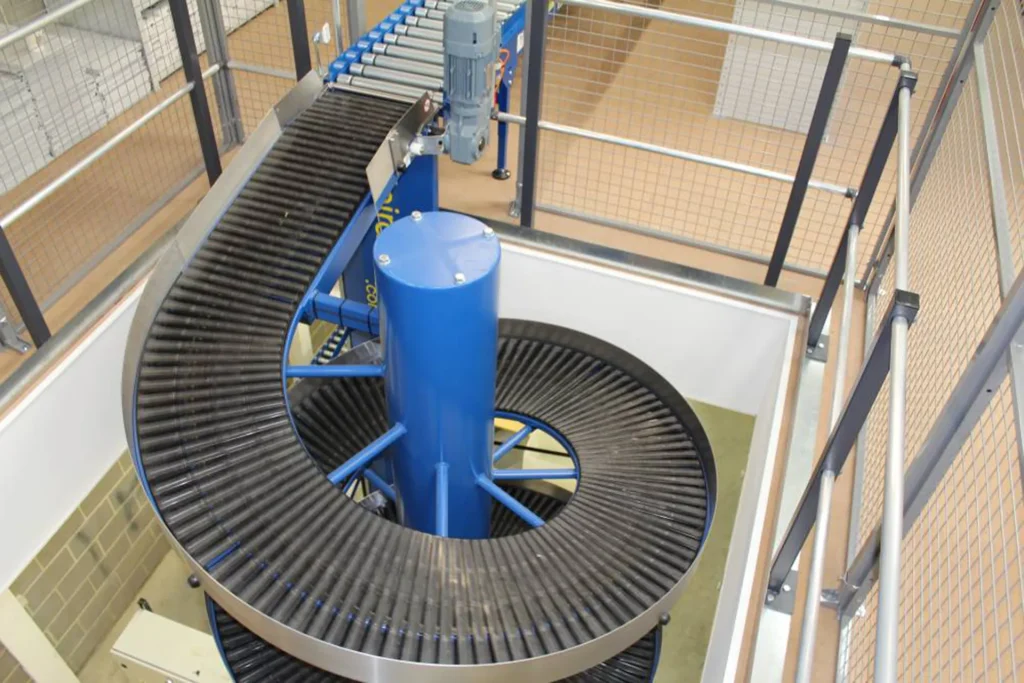
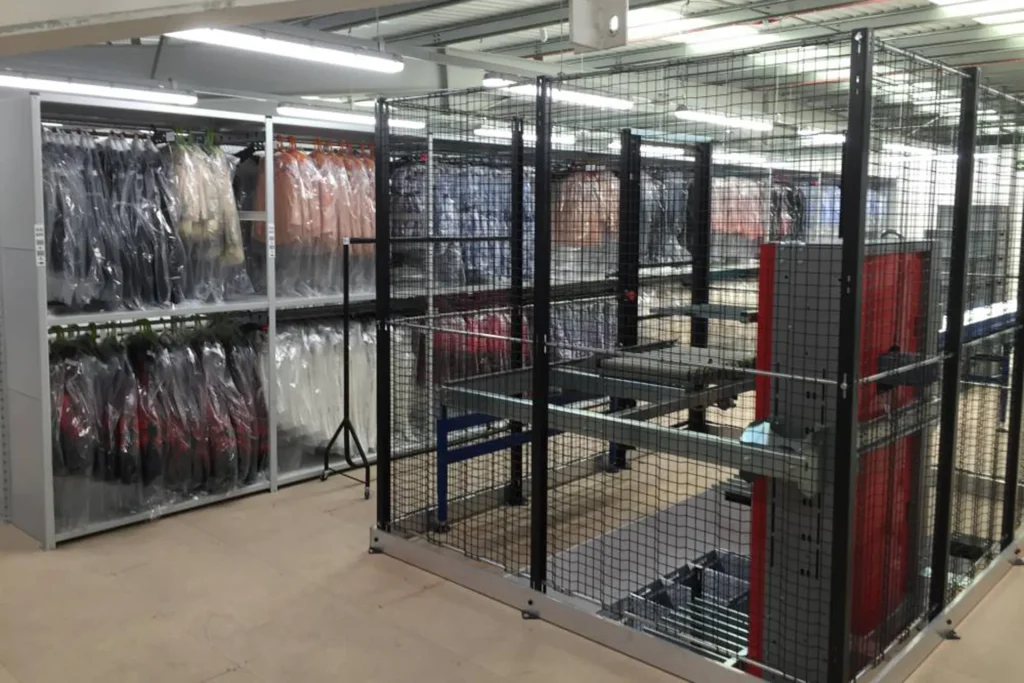
Image Credit: Shelf Space Limited³
Example D: Office Mezzanine Above Rack-Supported Platform
A flooring company wanted more office space, without giving up showroom space. The solution was a sleek mezzanine office built right above the retail area. With custom design, lighting, and minimal disruption, they gained a quiet workspace for managers while keeping the sales floor 100% customer-focused. Clean, efficient, and space-smart.
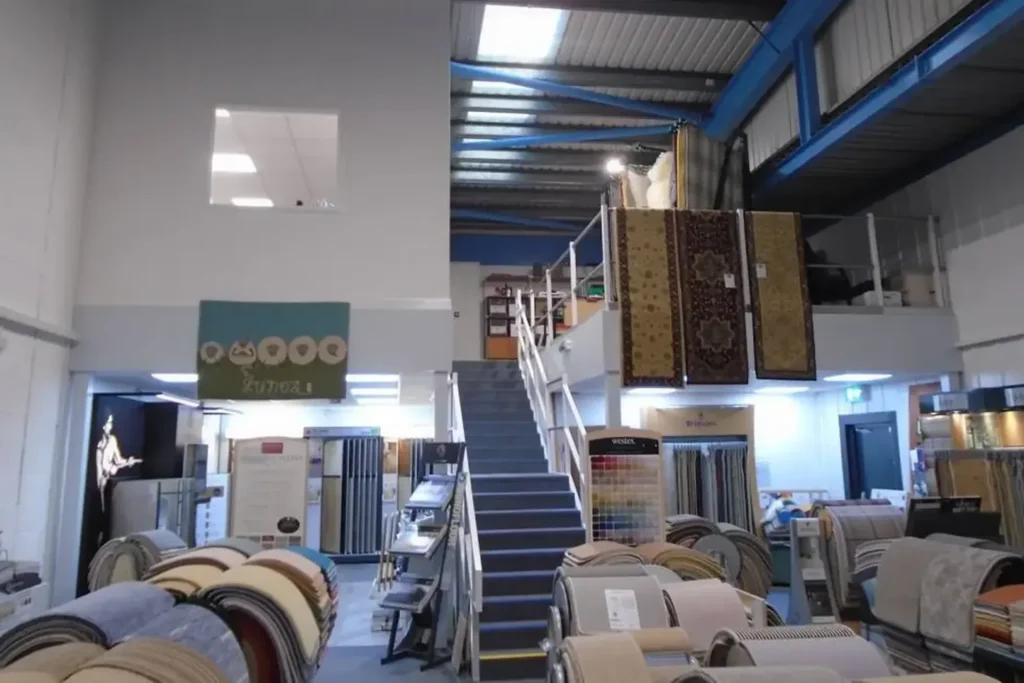
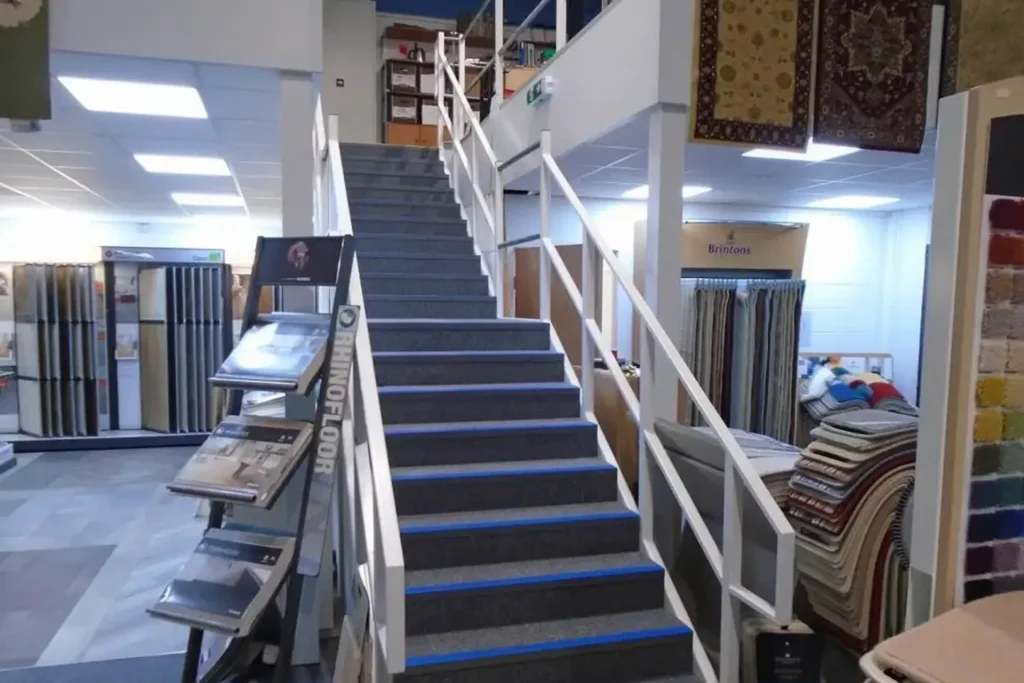
Image Credit: Warehouse Systems Limited⁴
When More Floors Might Not Be Feasible
Even if your warehouse has the height for it, adding extra floors isn’t always practical—or safe. A few common challenges can get in the way:
- Obstructed Ceiling Space: Things like sprinklers, ductwork, or lighting fixtures can limit how much usable vertical room you really have.
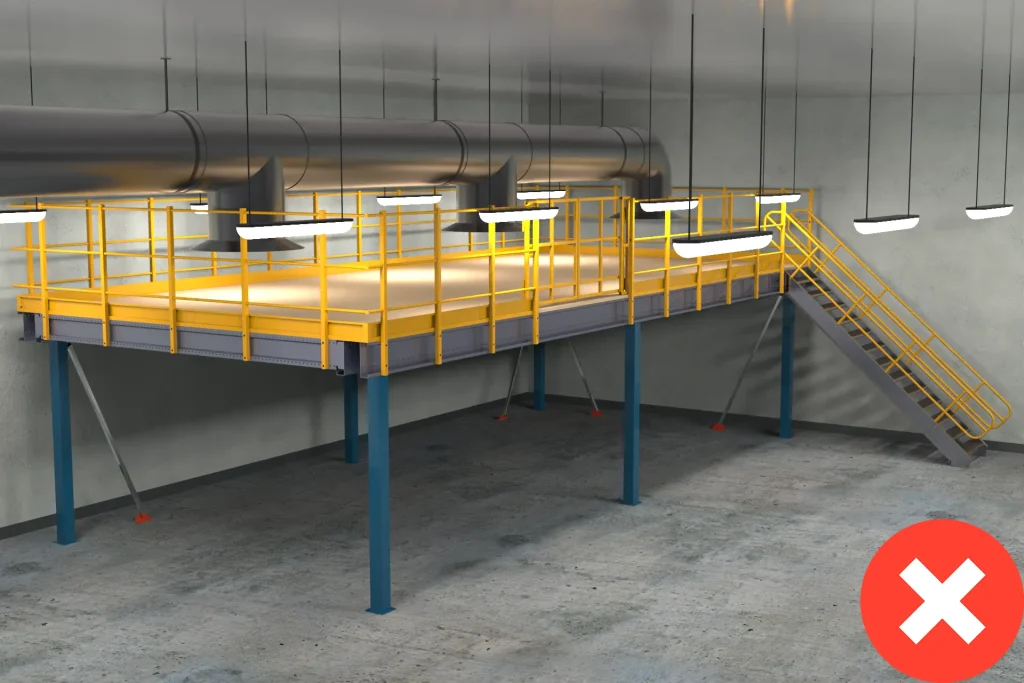
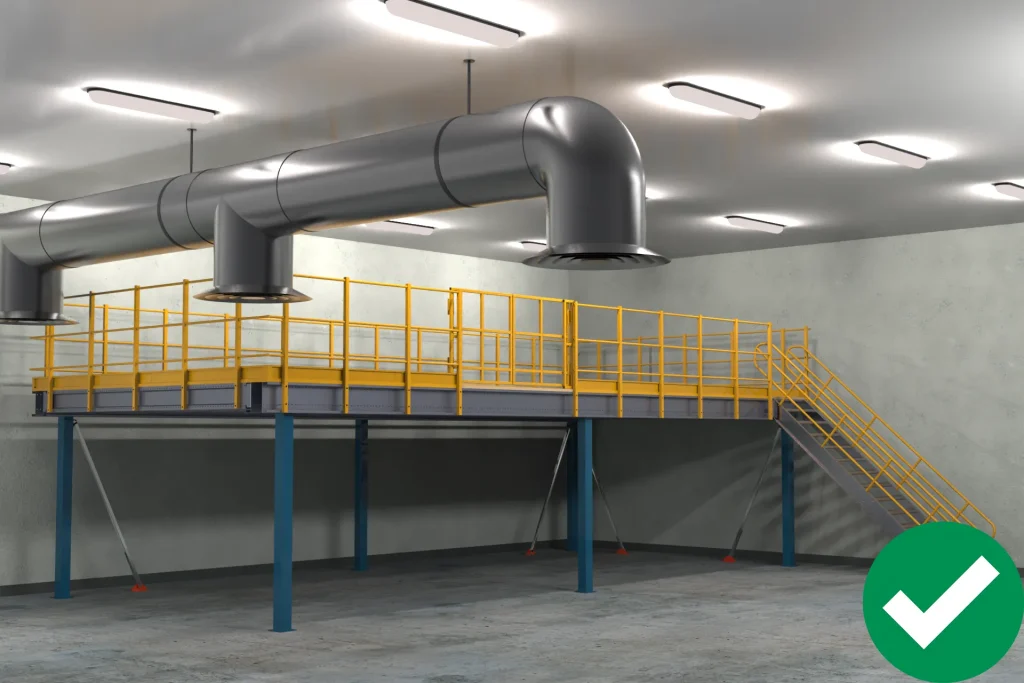
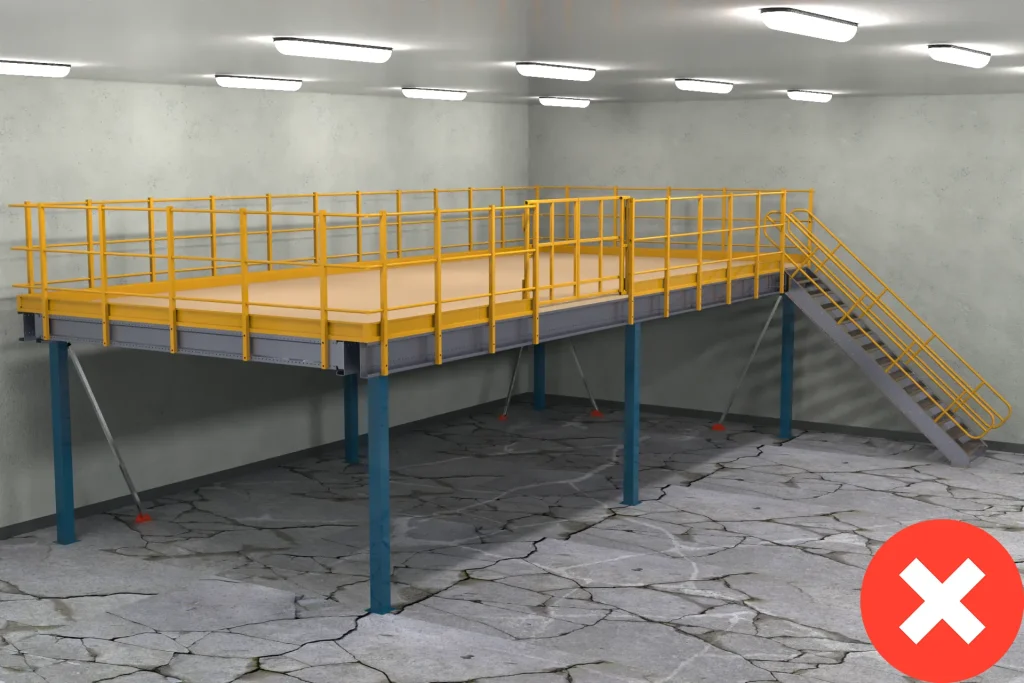
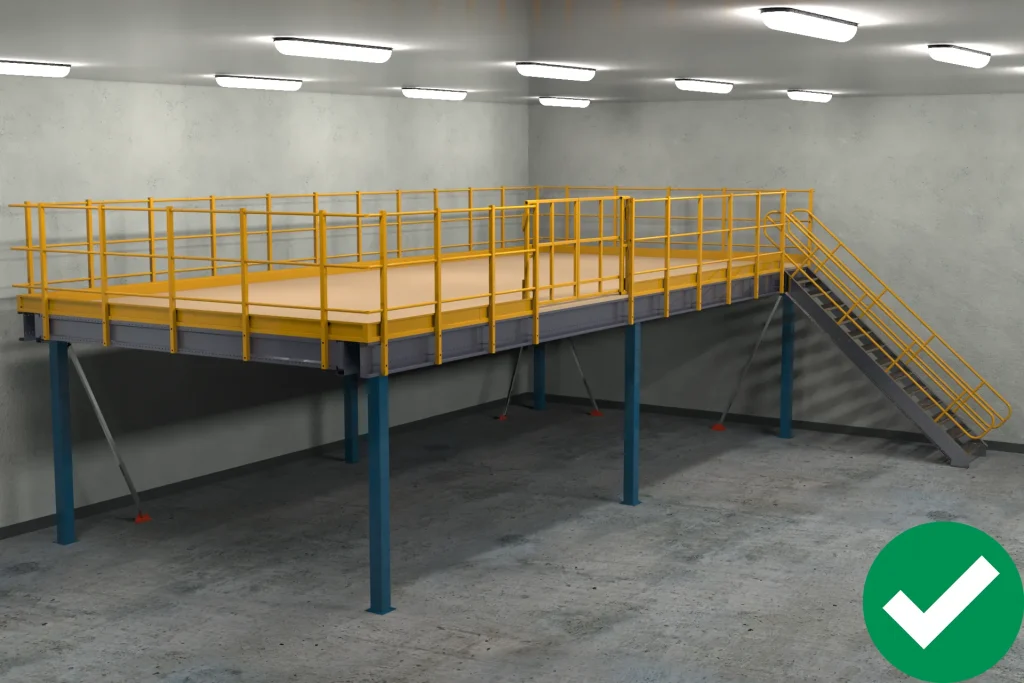
- Old or Weak Concrete Slab: If your floor isn’t strong enough to handle the extra weight from new columns or equipment, it could be a serious safety risk. If you’re unsure, it’s best to ask our engineers—just fill out the quick form.
- Stairways and Emergency Exits: It’s not enough to just have stairs—you need proper egress⁵. The 2021 International Building Code (IBC) breaks this down into sections:
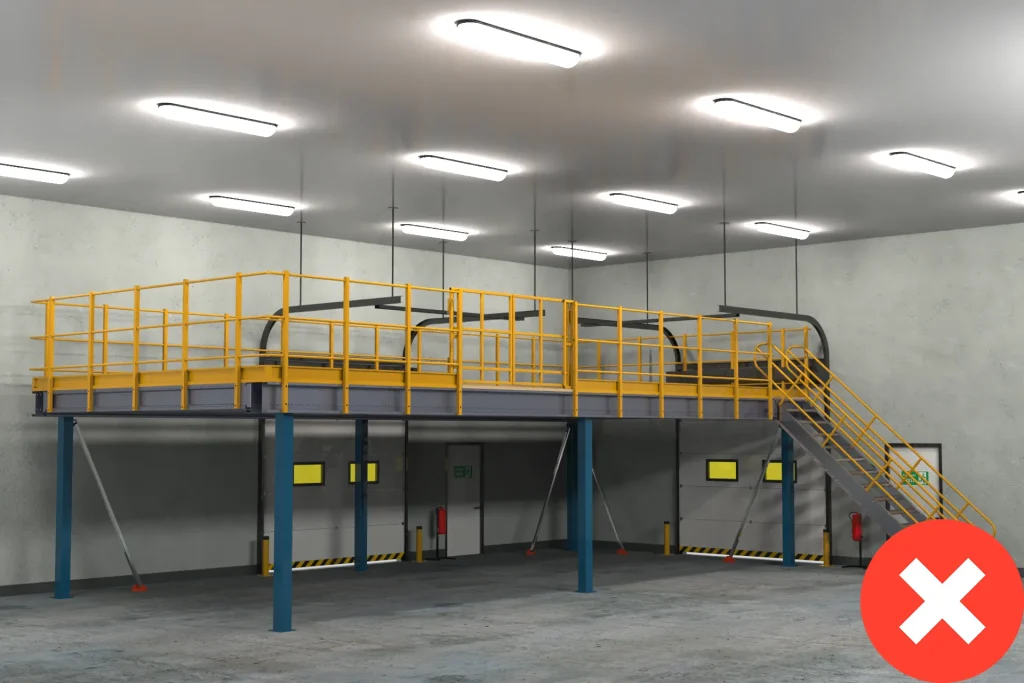
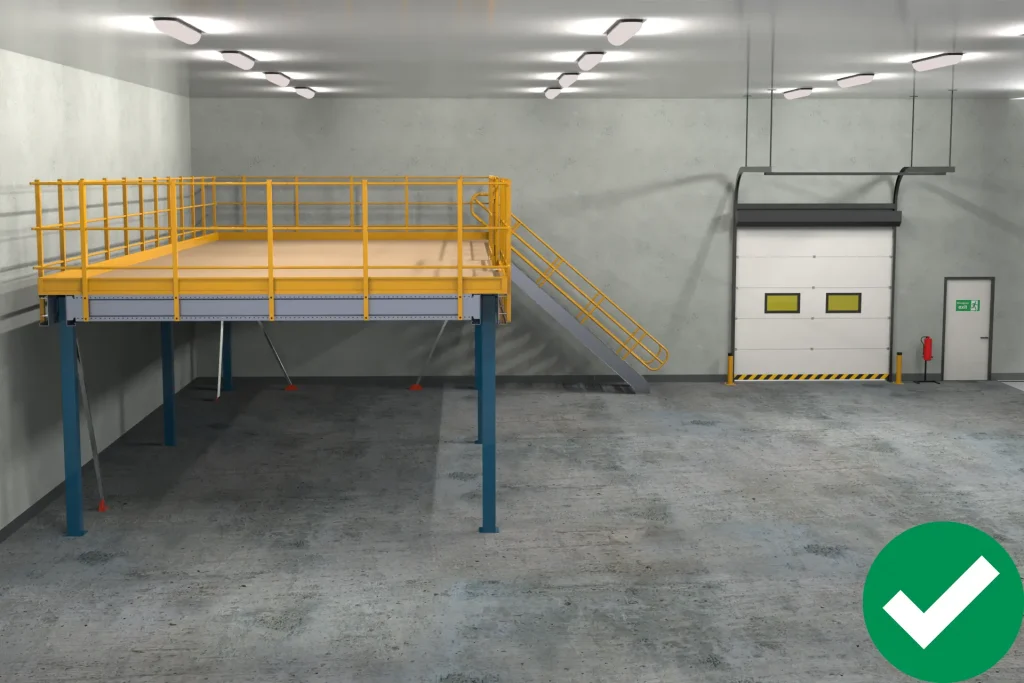
Keep in mind: the travel distance to an exit only applies to the access part, not the stairs themselves. So, not everything needs to happen inside the stairwell.
Bottom line? It’s not just about what can be built—it’s about doing it safely, and by the book.
So, what factors could limit your mezzanine levels? Let’s take a closer look.
Key Factors That Determine Floor Limits
Adding floors isn’t just about stacking steel. Here are the key elements that determine how far up you can go:
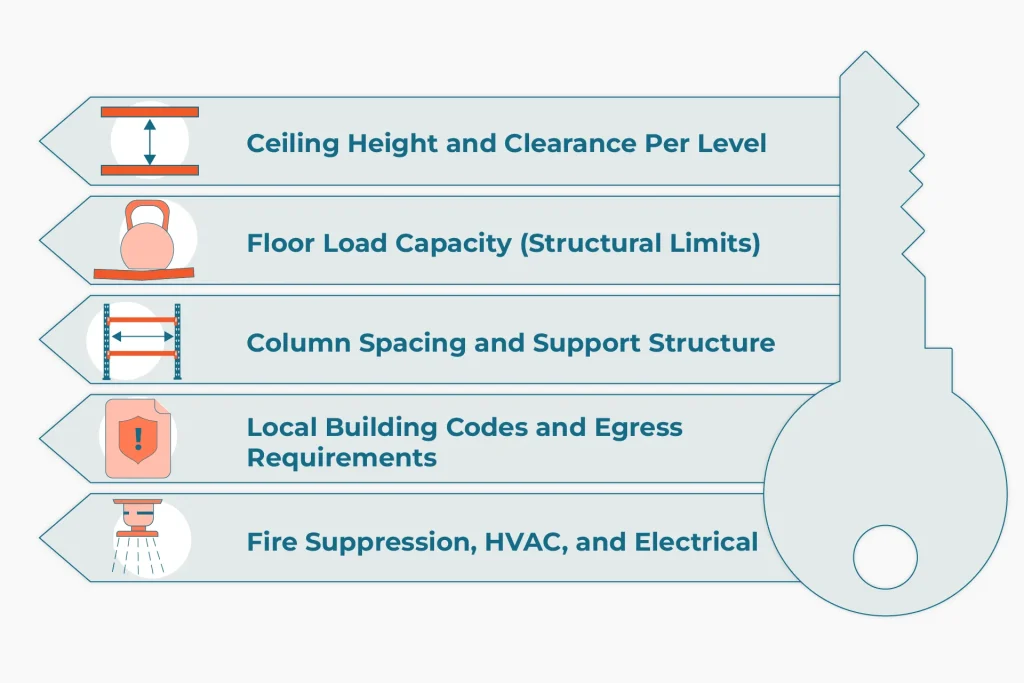
1. Ceiling Height and Clearance Per Level
To comply with the International Building Code (IBC), mezzanines must allow at least 7 ft of headroom both above and below. Generally, a total ceiling height of 14–16 ft is recommended, allowing for at least 7 ft of clearance above and below the mezzanine floor.
Each additional level typically requires 10–12 ft of vertical clearance, so if you’re planning for two mezzanine levels, you’ll likely need a minimum clear height of 20–24 ft.
Please note that 14 ft of clear height does not include the thickness of the mezzanine structure itself. The mezzanine floor system typically adds 12–18 inches (1–15 ft), depending on the construction (e.g., steel framing, joists, decking). So what’s the real minimum ceiling height?
| Configuration | Clearance Below | Floor Thickness | Clearance Above | Total Minimum Height |
|---|---|---|---|---|
| 1 Mezzanine Level | 7 ft (IBC minimum) | 1–1.5 ft | 7 ft (IBC minimum) | 15–15.5 ft |
| 2 Mezzanine Levels | 7 ft (lower) | 1–1.5 ft (x2) | 6.5–7 ft (upper) | 22,5–24 ft |
Also consider obstructions like fire suppression clearance, ductwork, and lighting, that could impact usable vertical space.
2. Floor Load Capacity (Structural Limits)
Before you add a mezzanine, make sure your floor won’t give out under the weight. Think of your warehouse floor like a giant tabletop — if it’s not strong enough, adding too much on top (like storage or equipment) can cause sagging, cracks, or worse. Not every floor is built to handle the weight of a second level, so it’s important to check first.
That means checking how much weight your concrete floor (called a slab) can safely support — this is known as the load rating. Most mezzanine systems require a reinforced concrete floor that’s at least 6 to 8 inches thick. Everything must comply with the International Building Code (IBC).
Floors in warehouses are usually rated between 125 and 500 pounds per square foot (PSF) — that means how much weight each square foot can safely hold. For example:
- An office mezzanine needs about 75 PSF
- A retail or light storage mezzanine needs 100–150 PSF
- Heavy storage might require 200 PSF or more
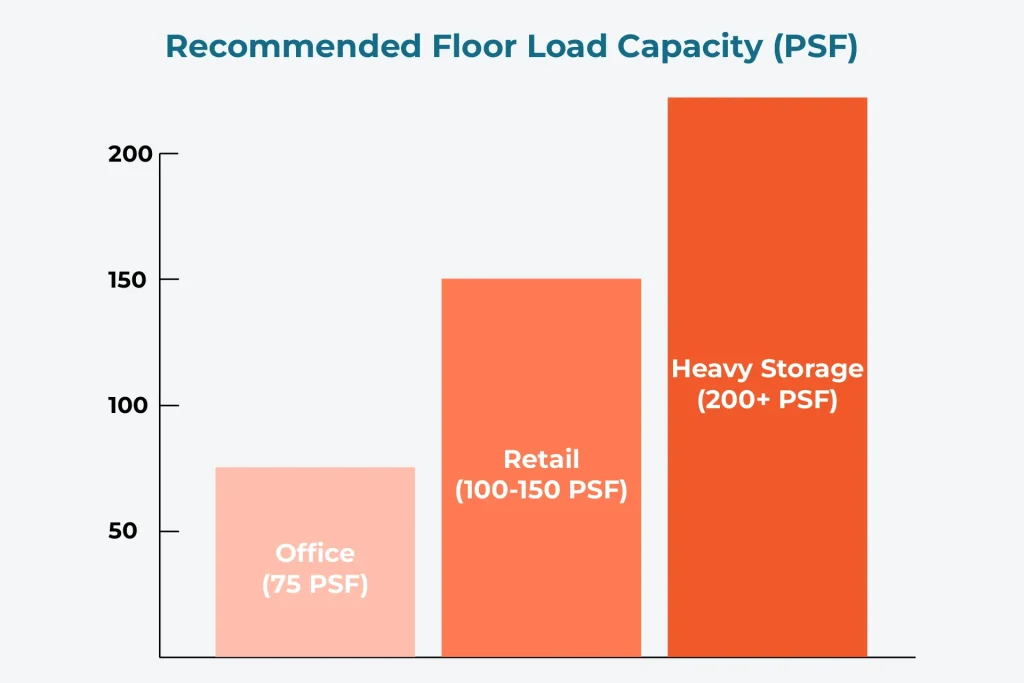
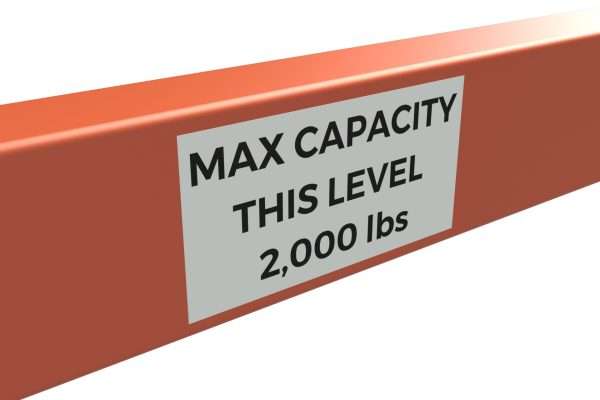
To picture that⁶, a 50′ x 50′ mezzanine rated at 125 PSF can safely hold up to 312,500 pounds—roughly 208 pallets each weighing 1,500 lbs.
Just remember that weight has to be spread out evenly across the floor. Putting too much in one spot can bend the structure or even cause it to fail. That’s why it’s crucial to understand how your mezzanine will be supported before building it.
3. Column Spacing and Support Structure
Column grid spacing in mezzanine systems typically ranges from 15 to 25 ft, which offers a solid balance between structural support and open usable space below. You can go wider — up to 40 ft in some cases — but that typically requires stronger materials and a higher budget.
Let’s look at some mezzanine design styles, along with the materials commonly used for each.
| Design Type | Typical Column Spacing | Common Materials |
|---|---|---|
| Freestanding (Structural Steel) | 8′–25′+⁷ | Hot-rolled structural steel |
| Large-Open-Span Mezzanine | Up to 40′ | Pre-engineered steel trusses |
| Rack-Supported | Varies by rack configuration | Cold-rolled or structural steel |
| Shelving-Supported | Typically ≤15′ | Cold-rolled steel |
4. Local Building Codes and Egress Requirements
Planning a mezzanine or extra floor? It’s not just about how much space you can create—it’s also about staying safe and following the rules. Ever heard of the UBC vertical access code or IBC egress requirements? These are building codes that spell out how people should move between floors and safely exit a building in case of an emergency.
The old Uniform Building Code (UBC) focused on things like stairs, ramps, and elevators. But in 2000, the International Building Code (IBC) took over and became the go-to safety standard across the U.S. It now sets the rules for things like exits, travel distance, emergency lighting, and fire protection.
To keep it easy, here’s a quick breakdown of the latest 2024 IBC egress requirements:
| What It Covers | What It Means |
|---|---|
| Number of Exits | At least 2 exits for most areas. 3 if you have 500+ people, 4 if 1,000+. |
| Travel Distance | How far people can go before hitting an exit—shorter if there’s no sprinkler. |
| Egress Components | Includes exit access (hallways, aisles), exits (stairs, doors), and discharge. |
| Stair & Door Widths | Depends on the number of people and if there are sprinklers—wider for more folks. |
| Ceiling Height | Minimum of 7’6″ overhead clearance along the way out. |
| Accessibility | Must have at least one clear, accessible way out (including from rooftops). |
| Fire Protection | Corridors and stairwells must be fire-rated to keep people safe during exits. |
| Roof Egress | If your roof is used (e.g., for work), you’ll need proper exits there too. |
| Lighting | Emergency lights are required—except in tiny storage units under 400 sq ft. |
| Common Path Limits | You can’t make people go too far before choosing between two exit routes. |
| Exit Separation | Exits must be far enough apart to give people multiple safe ways out |
| Intervening Rooms | Exits shouldn’t go through random rooms—paths need to be clear and direct. |
We know these rules can get tricky, but that’s what we’re here for. If you’re not sure whether your design meets local codes, reach out—we’ll help you stay safe, legal, and efficient.
5. Fire Suppression, HVAC, and Electrical
When planning a mezzanine, it’s easy to focus on the added square footage, but without fire suppression, HVAC, and proper electrical infrastructure, that space might not be usable or code-compliant.
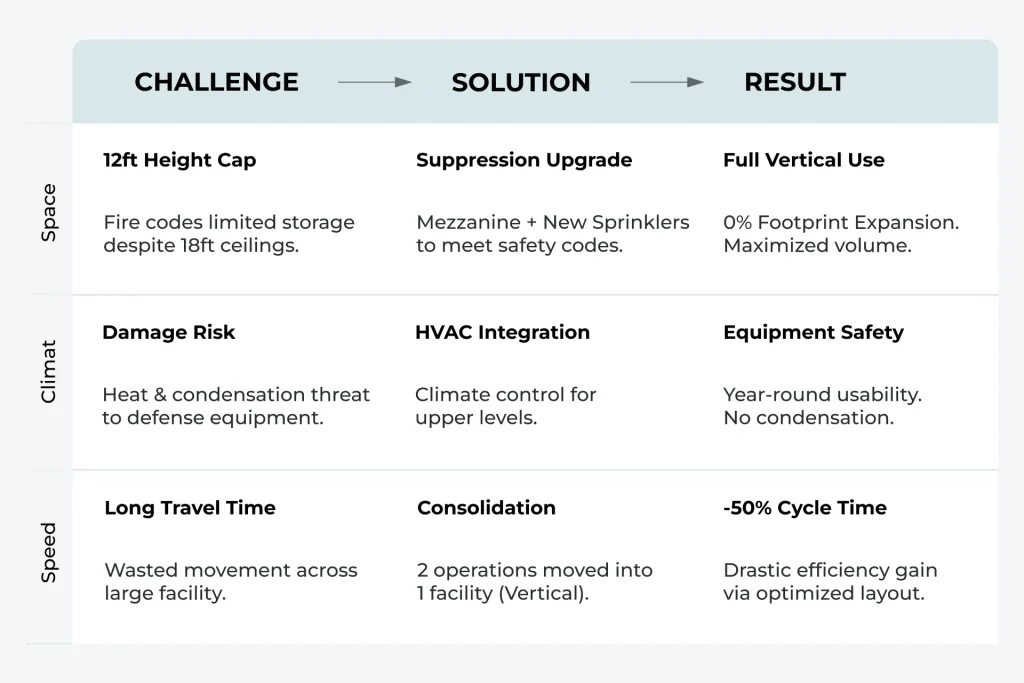
Take Honeywell⁸, for example. When they consolidated two operations into one facility, they faced a space crunch, but vertical expansion wasn’t simple. Fire codes capped storage height at 12 ft despite 18-foot ceilings, making vertical racking ineffective. Their solution: installing two mezzanines to create more space for inventory, repair work, and office functions—without expanding the building’s footprint.
But here’s the crucial part: the mezzanine alone wasn’t enough. To make the upper levels safe, comfortable, and fully functional, Honeywell also invested in upgraded fire suppression and HVAC systems. This wasn’t just about comfort—the HVAC system protected sensitive defense-related equipment and ensured that workstations on the mezzanine floor could be used year-round without overheating or condensation risks. Without HVAC, these elevated areas could have become too hot, too cold, or too humid, compromising productivity, equipment safety, and even compliance with industry standards.
This project didn’t just solve a space problem—it improved workflow efficiency, reduced cycle times by 50%, and eliminated the need to travel long distances within the facility.
Summary:
Steps to Determine What’s Possible in Your Facility
Before you start stacking floors, follow these steps for a safe and legal vertical expansion:
- Step 1: Measure Clear Vertical Space. Use a laser or tape to check slab-to-ceiling height. Account for mezzanine level clearance.
- Step 2: Assess Slab and Column Strength. Engage an engineer to assess slab load rating and column grid spacing.
- Step 3: Consult a Mezzanine Engineer or Local Code Authority. Discuss mezzanine code compliance, fire code for warehouse mezzanine, and design needs. Start with a custom warehouse layout planning session.
Final Thoughts
How many floors can I add to my warehouse? The answer depends on your clear height, slab strength, load needs, and code compliance. From single-level storage platforms to multi-level mezzanine systems with conveyors and offices, the possibilities are wide, but every vertical warehouse expansion must be engineered for safety, efficiency, and local compliance.
Plan Your Vertical Expansion Today
Our engineers provide a full structural evaluation and custom mezzanine design. We ensure your buildout is safe, efficient, and fully code-compliant.

Was this helpful?