

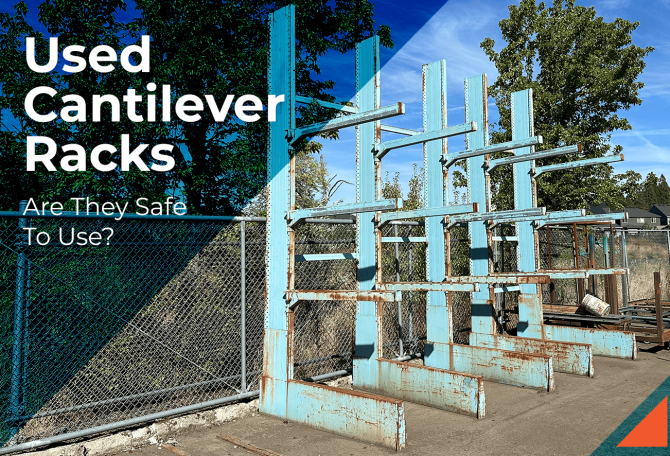

Cantilever racking condition checklist
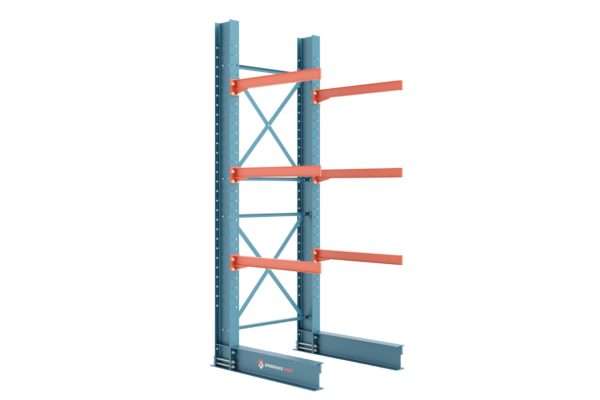
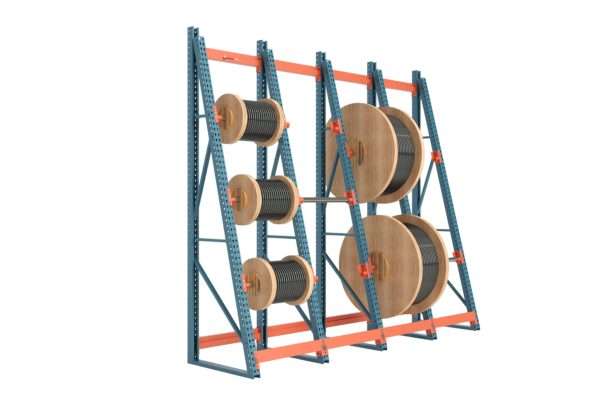
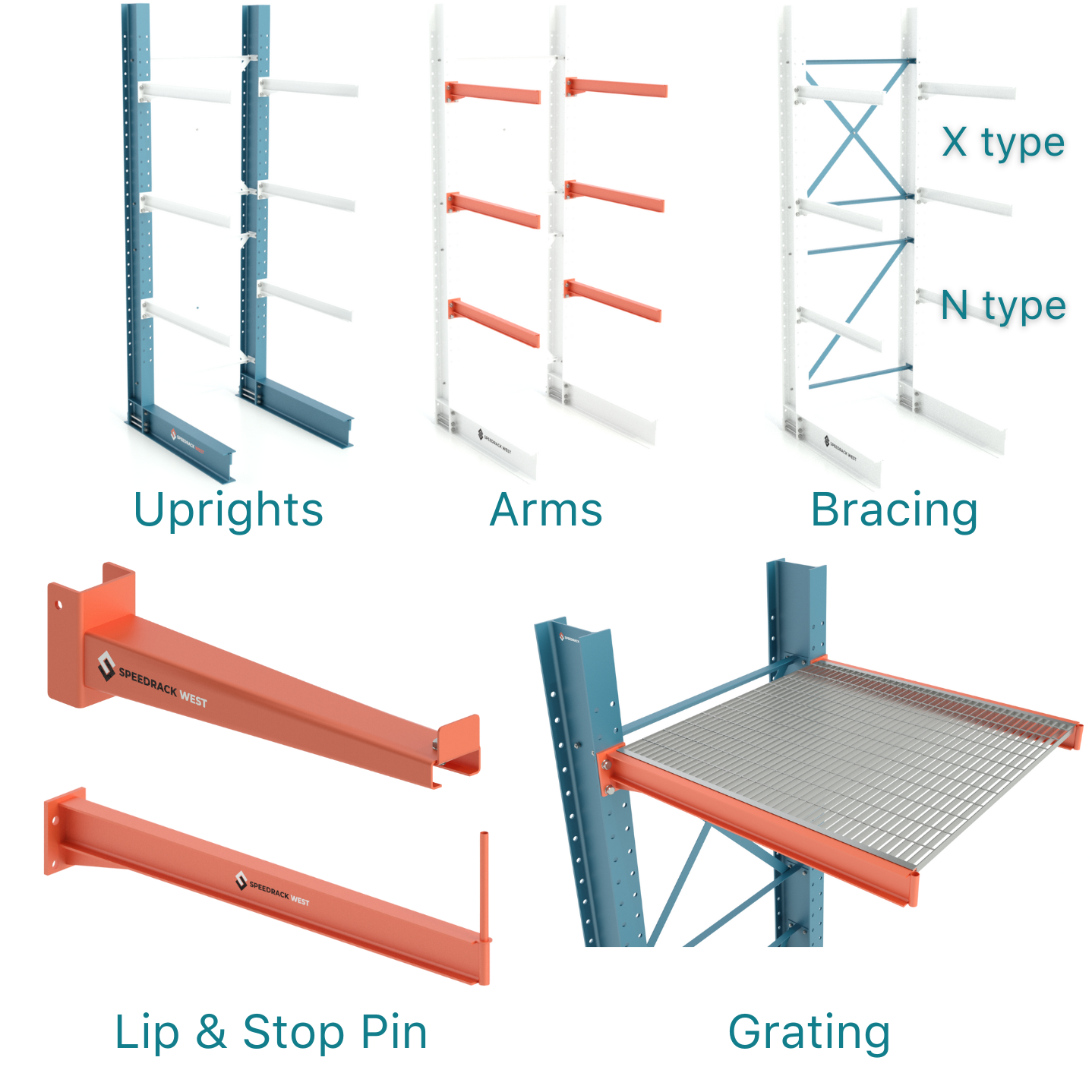
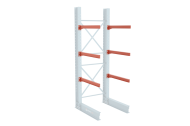
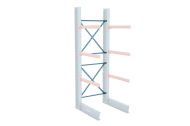
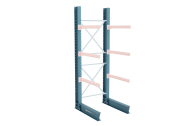
A cantilever, well-known as a word since 1667 and as a technology since 1890, is a type of storage for long bulky loads. These days, cantilever storage systems are made up of some basic elements:
- Vertical columns or uprights columns (structural or roll-formed steel)
- Horizontal arms or simply cantilever arms (inclined, straight, crank-out)
- Braces come in two types: X (the most common) and N (rare).
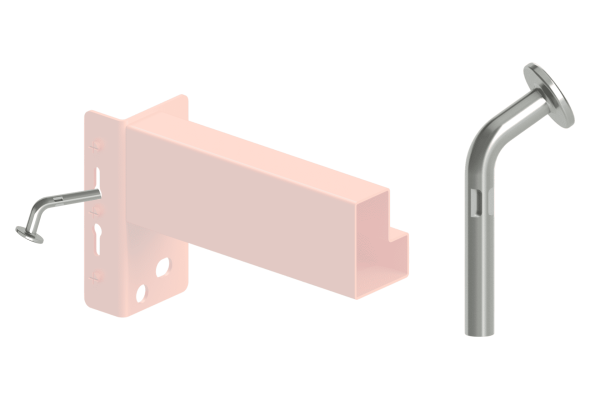
- Lock and stop pin or lips (welded or bolted)
- (optional) Additional accessories like grating, arm bridge, dividers, etc.
So, if you know how to utilize cantilever racks safely and inspect them, you truly deserve to take the rest of the day off! If not, look at our cantilever racking condition checklist.
Note the following points:
- Uprights, beams, and arms have no rust and are free of degradation.
- Welds are not broken.
- Beams, uprights, and arms are straight and have no deformations or deflection.
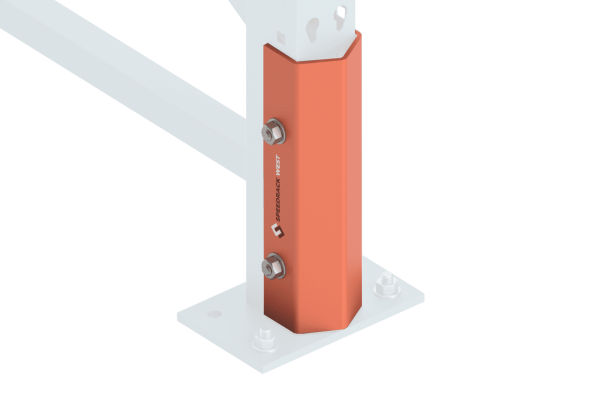
- Anchorage is made precisely to the concrete floor or base with tightened and undamaged bolts.
- All connections should be durable.
- Tilting uprights to one side is potentially unsafe and reduces rack capacity.
- Sheds are mounted correctly and have no twist.
- Loaded arms are not bending of the base.
- Loads are placed horizontally and extend evenly on the arms.
Is everything well, or do you have further questions? For instance, about safe arm loading or degradation rate? When do racks need to be replaced, or is it enough to simply add special equipment (if so, what kind) to protect the structure and goods? The answers are here. Do not switch. See below.
How should used cantilever racks be inspected?
It is common practice to check used cantilever racks yearly. This preventative measure is the best way to replace damaged ones on time. Note the following points.
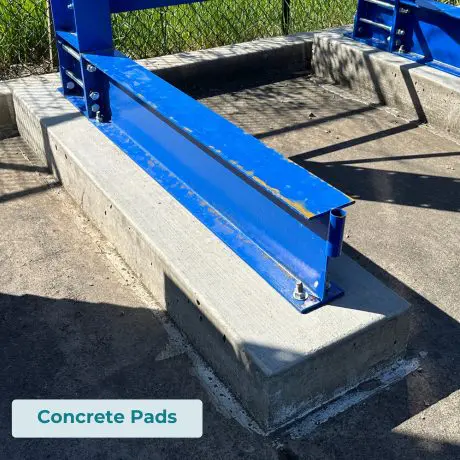
Surface. You can use cantilever racks outside and inside. In any case, they must be installed only on a smooth, flat base (6” minimum). Commonly, it is made of concrete pads, not asphalt, because of its unstableness. The Rack Manufacturers Institute (RMI) specification, American National Standards Institute (ANSI) MH16.1-2012, says that deviations should be less than 5 inches in 10 feet of height. All columns must have a base plate and anchor bolts meeting RMI design standards for quality and durability.
First, you have to analyze the soil subgrade. This is crucial in an earthquake-prone area, but it is not the only one.
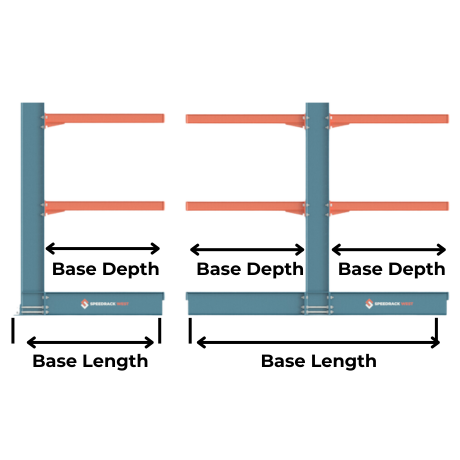
Base. The base depth and length are the following things you must consider beforehand.
The base depth is equal to the distance from the outside edge of the column to the end of the base and should be equal to or greater than arm lengths. If you have double-sided arms, your total base length must equal the arm’s lengths on both sides, plus depth uprights.
Base heights are measured from the floor to the top of the base and depend on the arm’s depth and load weight.
Uprights and column spacing.
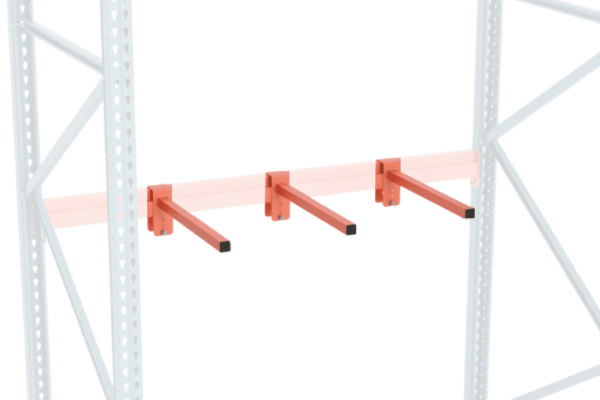
Upright columns anchor to the base and link each other with braces. They provide lateral stability to your cantilever rack system and are bolted between pairs of uprights. Each column can be single- or double-sided and contains some arms depending on the height of the column. The arms are inserted into the holes of the cantilevered vertical posts at different heights to form levels.
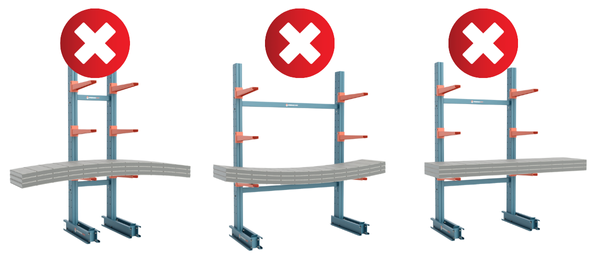
To count the required amount of columns and their spacing, note the arms and load deflection. Column spacing is the length between upright columns. To determine the initial column space, you need to divide your load length by two. If your load has no deflection, use two arms and calculated space. However, if not, you should add extra columns and arms to evenly distribute the weight.
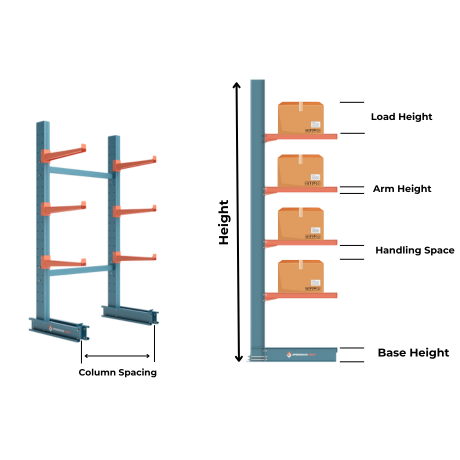
The next is column height. How to calculate the efficient height of a column? Note that the total column height consists of the number of arm levels, considering their load’s height and arm’s thickness plus clearance between the arms. The capacity of the cantilever rack is based on the column capacity and the arm capacity. To calculate the upright column capacity, multiply the number of arms on one column by the load on each arm with no load that rests on the base. If you have double-sided units, double the load weight for 2-sided racks.
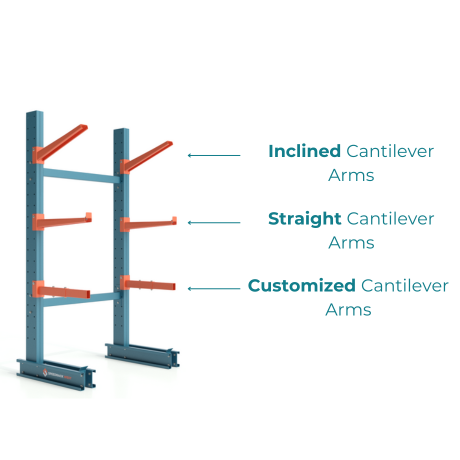
Cantilever rack arms are available straight and inclined (tilted).
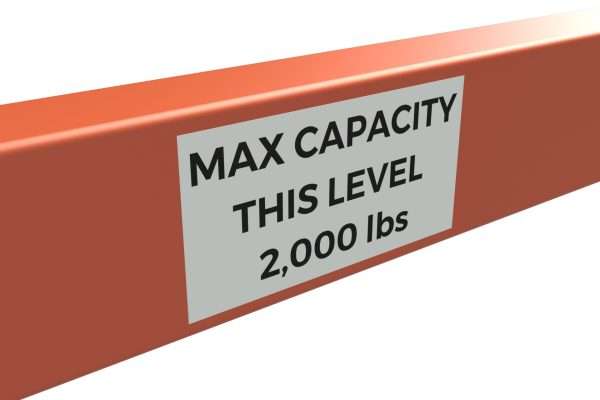
Used arms should not be overloaded. The arm’s load is calculated by dividing the total weight of the load by the number of arms on the same level. For instance, your load weighs 1800 lbs and lies on two arms, thus you have 900 lbs/ per arm. The more arms you have to put the weight on, the less weight you will have on your arm. This way, you can also figure out what kind of racking system you need: light-duty, medium-, heavy-duty, or super-heavy-duty. By the way, we have a separate blog post that goes in-depth on cantilever arms and how to choose the right one.
Note also that arm length should equal or more load depth. The load must not be on the outer edges of the arms. To prevent the rolling off, use a variety of accessories, such as end stops, sockets, lips, or decking.
The last, but not the least, is correctly calculating the height between the arms. It is important for the safety of load-handling operations with a forklift.
Are used cantilever racks safe?
Sure, if you check them and follow the operating rules. This is why you need a professional view. Just look at our case with Evraz, which required a safety inspection of its used racks to prevent accidents and replace them if necessary. Besides inspecting the racks, we re-planned the inventory. The main logic we followed was that instead of increasing the load capacity of the racks, we sorted the stocks according to the rack load. Our team was so exemplary that we were recommended for work at other company sites. We believe that a cantilever rack is one of the best solutions; you need to know how to use it to its maximum potential.






Do you have any questions or comments?
Be the first and post your question or comment