



That’s not just annoying — it’s costing you time, money, and maybe even someone’s back.
Cantilever racks are one of those storage options that may seem complex at first, but once you have them, you wonder how you ever managed without them.
Why Cantilever Racks are Great for Electrical Contractors
Since 2020, electrical contracting firms in the U.S. have been steadily growing. Smaller crews focus on traditional power and residential automation, while larger companies handle complex projects like prefabrication and high voltage. Smaller crews usually work with equipment that fits neatly in a truck—ready to roll out to a job site quickly. But when it comes to managing inventory and keeping a warehouse organized, they need more than just a pickup bed.
No matter the size, every contractor uses specialty shelving, A-frames, pallets, cable drum storage, yet faces the same storage challenge: bulky, awkward materials that don’t fit neatly on standard pallets.
We’re talking:
- 20-ft EMT conduit runs
- Heavy metal pipes
- Oversized solar panels
- Giant cable spools
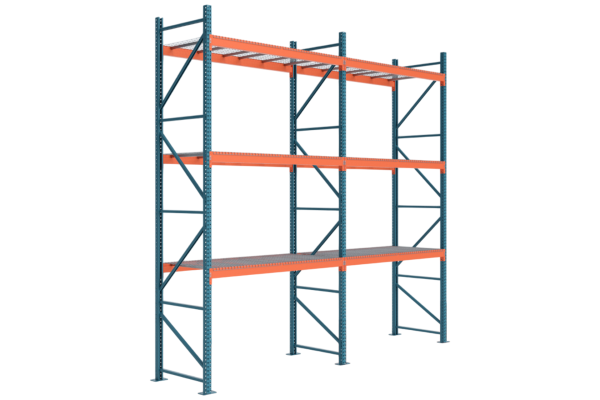
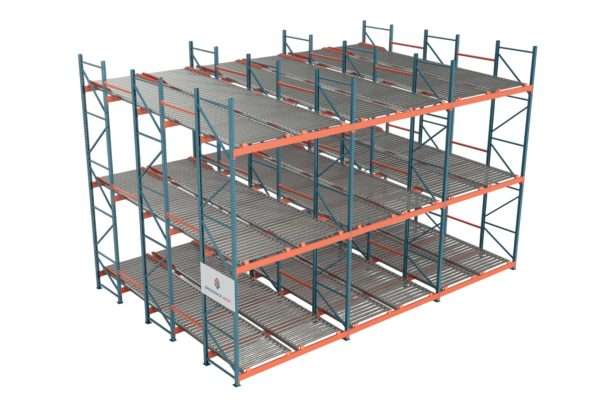
Trying to store these on regular pallet racks wastes space and forces forklift drivers into a constant game of Tetris.
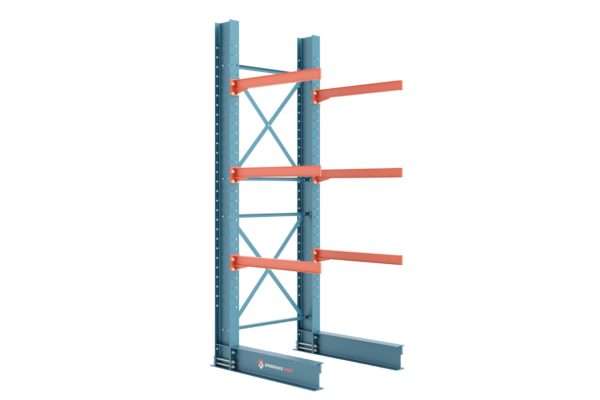
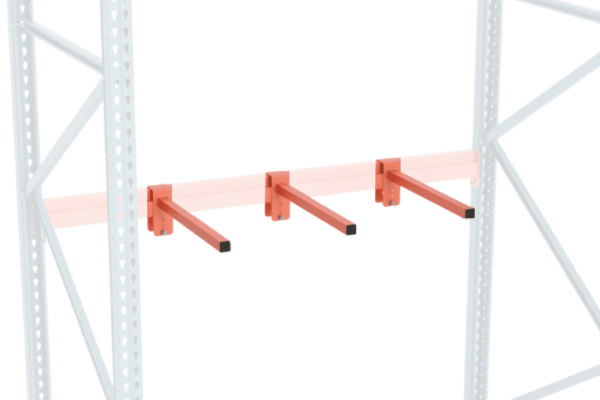
That’s where cantilever racks come in:
- Open-front design — no beams blocking access, so forklifts and hand loaders can grab materials easily.
- Built for long loads — whether it’s 10 sticks of conduit or 40, they hold securely without sagging.
- Boost efficiency – cut material handling time by up to 30%, based on feedback from contractors using cantilever racks.
- Safer for crews — less bending, awkward lifting, and fewer tripping hazards. Cantilever racks help protect both your materials and your team, reducing injuries and keeping your warehouse efficient. This helps ensure OSHA compliance
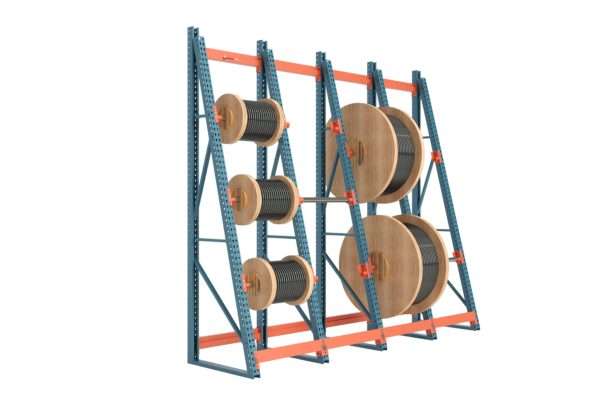
Palletized Cable Drums: Why Cantilever Racks Work Best
Storing cable drums on pallets sounds simple — until you run out of floor space or have to dig through a messy stack to find the right size. Standard pallet racking can work, but it’s not ideal for bulky, heavy drums that need extra clearance and support.
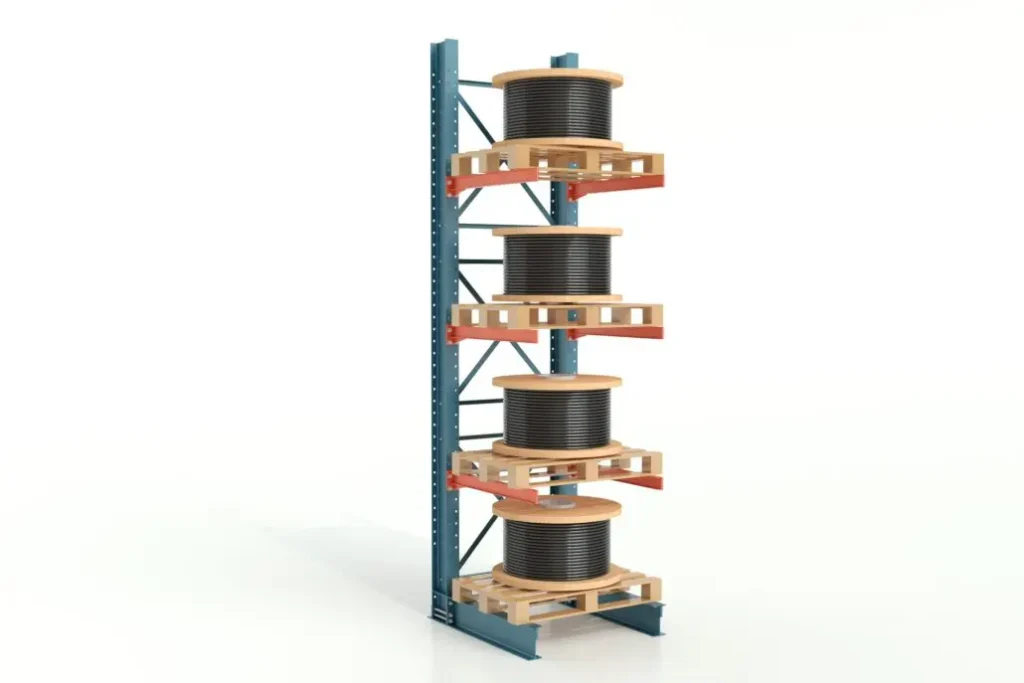
Cantilever racks solve this with structural designs that meet your needs and come in two main options:
- Medium-duty Racks for smaller reels, offering flexibility for a compact warehouse
- Heavy-duty Racks built for massive utility-grade spools, with arm thickness and load capacity to match your heaviest inventory.
Available in single-sided or double-sided configurations, these racks keep drums visible, accessible, and secure, reducing handling time and keeping the warehouse OSHA compliant. You can read more about it in our article Types of Cantilever Racks and Their Applications.
Whether you’ve got a few small reels or massive utility-grade spools, cantilever racks keep everything organized, visible, and easy to move.
Solar Panels: Store Them Right or Pay the Price
The U.S. solar market is booming, with large-format modules (60- and 72-cell frames) weighing 70–80 lbs each becoming the standard. Drop one, and you’re eating hundreds of dollars in losses.
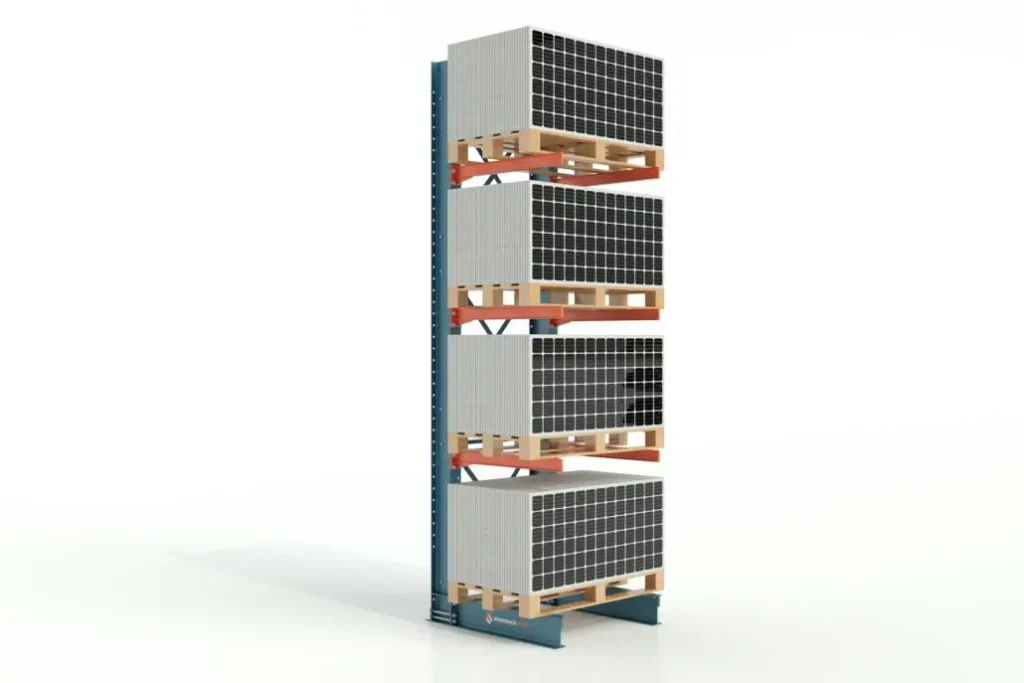
Here is how to store them right:
- Keep panels on pallets — never loose.
- Use cardboard sleeves, plywood spacers, and corner protectors.
- Always forklift from the short side of the pallet — reduces bending and cracking. For a detailed explanation with pictures, see this PDF guide.
For heavy or oversized panels, go with cantilever racks with covers (board, grating, or mesh on the arms).
Why Choose Speedrack West?
At Speedrack West, we’ve been helping U.S. electrical contractors optimize their warehouses for over 20 years. Whether you’re a small crew or a large firm, we’ll design a cantilever rack system that meets your inventory needs, space, and budget. Our racks are built to meet U.S. safety standards and handle the toughest materials, from EMT conduits to utility-grade cable spools.



Do you have any questions or comments?
Be the first and post your question or comment