

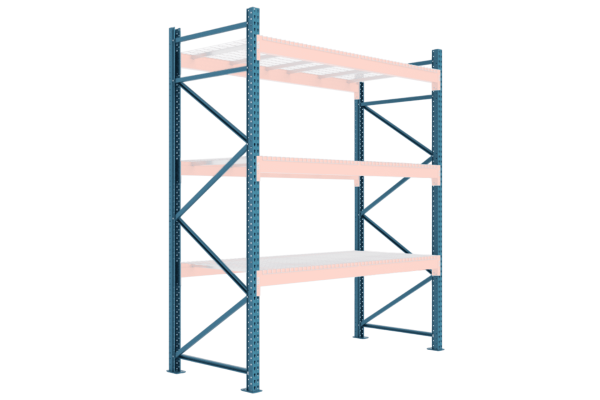
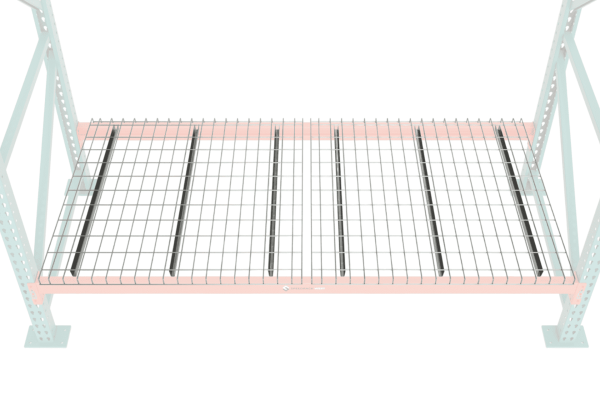
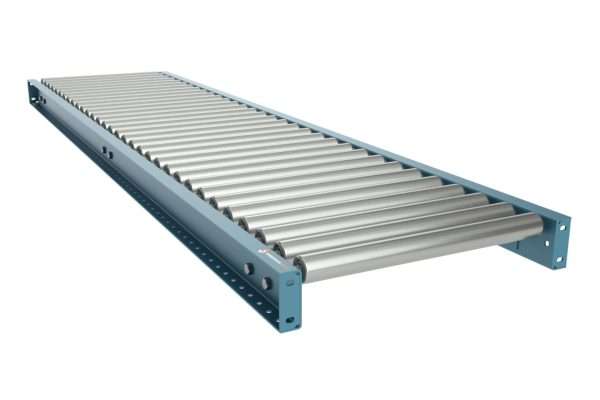
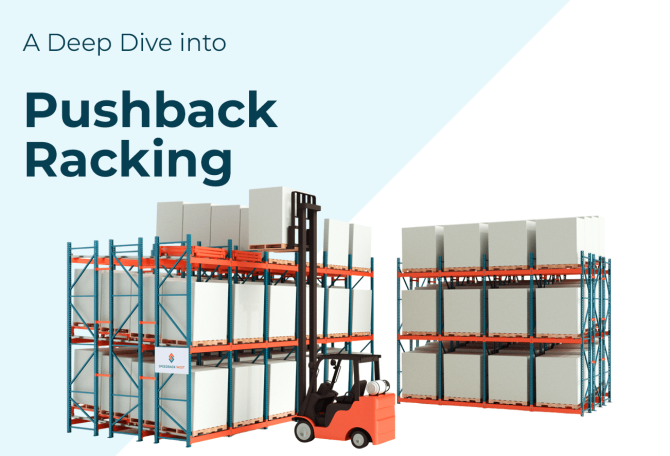

What is Pushback Racking?
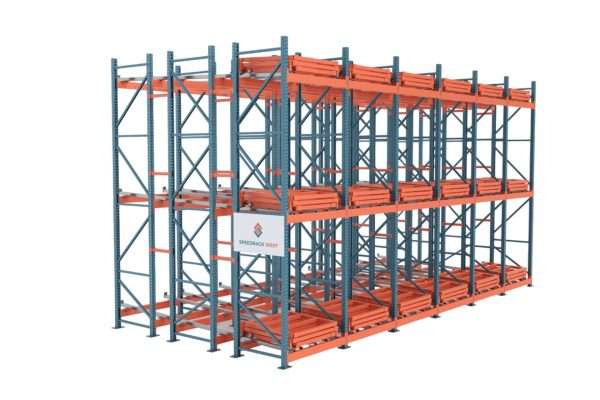
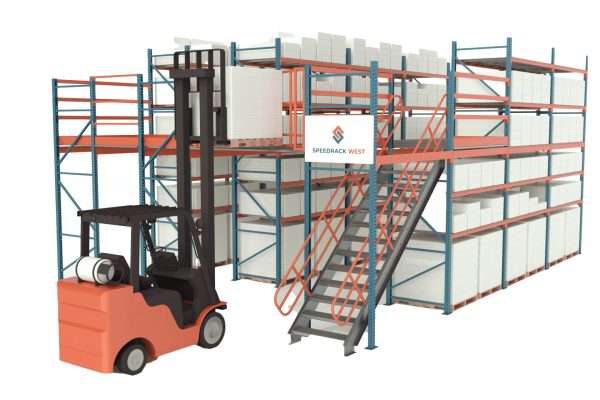
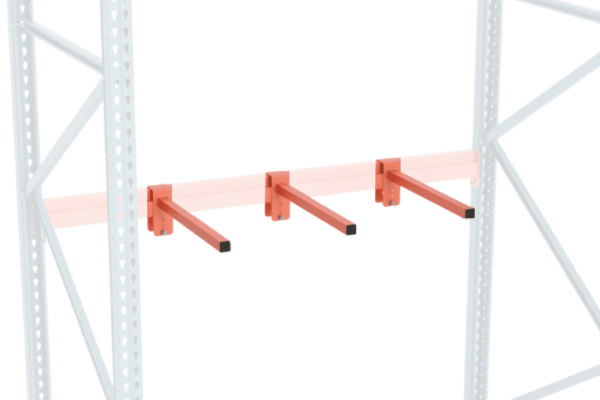
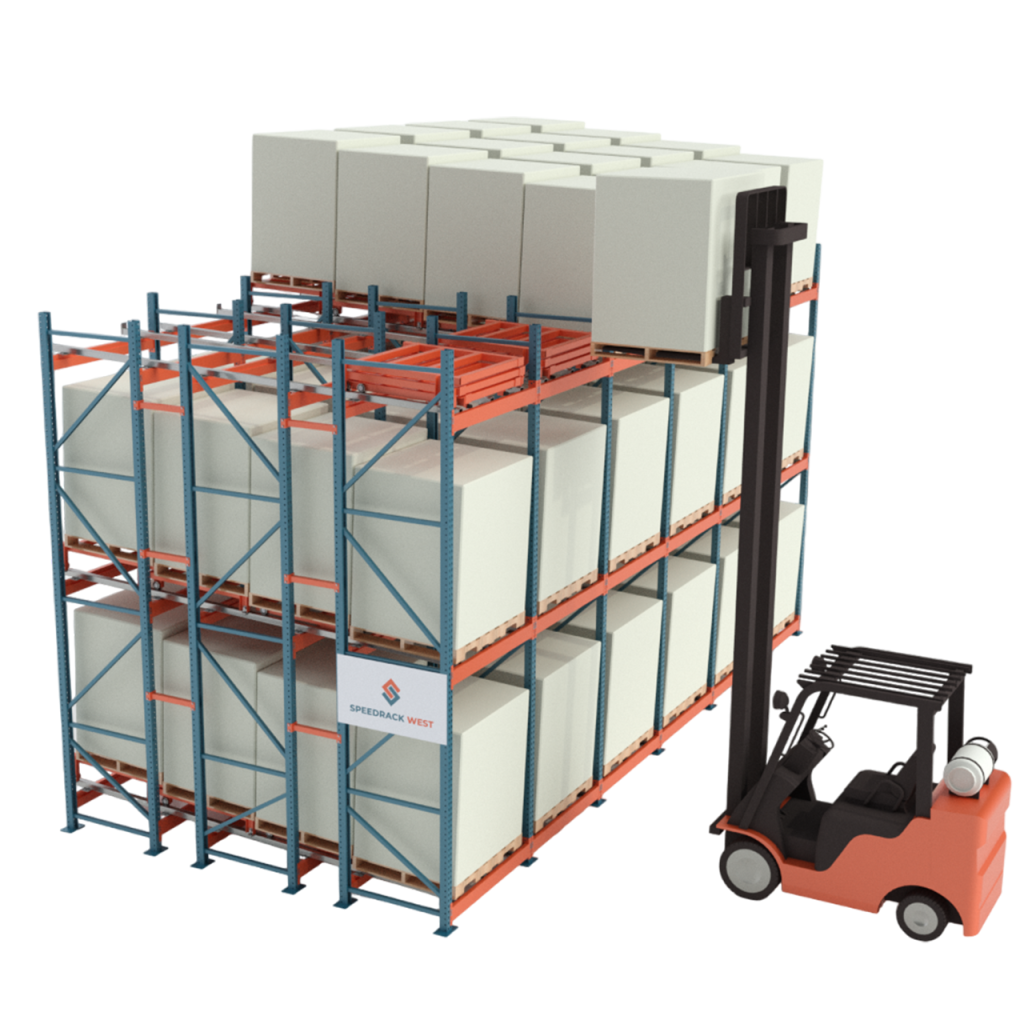
A push-back rack lets you store multiple pallets deep in the same lane, operating on the LIFO (Last In, First Out) principle. Unlike traditional pallet rack systems, which offer one pallet per position, pushback racking uses a cart-on-rail design that pushes previous pallets further back as new ones are loaded.
How Does Pushback Racking Operate?
The process is straightforward but effective. Here’s how it works:
- The forklift sets the first pallet onto a rolling cart located at the front of the rack.
- As the second pallet is added, the cart system gently pushes the first pallet further back, resting it on rails.
- This continues until the rack is fully loaded, typically from 2 to 7 pallets deep.
- When unloading, each pallet moves forward to the front of the rack, providing easy access for the operator.
Optimizing Warehouse Space with Pushback Racks
These high-density pallet storage systems reduce the number of aisles needed, allowing more storage within the same footprint. You can adjust the lane depth (up to 7 pallets deep) and height up to 4 levels. As you can see, a pushback rack system is flexible enough to fit your inventory management strategy. This is especially helpful for SKUs that require quick retrieval or operations that deal with high-density storage requirements. Since the system holds multiple pallets in each lane, it’s ideal for cold storage, bulk items, and SKUs that experience seasonal demand spikes.
Key Benefits of Pushback Racking:
- More storage space: By stacking multiple pallets in one lane, the system saves a ton of space.
- Efficient Loading/Unloading: The LIFO setup allows for quicker handling compared to drive-in racks.
- Less Aisle Space Required: Pallets are stored on rails, minimizing the distance that forklifts need to travel for loading and unloading.
- Minimize handling time: when moving a pallet through the channel, the forklift driver can work with another pallet.
- Compatible with Various Pallet Sizes: The system can be adjusted to fit a variety of pallet sizes, making it a versatile solution.
Pushback vs. Drive-In Racking
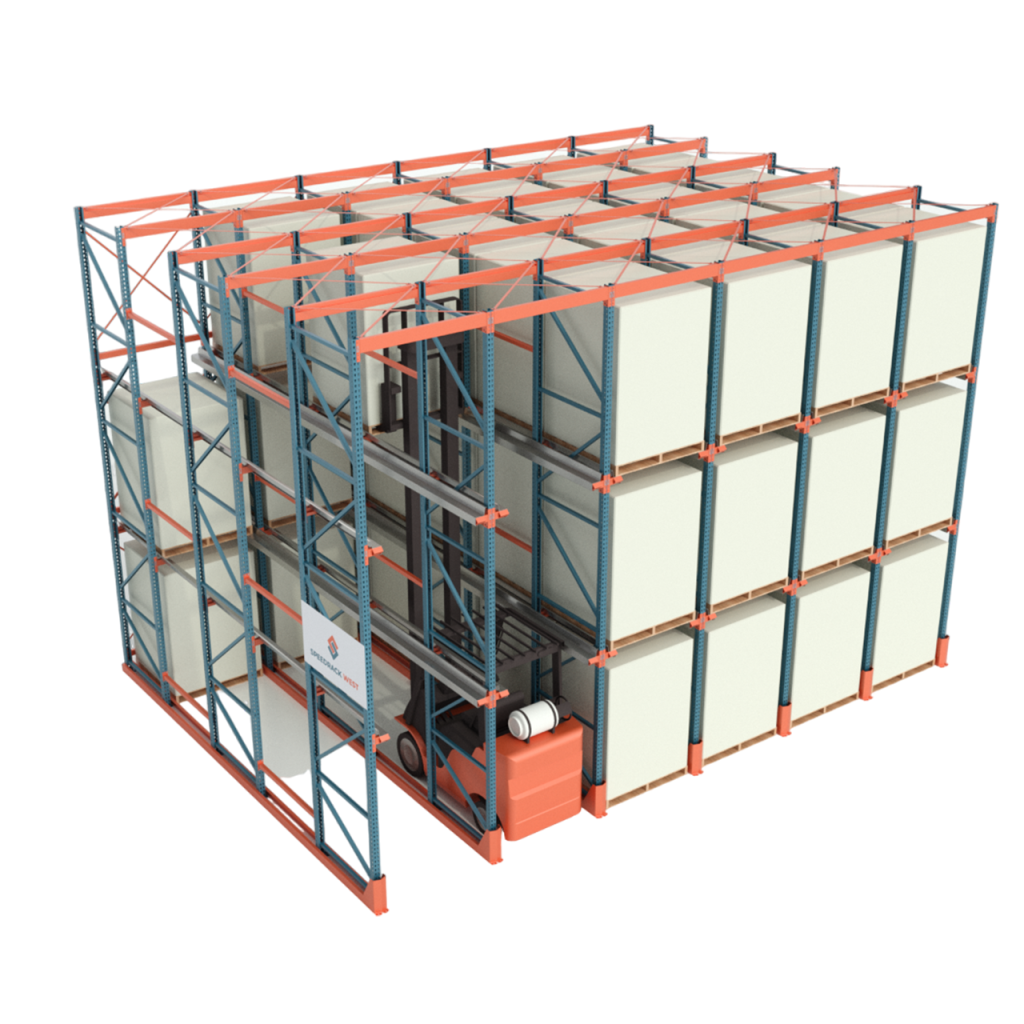
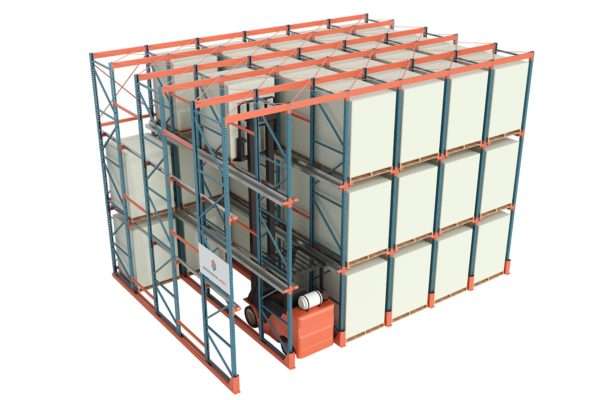
Both pushback and drive-in racks offer high storage density, but pushback racking provides better access to stored items. Manipulating the pallet in the aisle of the drive-in systems requires maximum attention and skill on the part of the forklift truck driver, unlike the pushback system.
Pushback Racking vs. Gravity Flow Racking
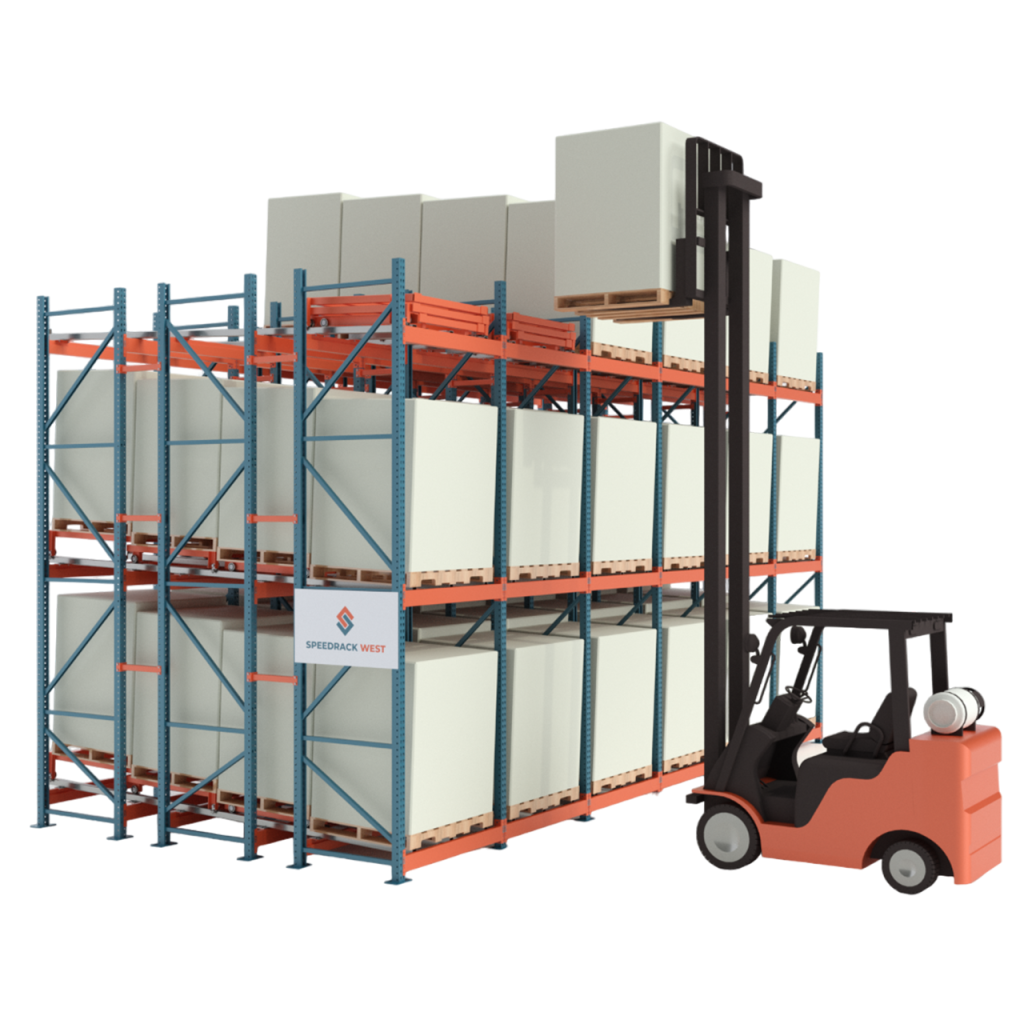
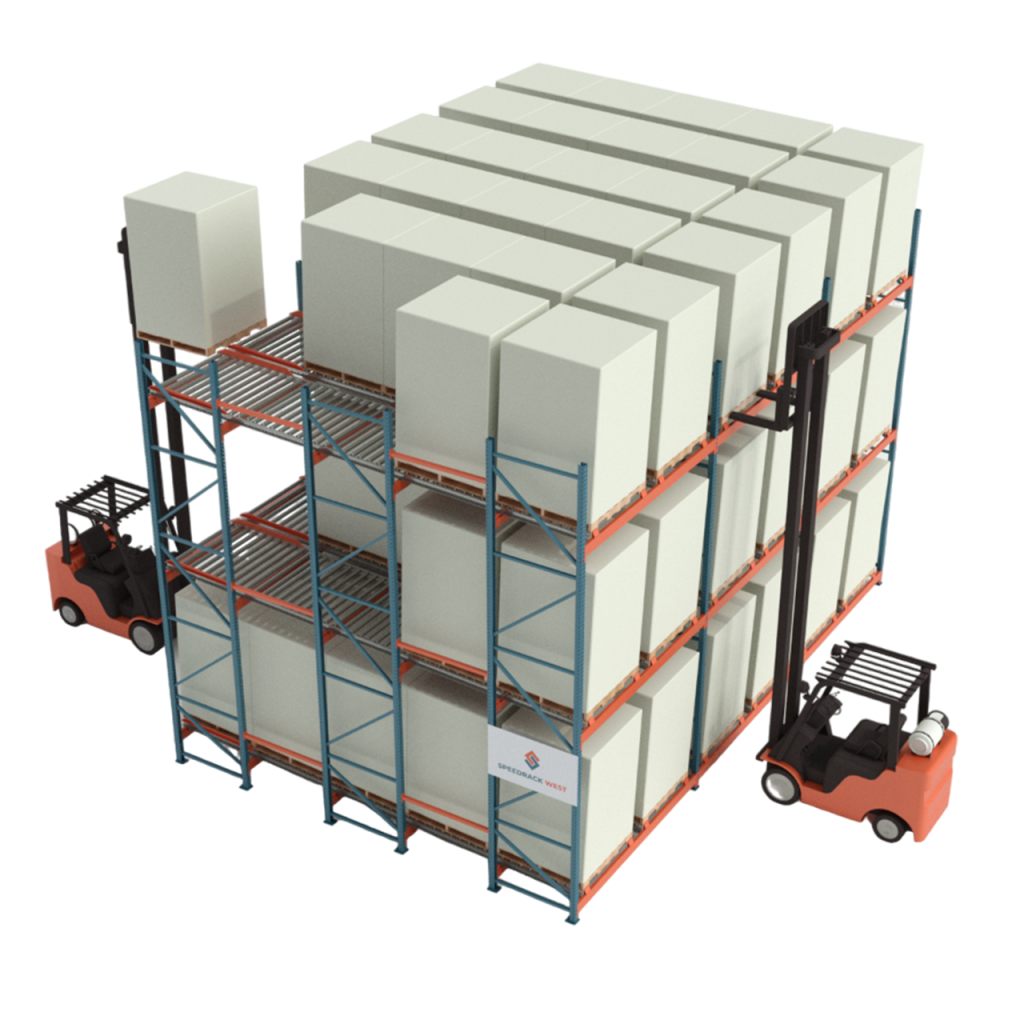
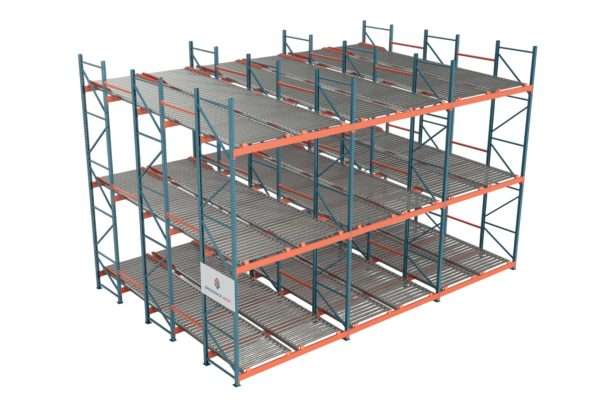
Gravity flow racking is suitable for FIFO inventory management, you can be sure that old stock will always be used before new stock. It’s often used for perishable goods or products with expiration dates (e.g., food, beverages, pharmaceuticals). The loading/unloading process makes the racking system ideal for continuous product turnover. That is because the racking design is due to pallets being loaded from the higher, rear end of the system, and gravity naturally moves them down toward the front, where they are unloaded.
Pushback racking systems are an effective, high-density storage solution designed to optimize your warehouse space. They enable businesses to store more products in less space while maintaining fast access for loading and unloading. If you’re looking for better storage, more space, and easy pallet handling, a pushback rack system is the way to go.
| Feature | Pushback Racking | Gravity Flow Racking | Drive-In Racking |
| System | LIFO (Last In, First Out) | FIFO (First In, First Out) | LIFO (Last In, First Out) |
| How It Works | Pallets push back on carts, retrieved front-first | Pallets roll forward on inclined rails via gravity | Forklift drives into lanes, placing pallets on rails |
| Storage Density | High-density, 2 to 7 pallets deep | High-density, up to 20 pallets deep | Very high-density, typically 6 to 10 pallets deep |
| Inventory Rotation | LIFO – newer pallets are retrieved first | FIFO – oldest pallets are retrieved first | LIFO – newest pallets are retrieved first |
| Loading/Unloading | From the same side (front) | Load from rear, unload from front | Loading and unloading occur from the same aisle |
| Best For | Bulk storage, non-perishables | Perishables, products with expiration dates | High-volume, low-SKU items needing maximum density |
| Aisle Space Needed | Reduced, since pallets are deep in racks | More space for flow lanes but reduced aisle count | Minimizes aisle space, ideal for large volume of identical SKUs |
| Access to Pallets | Access to front pallets only until others are removed | Continuous pallet flow, easy access to front pallet | Must remove front pallets to access deeper ones |
| Best Application | Warehouses needing high density with quick access | Environments requiring strict FIFO like food or pharmaceutical | Cold storage, large quantities of the same SKU |


Do you have any questions or comments?
Be the first and post your question or comment