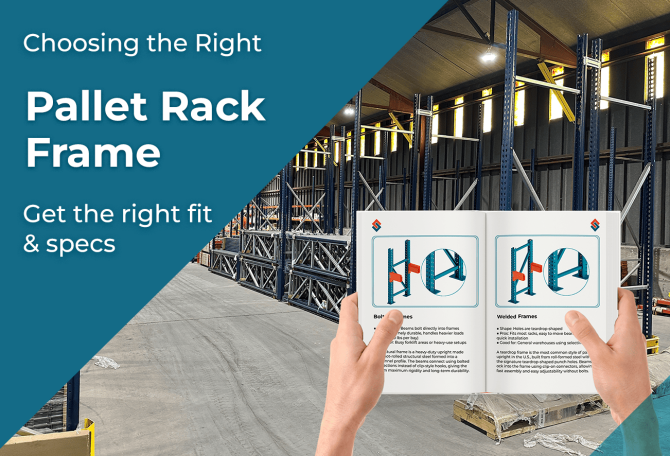

In this guide, we’ll show you how to pick the right upright frame from the start, so your racks stay safe, solid, and easy to work with. By the end, you’ll have a simple checklist to pick the right upright frame for your warehouse.
What Is a Pallet Rack Frame and Why Does It Matter?
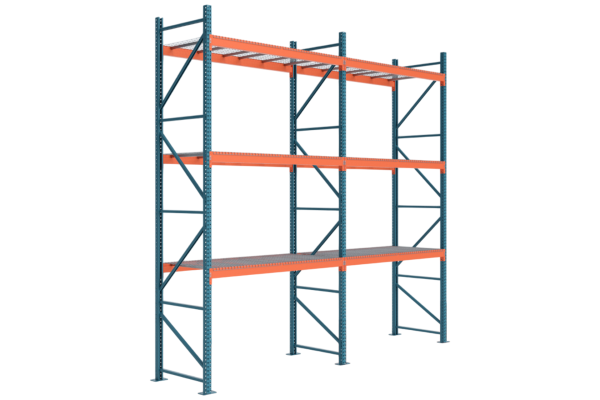
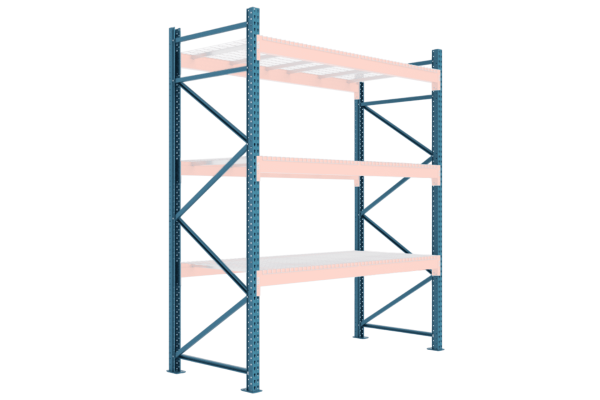
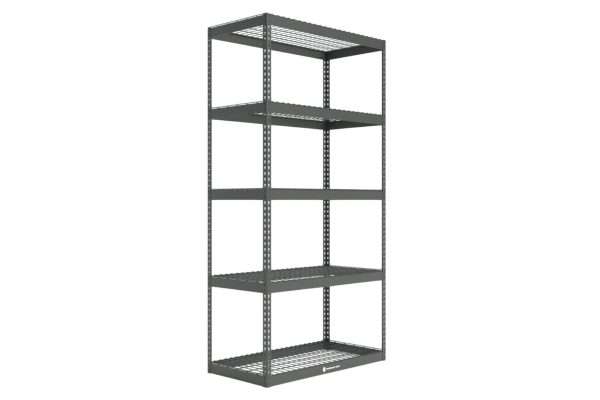
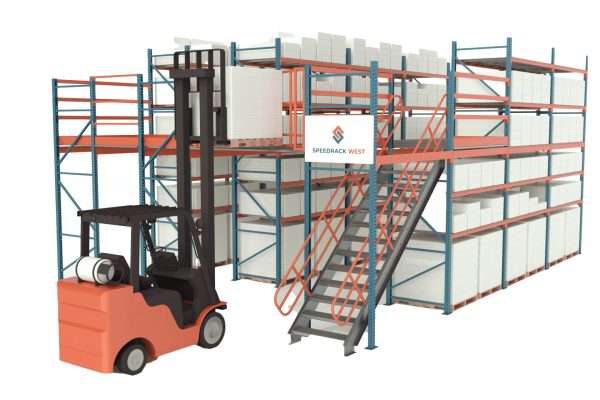
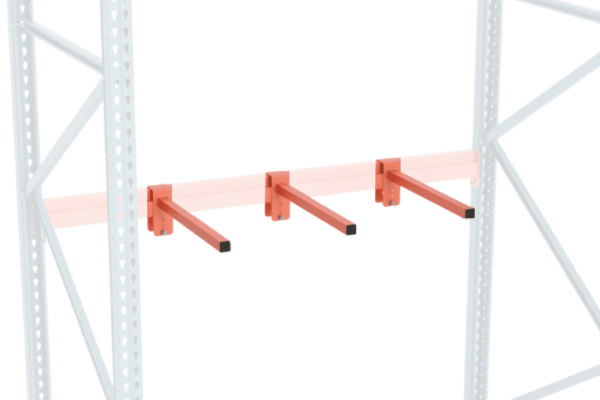
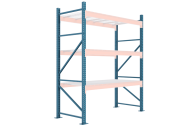
A pallet rack frame is the vertical structure that holds up your entire racking system. It’s two upright columns tied together with bracing — think of it like a steel goalpost holding your beams. Horizontal beams (with beam connectors) lock or bolt into the frame to create pallet levels.
Frames and Beams: Quick Breakdown
| Component | Role |
|---|---|
| Frame (Upright) | Supports vertical weight, sets height, depth, and stability |
| Beams | Connect frames horizontally and hold the actual pallets |
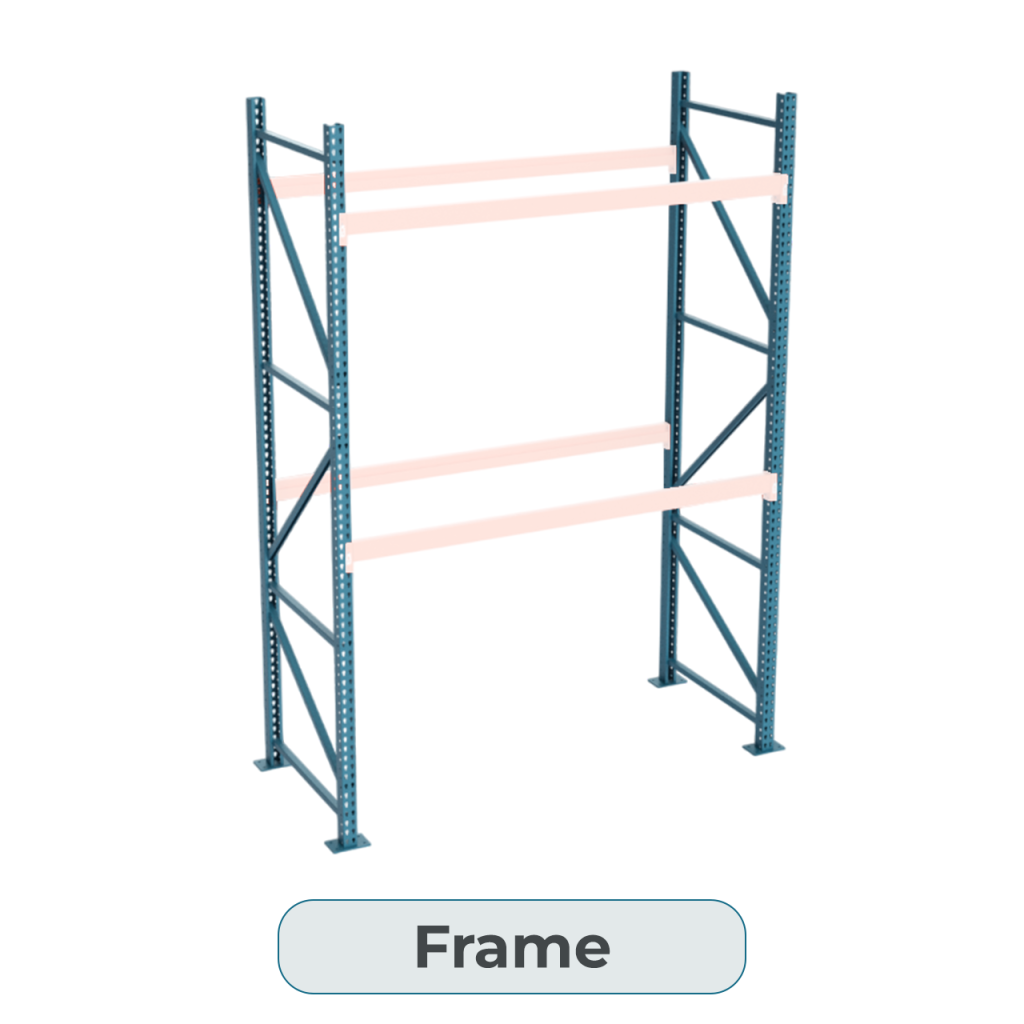
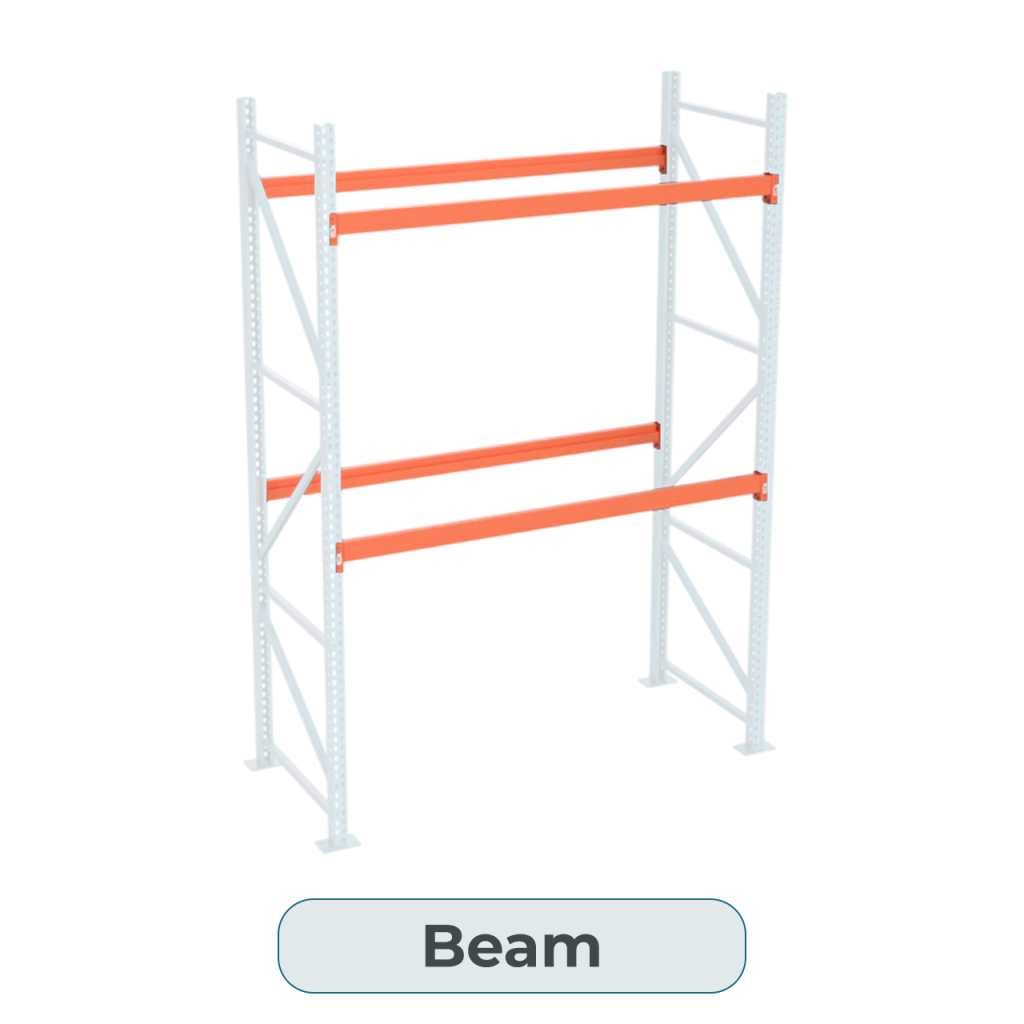
Why it matters: The frame sets your rack’s depth and strength, and even small sizing mistakes can cost you space and repair bills down the road.
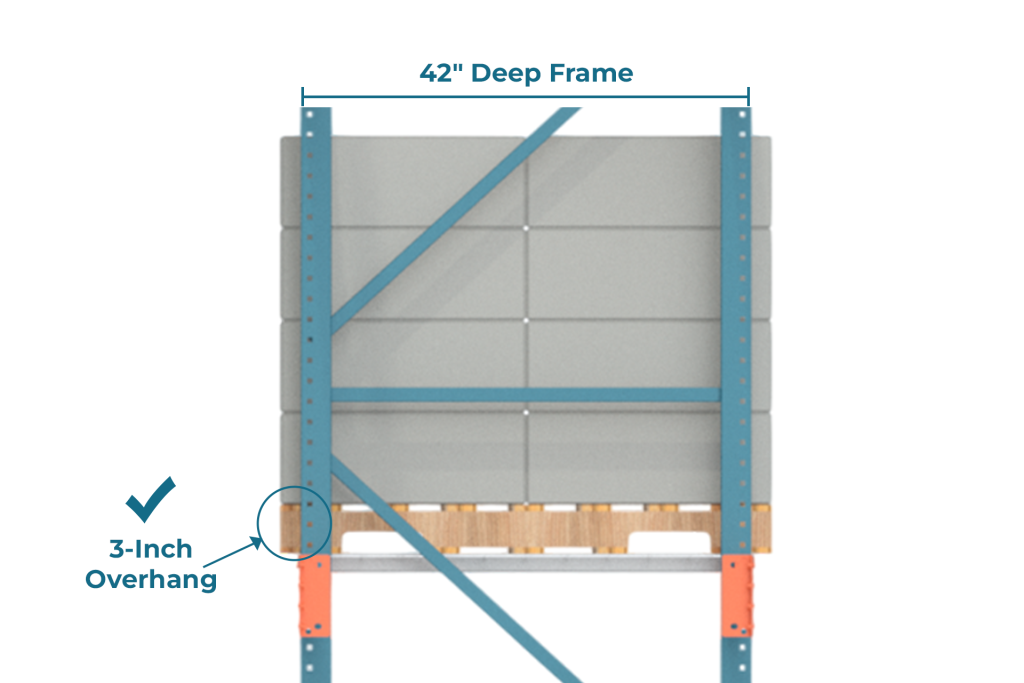
Here’s a sneaky trap: standard 48″ x 40″ pallets actually work best on 42″ deep frames, not 48″. That extra few inches of “support” might seem safer, but it removes the small overhang that forklifts need to lift pallets cleanly. With 42″ frames, you get about 3″ of pallet overhang front and back — the right amount for safe handling and less damage over time. That’s how our medium-duty teardrop frames are designed: safer and a better fit. Don’t learn this the hard way.
Pro Tip: Always start with frames — everything else depends on them.
Types of Pallet Rack Frames
There are a few main frame styles — and the right one depends on your setup. Here are the most common:
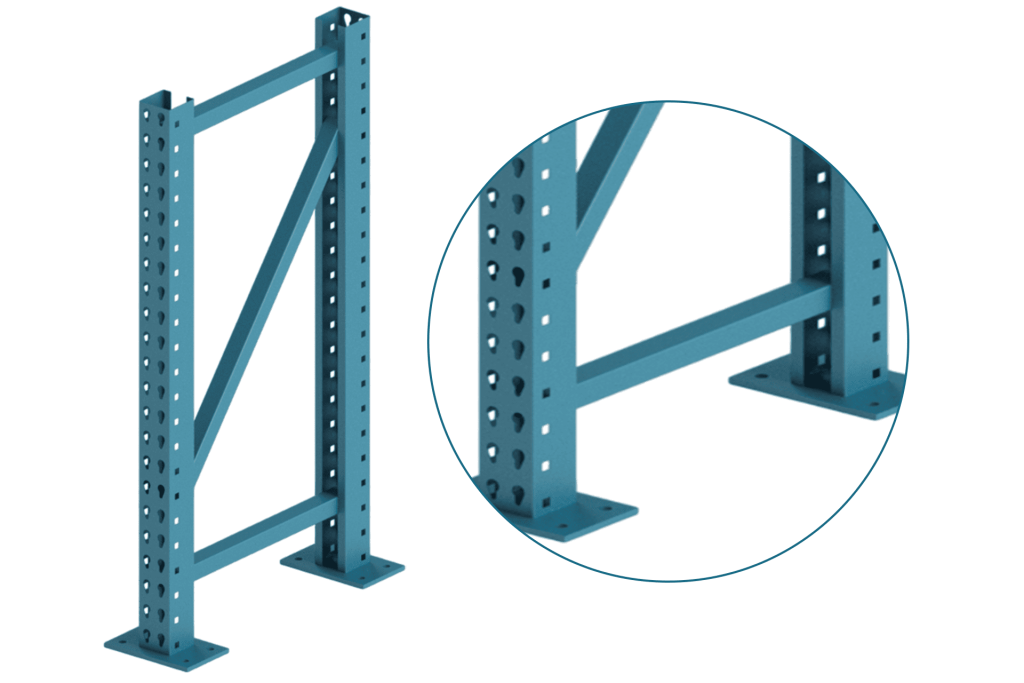
1. Welded Teardrop Frames (Most Popular)
- Bracing and channels are factory-welded (Up to 24,000 lbs capacity)
- Pros: Maximum rigidity, no hardware to loosen, fast installation
- Good for: Most standard warehouses, high-traffic forklift environments
2. Bolted Teardrop Frames
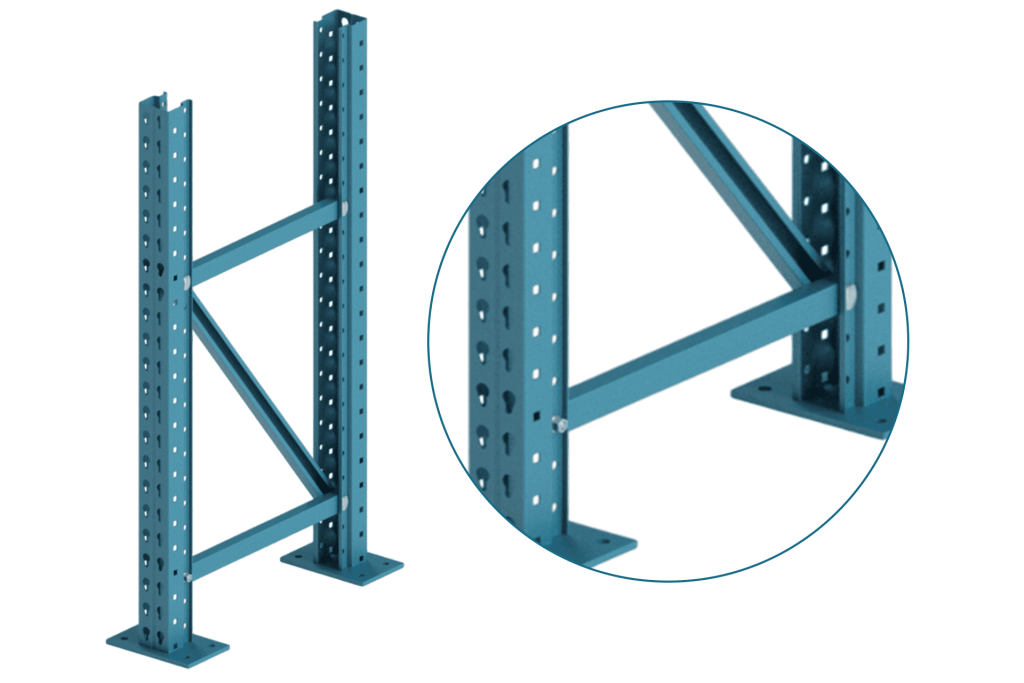
- Bracing is bolted together but uses the same teardrop pattern (Up to 18,000 lbs capacity)
- Pros: Easier to ship, often lower cost, parts can be replaced individually
- Good for: Light-to-medium-duty storage, budget-sensitive projects
Welded vs. Bolted Teardrop Frames
| Type | Material | Use Case |
|---|---|---|
| Welded | Fully welded uprights, no hardware | Best for heavy daily use, impact-prone aisles |
| Bolted | Upright components connected with bolts | Good for lighter-duty setups or flexible “replace-only-what-breaks” maintenance |
Pro Tip: Both welded and bolted teardrop frames work with standard teardrop beams — but welded frames stay rigid longer in high-impact environments.
Key Frame Specifications to Consider
Check these specs before you order your frames:
| Specification | What to Check | Why It Matters |
|---|---|---|
| Frame Height | Total upright height (96– 240″) | Must fit ceiling height and forklift’s lift reach |
| Frame Depth | Front-to-back measurement (24–48″) | Should match your pallet depth — leave about 3 in of extra space for safe loading (e.g., 42″ for 48″ pallets) |
| Column Size | Upright column dimensions (e.g., 3″ x 3″) | Larger means stronger |
| Steel Thickness | Gauge (lower number = thicker) | Thicker steel = higher capacity (check for RMI certification on the frame) |
| Load Ratings | Max weight per frame (e.g., 24,000 lbs) | Safety first — never go over the rated load |
Example: A 48″ pallet fits best on a 42″ deep frame — about 3″ of overhang front and back for safe forklift access.
How to Choose Based on Load Requirements
Your pallet’s weight determines how strong your upright frame needs to be. Here’s how to size your frame by weight:
Step 1: Weigh Your Heaviest Pallet
- Include pallet + product + packaging
- Example: 2,500 lbs per pallet (common for food/beverage storage)
Step 2: Calculate Weight per Level (Bay Load)
- 2 pallets per bay, where each frame supports half the bay load
- Use formula: Load per Frame per Level = (Pallets per Bay × Weight per Pallet) ÷ 2
- Example: 2 pallets × 2,500 lbs = 5,000 lbs total per level (bay load)
5,000 lbs ÷ 2 frames = 2,500 lbs per frame per level
If you have 4 levels, total frame load = 4 × 2,500 = 10,000 lbs.
Choose a frame rated for at least 10,000 lbs total capacity (e.g., medium-duty teardrop: 18,000 lbs total)
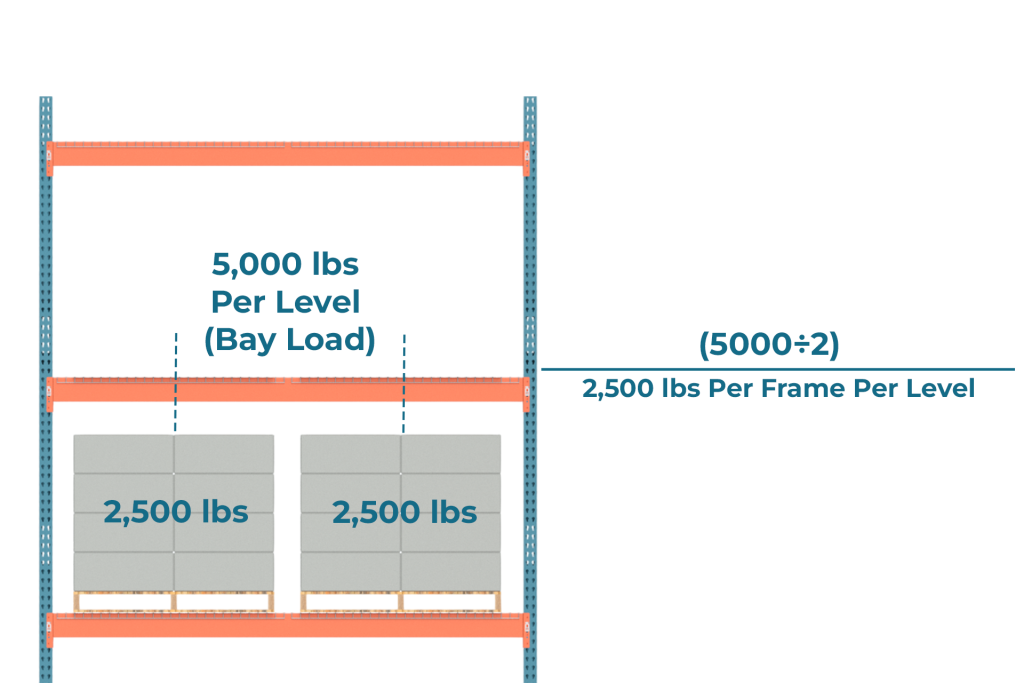
- Key Point: One frame supports half the weight of each level.
Total frame capacity = (load per level per frame) × (number of levels)
Step 3: Add Safety Margin (30–50%)
- Multiply your total frame load by 1.3 to 1.5 to add a 30–50% safety margin. This isn’t required, but it’s a smart practice unless your engineer or local code says otherwise
- Example: 10,000 lbs × 1.3 to 1.5 = 13,000 to 15,000 lbs total frame capacity needed.
Rule of Thumb: Round up to the next standard capacity (never down).
What Drives Frame Cost
Ever wonder why two pallet rack frames look almost identical — but one’s $130 and the other’s $350? It’s not a gimmick. The price reflects what’s inside the steel and how long it’ll hold up when real warehouse life kicks in.
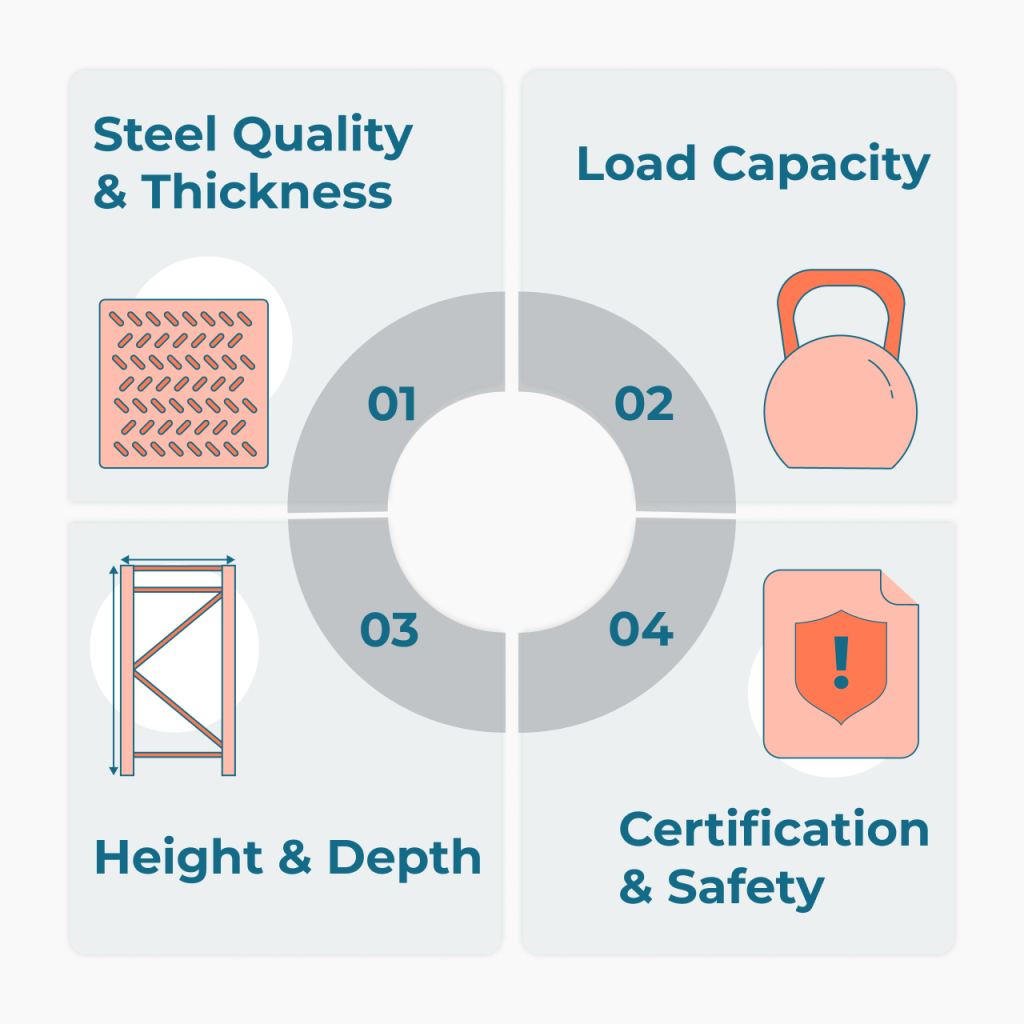
1. Steel Quality & Thickness. The thicker the steel, the stronger (and more expensive) the frame. Most American-made frames use high-tensile, rust-resistant steel — built to take years of forklift bumps without bending. Cheaper imports often cut corners with thinner gauge metal or poor galvanizing, which means early rust and replacements.
2. Load Capacity. More capacity means more steel — bigger columns, thicker bracing, and stronger welds. If you’re stacking light boxes, medium-duty works great. If you’re moving 2,500-lb pallets or running forklifts all day, go welded and you won’t have to replace it anytime soon.
3. Height & Depth. Taller or deeper frames cost more because they use more material and need added bracing. Always check your ceiling height and fire-sprinkler clearance before ordering.
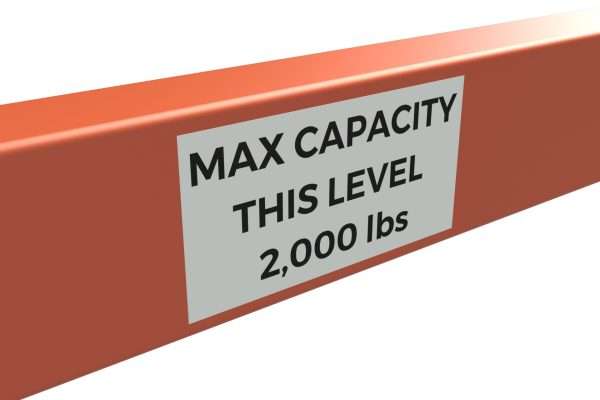
4. Certification & Safety. Every frame in the U.S. must meet RMI and OSHA standards — with load plaques, anchors, and (in some states) seismic permits. If you skip certification, inspectors can shut your system down before it’s even loaded.
The “Cheap Frame” Trap
You can find $80 frames online — but here’s what you often don’t see:
- No RMI engineering or verified load data — inspections get flagged
- Unknown steel thickness or brace patterns — real capacities are usually much lower than advertised
- No structural QA — bent posts, thin columns, or poor welding/bolting can compromise safety
- Hidden risk: if the frame fails, the entire pallet rack system can collapse
Bottom line: Cheap frames aren’t dangerous because of “no warranty.” They’re dangerous because you can’t trust their structural integrity, and once that’s compromised, no frame will hold the load it claims.
A quality, certified U.S.-made frame isn’t an expense — it’s protection. Start with a medium-duty bolted or heavy-duty welded frame, and you’ll have a system that runs safely for decades — no surprises, no shutdowns, no “do-overs.”
Final Checklist: Choose the Right Pallet Rack Frame
Get the Pallet Rack Frame Checklist
Avoid sizing errors and pick the right frame every time.
Ready to Build Your System?
Start with strong, reliable pallet rack upright frames from a supplier you trust:
- Browse pallet rack frames
- Explore full pallet rack systems
- Learn more: How to Select the Right Pallet Rack
Safety Note: Always have a professional engineer review high-bay or heavy-load designs.
You now have a complete, beginner-friendly roadmap to choosing the perfect pallet rack frame. Start measuring, planning, and building a safer warehouse today!
Save Time on Frame Selection
Send us your pallet dimensions and load — we’ll recommend the right frame in minutes.
Products, discussed in the article


Was this helpful?