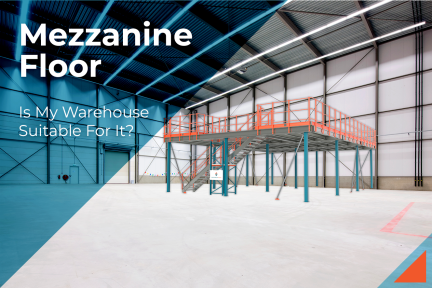
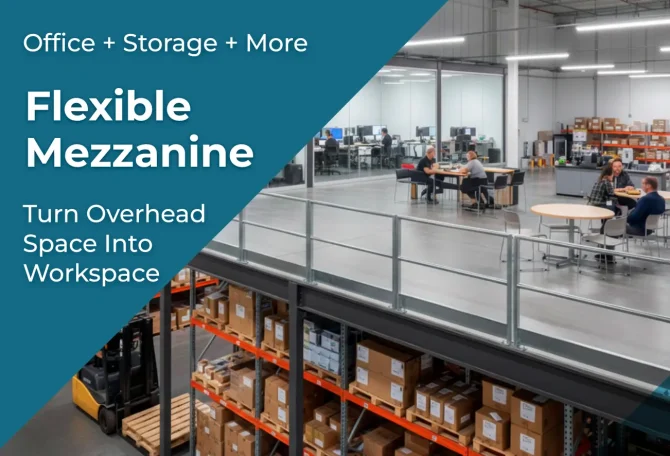

Let’s dive into the possibilities of mezzanine customization—and how the right setup can completely transform your workspace.
Why Customization Matters for Mezzanine Systems
No two facilities are exactly alike. What works perfectly for one business might be totally inefficient for another. Rather than squeezing your operations into a one-size-fits-all platform, a customized warehouse mezzanine is designed to support your specific workflow.
For example, a distribution center might need a mezzanine storage platform to handle high volumes of inventory, while a manufacturing plant might benefit more from a mezzanine with office space for better supervision and management. Customization allows you to address these specific needs without compromising on efficiency.
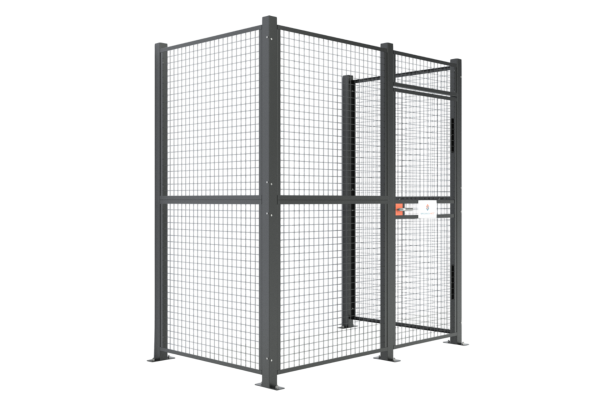
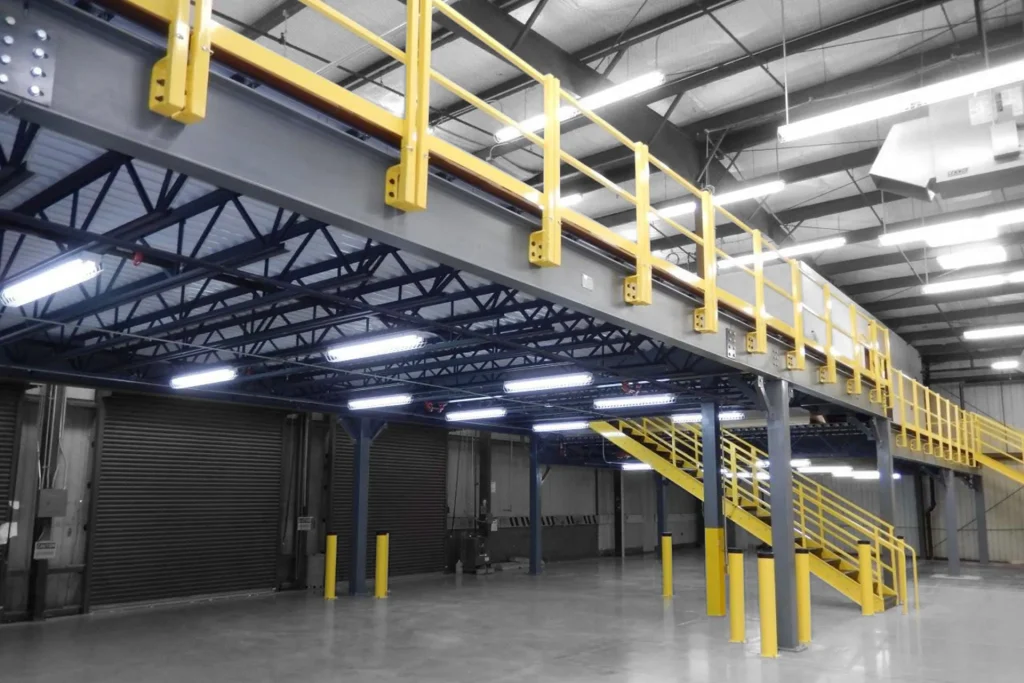
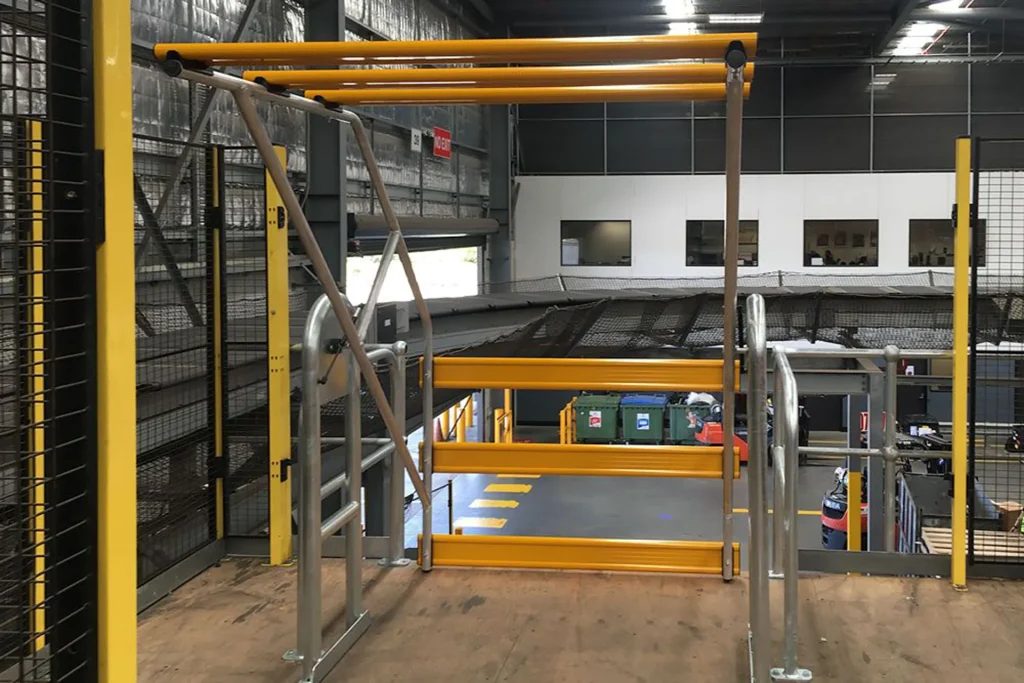
Additionally, the type of mezzanine and its intended use will determine the specific safety features required—such as safety gates, modular guardrails, and integrated lighting. These elements not only help your mezzanine comply with regulatory standards but also ensure a safe and functional environment for your team.
Office Spaces on Mezzanines
Think back to those old movies where you see warehouses and factories with offices perched above the floor, overlooking all the action. That design wasn’t just for show—it actually came from the Fordist and early Taylorist days, when keeping an eye on operations was a key part of management.
It wasn’t about following regulations; it was just smart, practical design. Supervisors or managers needed to see what was happening on the floor in real time.
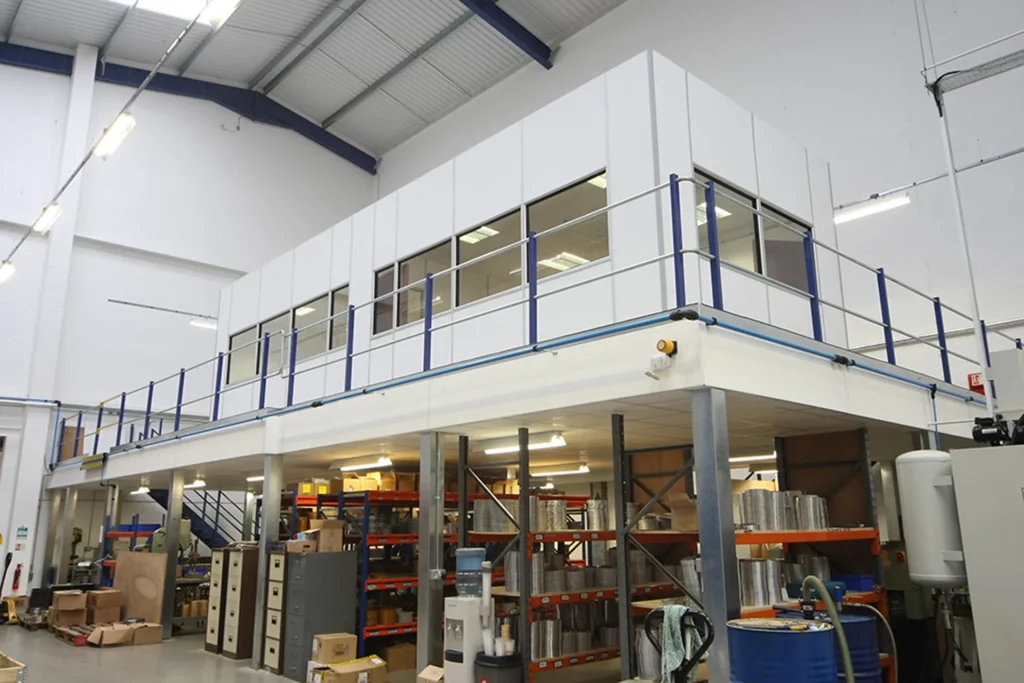
So, if you’re looking to create a command center with a clear, bird’s-eye view of your warehouse, adding a mezzanine-level office could be the ideal setup.
Why Go Up?
- Visibility: Supervisors can monitor operations from above.
- Space-Saving: Keeps the warehouse floor open for equipment and inventory.
- Quieter Environment: Elevated offices tend to be removed from the hustle and bustle, especially with soundproofing and insulated mezzanine enclosures.
How to create a comfortable and safe indoor environment?
- HVAC (Heating, Ventilation, and Air Conditioning) systems help regulate indoor temperature, air flow, and air quality to keep employees comfortable.
- Walls and Windows: Customize with drywall, glass, or modular panels.
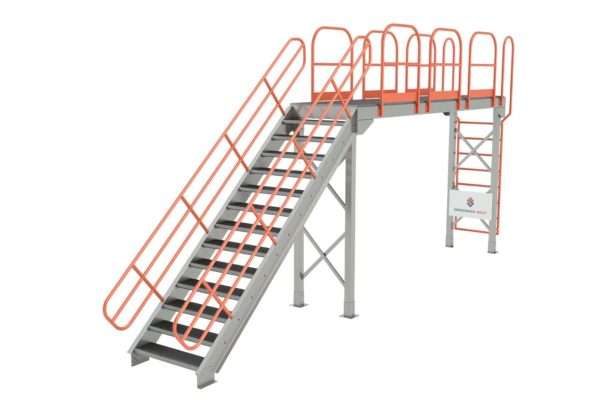
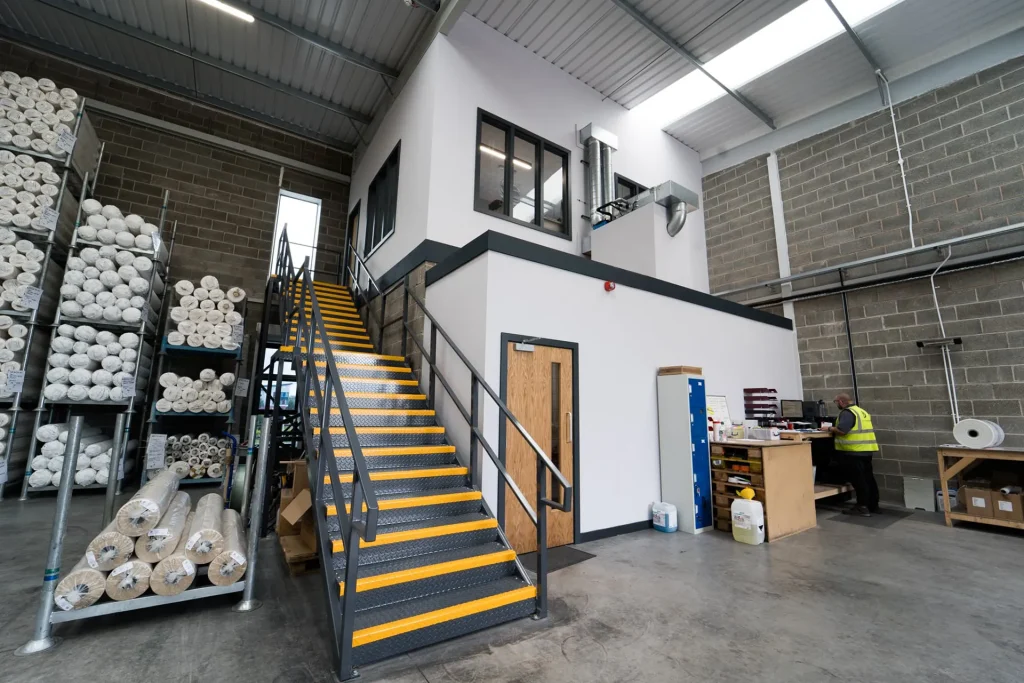
- Access and Safety: Add stairs, catwalks, and modular mezzanine guardrails to provide safe entry and exit. Find out what safety features should be included according to OSHA, ANSI, and IBC compliance.
Here’s what it looks like in practice.
Imagine a fulfillment center with a warehouse mezzanine office above their picking lines, providing supervisors with optimal visibility and a distraction-free space for meetings and admin work.
Storage Platforms and Material Handling
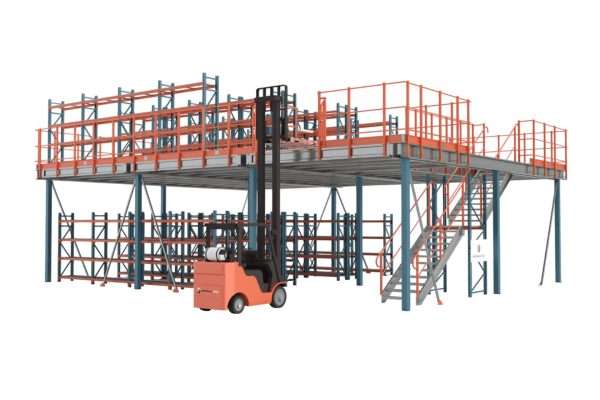
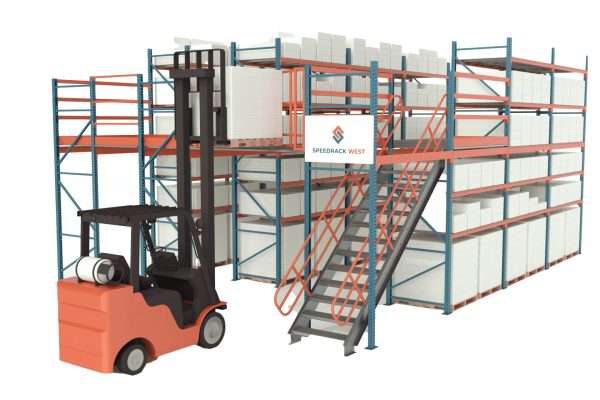
Storage is one of the most common—and most practical—uses for a mezzanine system.
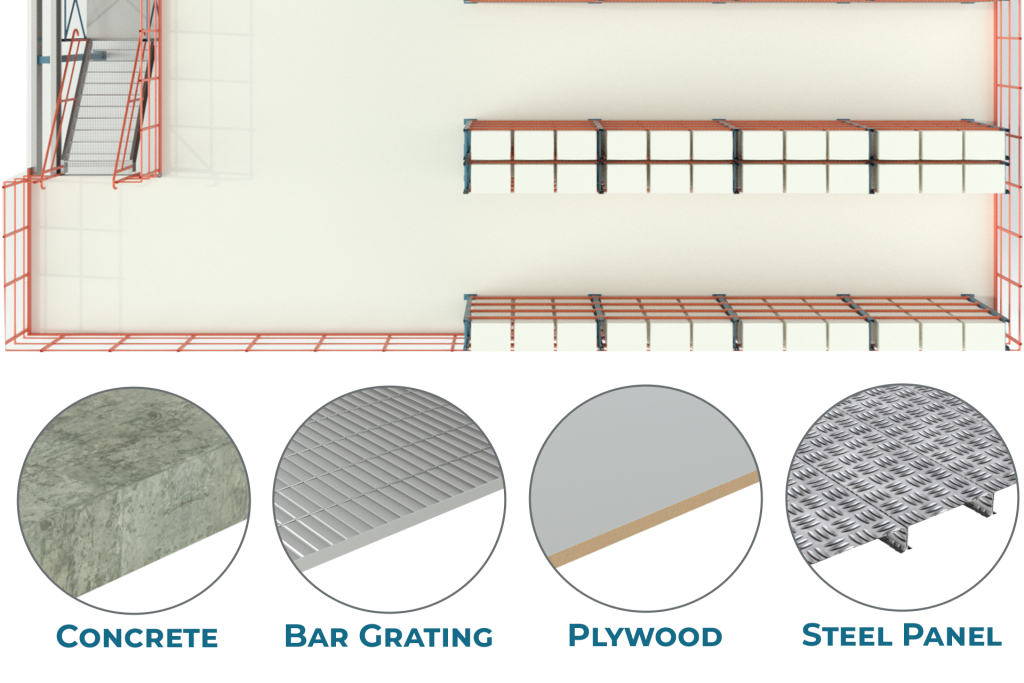
Build It for the Load. Different storage needs require different load capacities and decking options. There are four common flooring materials used in mezzanine platforms:
Concrete. Very durable but permanent—hard to move once installed.
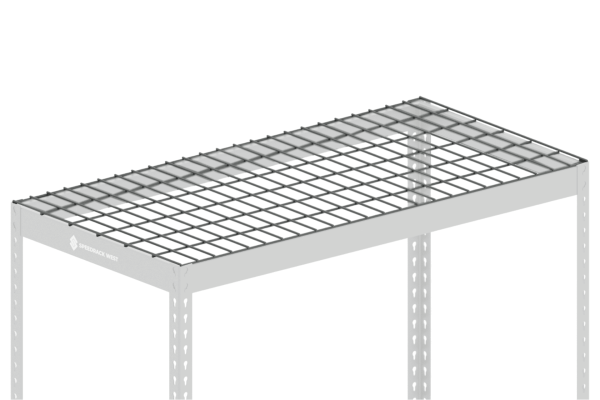
Bar Grating: Easy to install and clean; allows air, light, and heat to pass through.
Synthetic Plywood: Strong and durable—supports forklifts, AMRs, and AGVs.
Steel Metal Decking: Tough and cost-effective when used in high-traffic areas like drop zones.
Pick the right material based on what you’re storing—pallets, boxes, or equipment—for safety and efficiency.
What are the functional add-ons?
- Pallet drop zones with safety gates. A warehouse installs safety gates on mezzanine edges to safely load and unload pallets using forklifts.
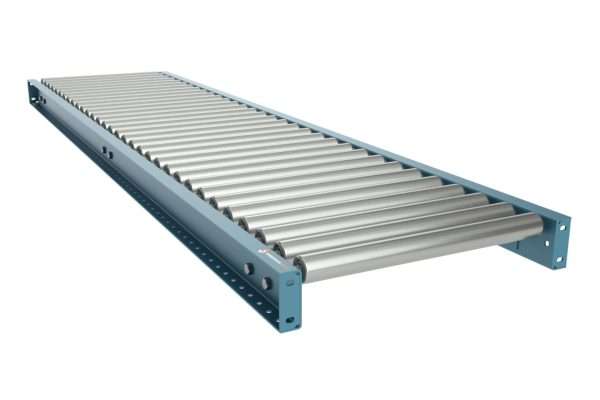
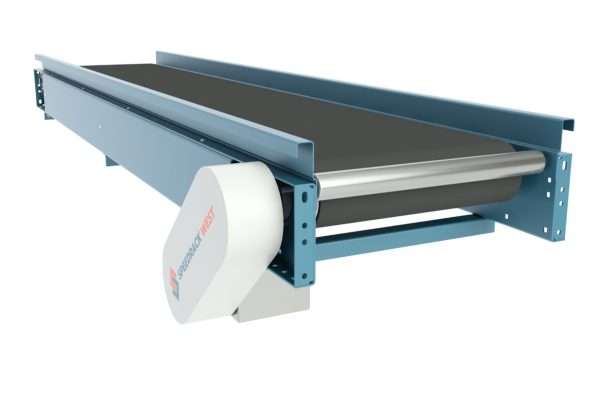
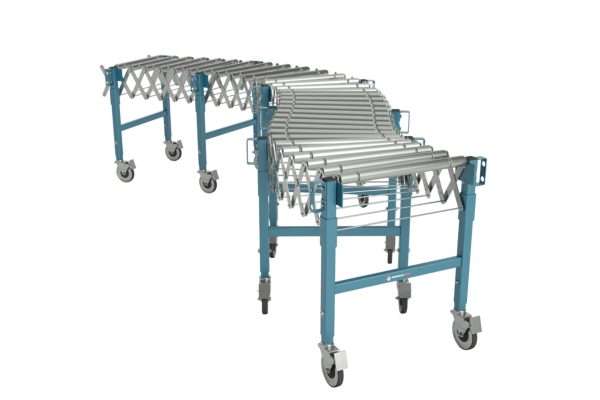
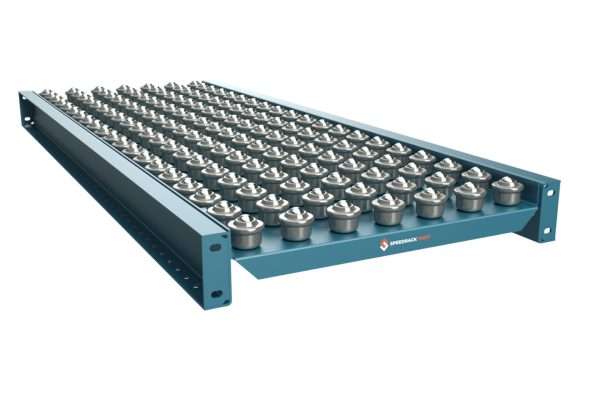
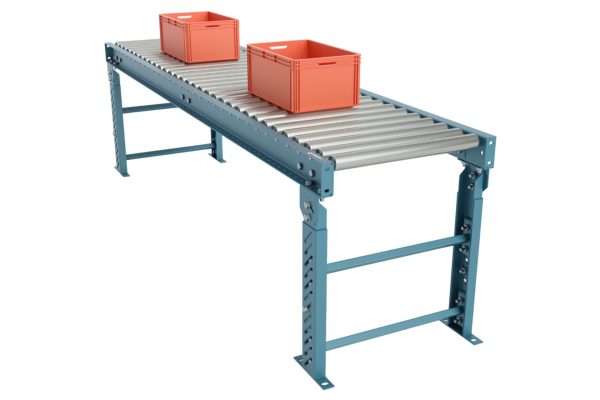
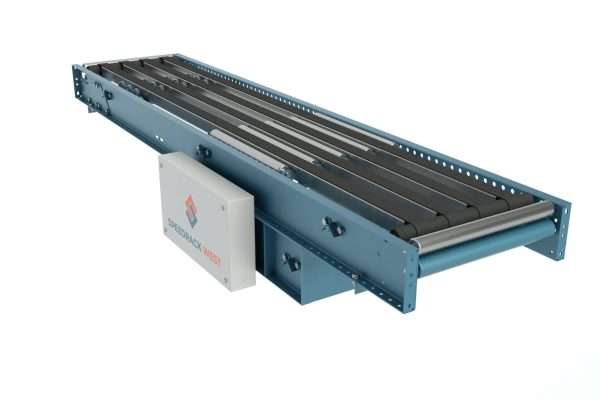
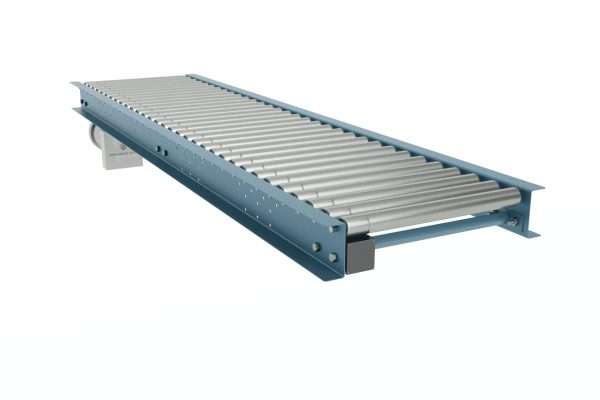
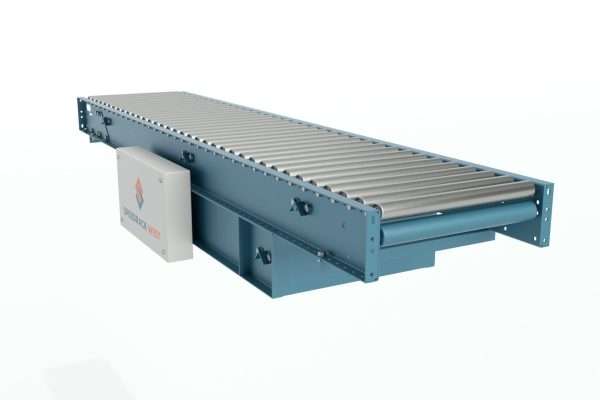
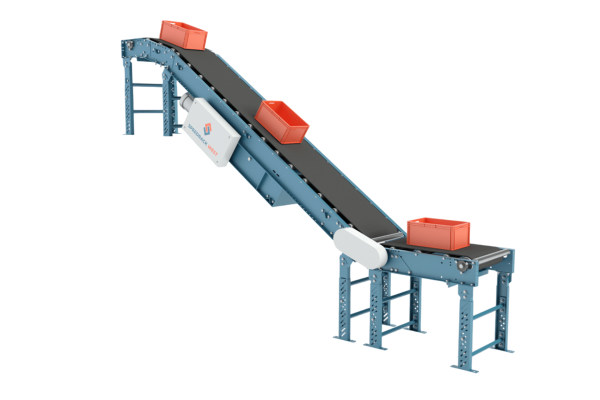
- Integration with material lifts or conveyors. A conveyor system connects the mezzanine to the ground floor, streamlining the movement of goods between levels.
- Adjustable shelving and racking systems. A distributor uses modular shelving on their mezzanine to reconfigure storage layouts as inventory changes in high and low seasons.
Got a Use Case? We Do. Imagine a parts distributor using a mezzanine storage zone placed above the docking area. This setup allows the company to stack bulky SKUs, doubling their inventory space without relocating or disrupting the main storage area.
Breakrooms, Meeting Rooms, or Labs
Mezzanines aren’t just for storage and offices. Many businesses are using modular mezzanine platforms to create comfortable, functional spaces for employees and specialized tasks.
Ideas That Work
- Breakrooms for employee relaxation. MPM⁵ added a mezzanine canteen and breakroom above part of its production area, boosting floor space by ~20% while giving staff a communal space to recharge and build team spirit.
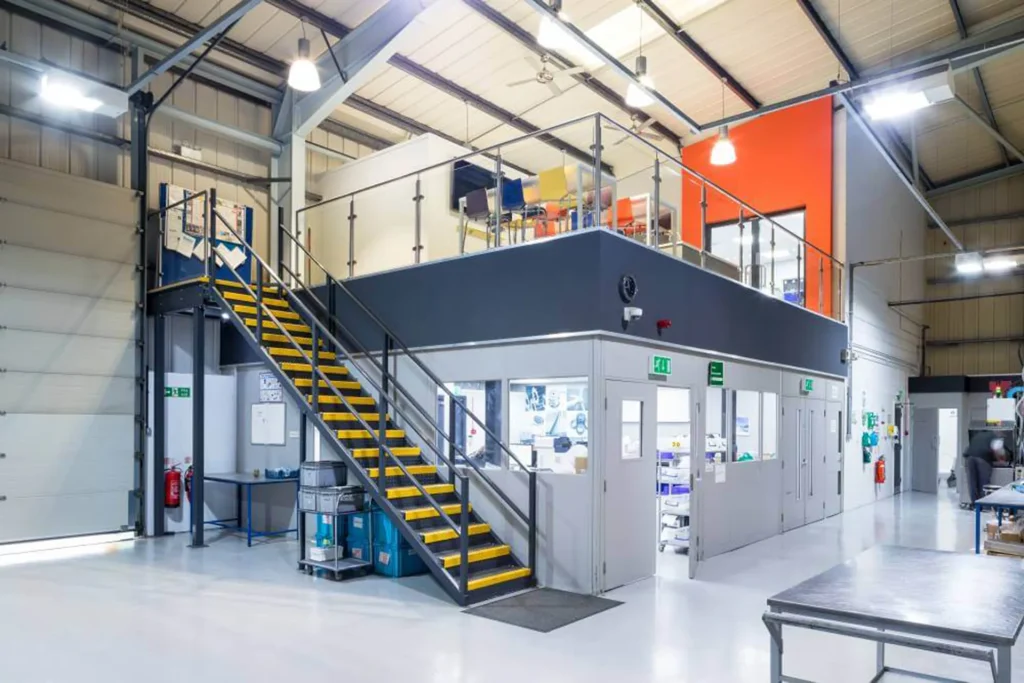
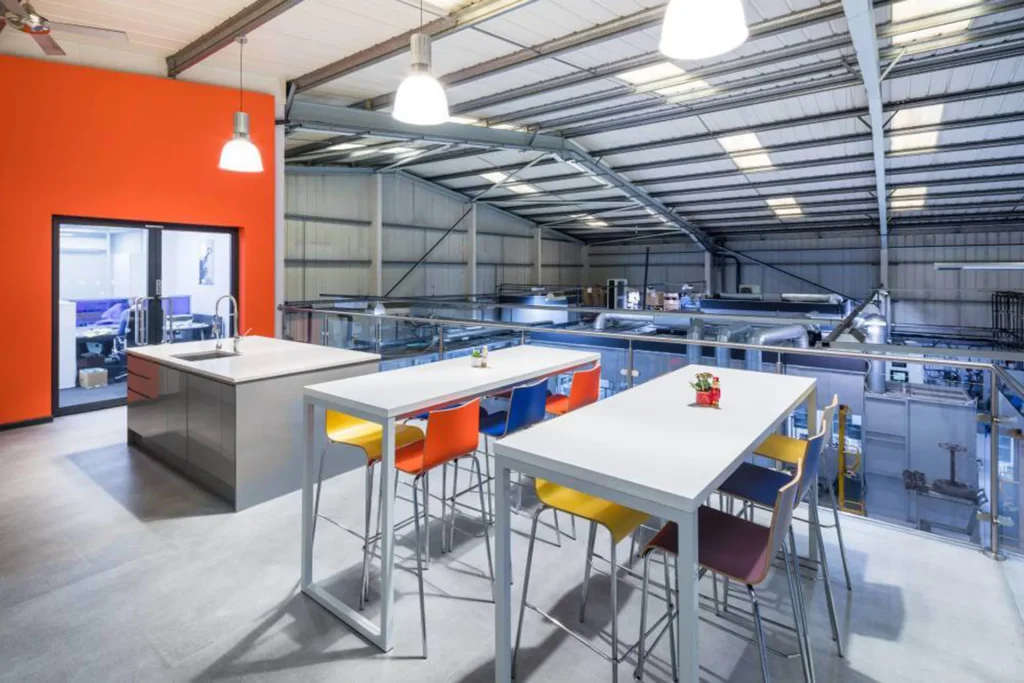
Image Credit: D.L. Storage⁶
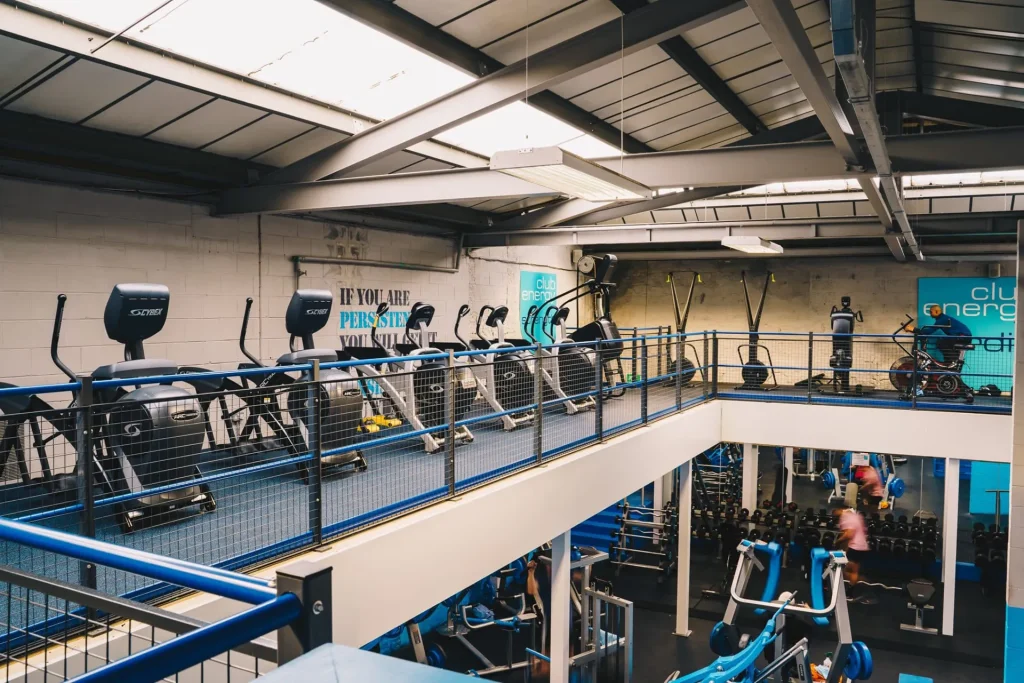
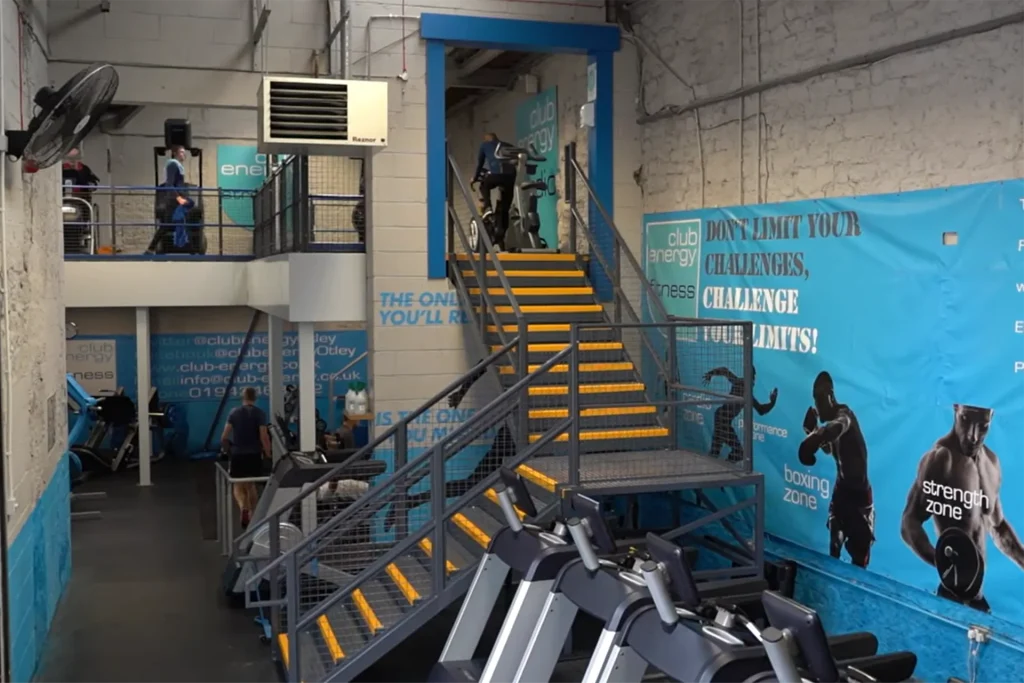
- Conference rooms or training spaces. Although primarily fitness-oriented, Club Energy⁷ installed a mezzanine to add workout zones, often doubling as a social/break area for staff and members during off-peak hours. It’s genius, isn’t it?
- Laboratories or cleanrooms, especially when isolated from the main floor. A 3,744 sq ft Class‑100 (ISO 5) modular cleanroom⁸ was built over a 125 PSF-rated mezzanine. Designed for photonics R&D, it features static-dissipative floors, ESD walls, and integrated HEPA fan units—all on an elevated platform.
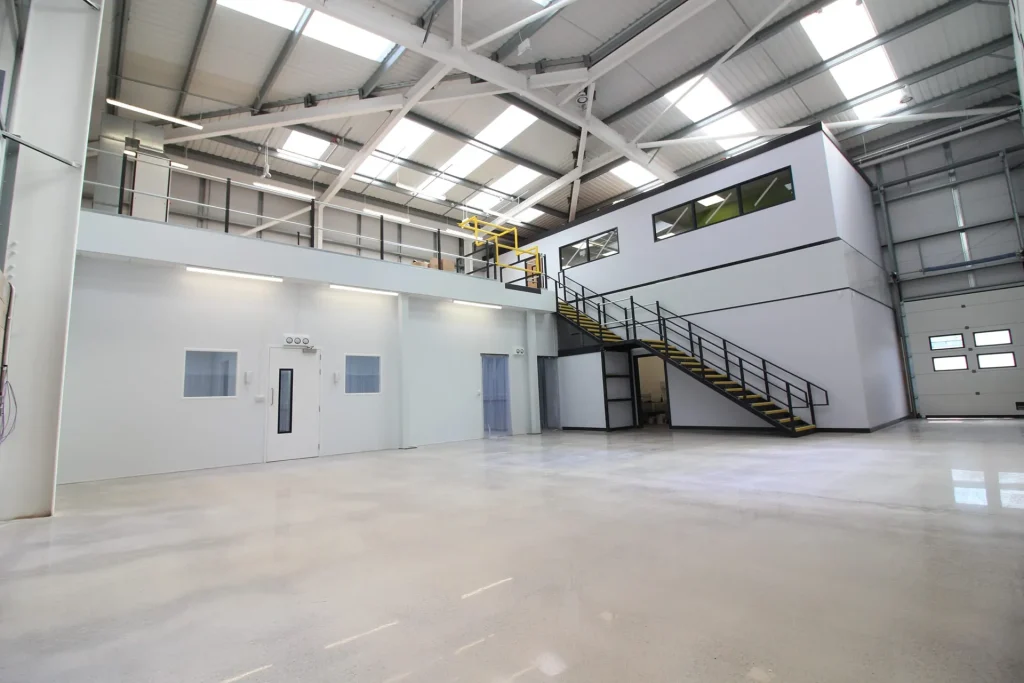
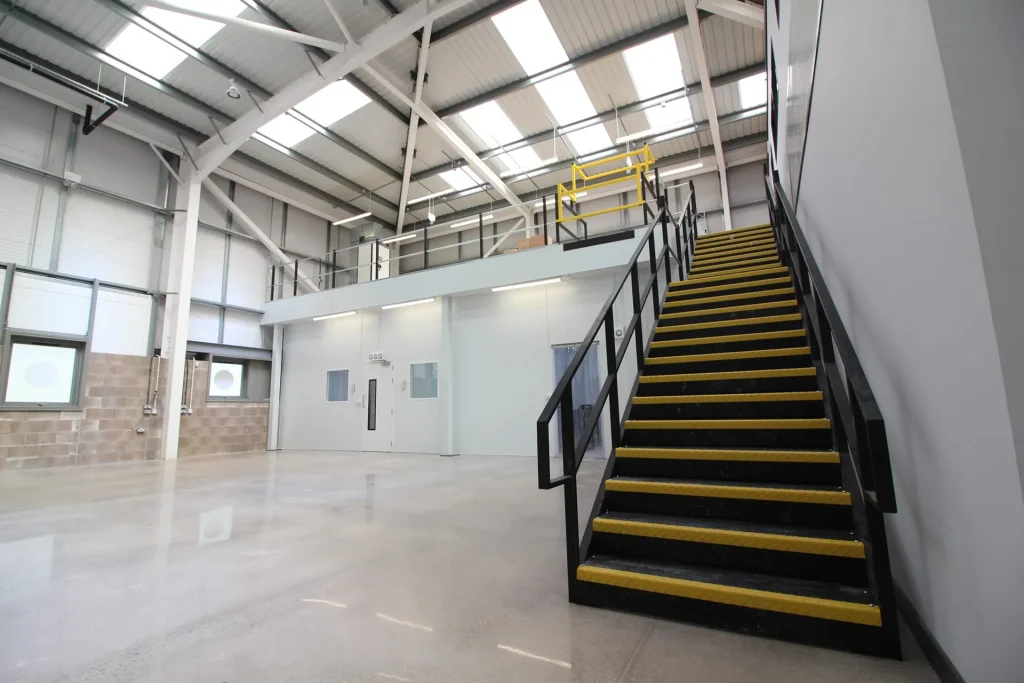
Image Credit: Nexus Workspace⁷
Key Custom Features
- Insulation and drywall finishes for climate control
- Integrated lighting and power for functionality
- Soundproof office walls to create a quiet atmosphere
The beauty of modular mezzanine design is flexibility. Whether you’re adding safety features or building for unique equipment, the options are almost endless.
Other Custom Features You Can Add
Here are some customizable components worth considering:
- Stairs, ladders, and catwalks for access.
- Guardrails and handrails for safety compliance.
- Integrated lighting, sprinkler systems, and fire-rated panels.
- Equipment platform mezzanine for conveyor systems, HVAC units, or processing equipment.
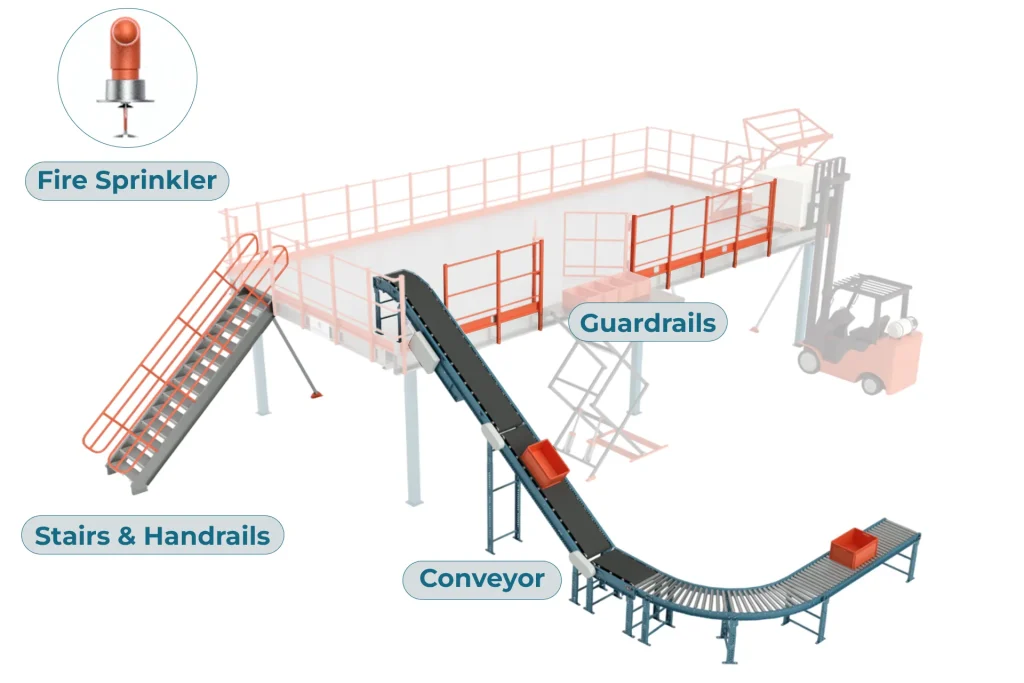
If you can imagine it, chances are it can be built.
Real-World Examples
Office + Storage Combo – FBO Air (Wilkes-Barre/Scranton, PA).
FBO Air⁹, based at Wilkes-Barre/Scranton International Airport in Pennsylvania, installed a steel mezzanine in their aircraft hangar to maximize space. The design features a modular office on the upper level—housing FAA and management offices, plus a parts room, each with individual HVAC controls, carpet, and shelving—and tool storage and work space below. The solution created a professional environment for business and mechanics alike without expanding the hangar’s footprint.
Mezzanine Breakroom Above Packing Line – Generic Warehouse Case
Florida Crystals Food Corporation¹⁰ needed a secure, efficient office space above their packing line. The solution: a custom 11′ x 45′ mezzanine office. The structure includes 9-foot interior walls, a steel-insulated roof, tempered-glass windows, and a full electrical package—all elevated on a mezzanine rated at 80 PSF load capacity with 151″ of clear height. Secure access is provided via code-compliant stairs and handrails. The mezzanine office maximized space without disrupting floor operations, meeting high standards for safety, quality, and durability.
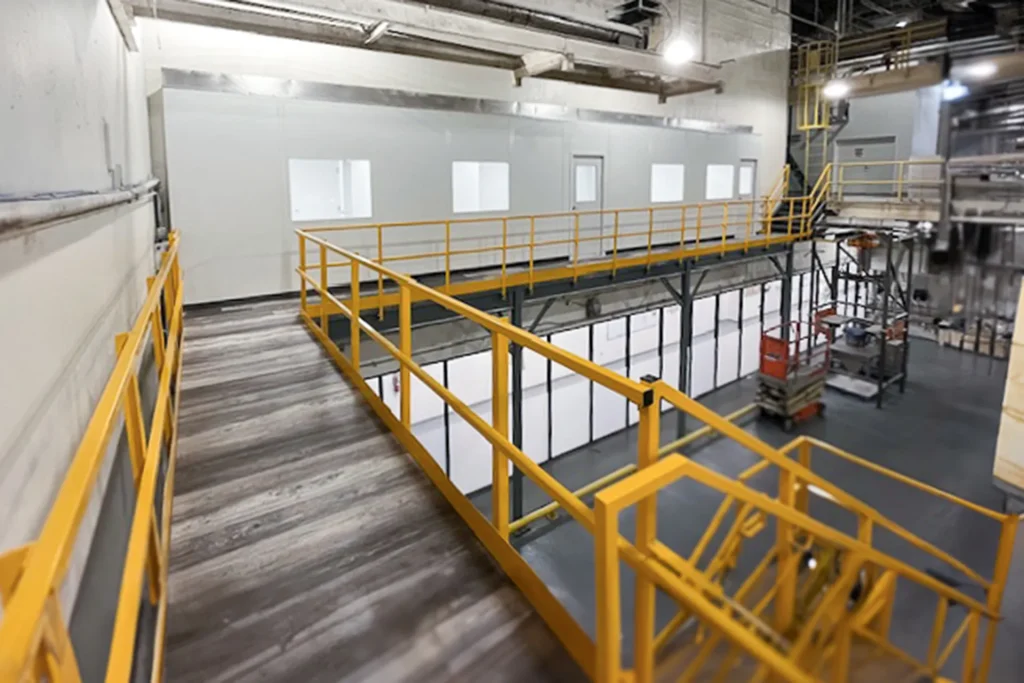
Modular Lab Space Above Cold Storage – S&C Electric’s UCS Lab (Westmont, IL)
S&C Electric¹¹ needed a testing lab but didn’t want to give up valuable storage space. The choice was an enclosed lab with a mezzanine overhead that preserves floor space while adding flexibility. This lab features climate control and clean lines, keeping sensitive testing separate from the main production floor. Moreover, the structure was designed so that in the future, the company could turn the additional storage space into offices or another laboratory.
Why These Solutions Work
- Vertical Optimization. You can add new workspace—offices, breakrooms, labs—without expanding the building footprint.
- Operational Isolation. Easily separate functions (e.g., meetings or testing) from the main floor to reduce noise, temperature mix, or disruptions.
- Fast & Modular Deployment. Mezzanines are often prefabricated and installed rapidly compared to ground-up construction.
Final Thoughts: Start with the Right Plan
Mezzanine systems are an investment—but with the right approach, they’re one that pays off in a big way. Whether you’re building a mezzanine with HVAC and walls for offices, a high-load storage mezzanine, or a multi-use mezzanine buildout, the key is planning with flexibility and integration in mind.
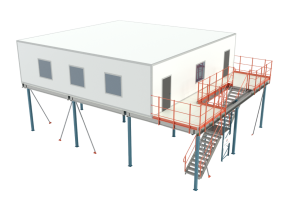
Plan Your Custom Mezzanine
Tell us how you want to use your space—offices, storage, labs, or breakrooms—and our team will design a mezzanine concept that fits your building, workflow, and code requirements.

Was this helpful?