
How to Calculate Usable Space From a Mezzanine
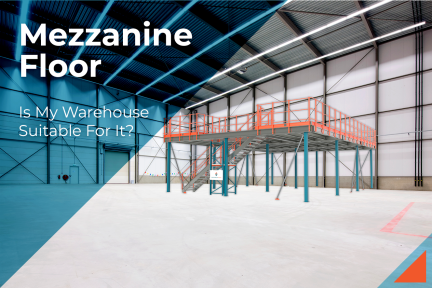
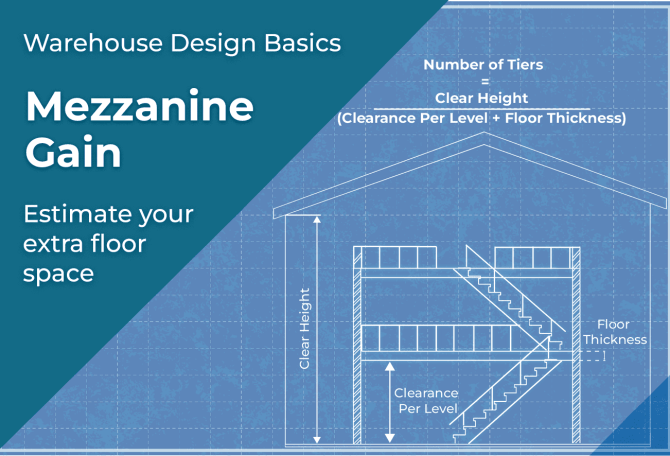
The basic mezzanine space calculation starts with understanding your clear height—the distance from the warehouse floor to any overhead obstructions such as lighting, HVAC ducts, or structural beams. For a deeper dive into this, see our article: Is My Warehouse Suitable for a Mezzanine Floor?
Formula:
- Total usable mezzanine area = Number of tiers × Mezzanine coverage area
- Number of tiers = Clear height / (Clearance per level + Mezzanine floor thickness)
Example Calculation:
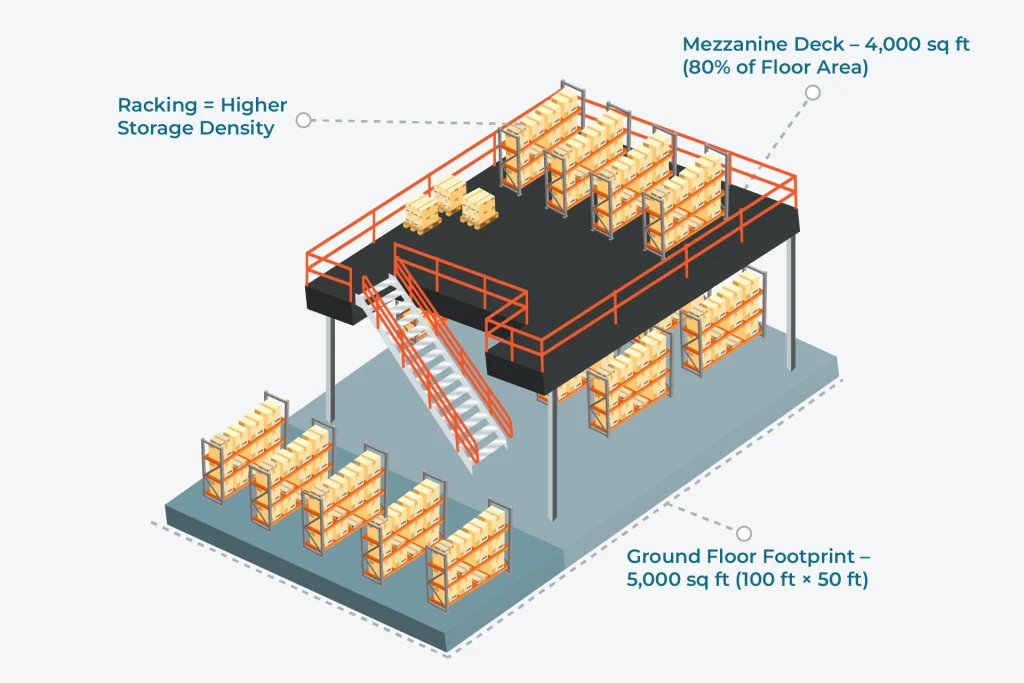
Let’s say your warehouse is 100 ft. long and 50 ft. wide, giving you a total floor area of 5,000 sq. ft. If the clear height is 20 ft., and you allow at least 7 ft. of clearance both above and below the mezzanine (as recommended by building codes), you can comfortably install a single-tier mezzanine with space to spare for floor structure and overhead systems.
Assuming the mezzanine covers 80% of the floor area, you gain an additional 4,000 sq. ft. of usable space. Add shelving racks, and your storage capacity increases even further.
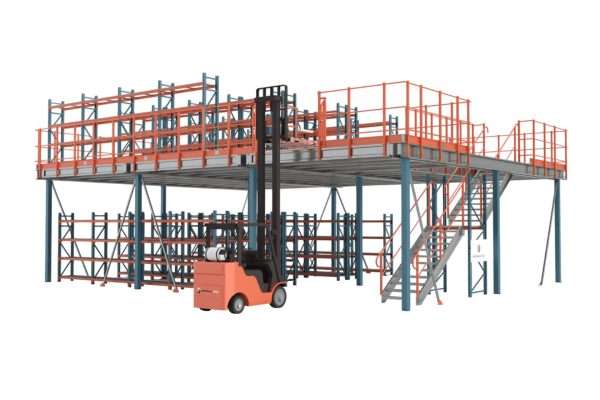
In effect, you now have 5,000 sq. ft. on the ground and 4,000 more above it. With properly chosen equipment—like racking systems designed for your specific loads—you can maximize the mezzanine’s efficiency, gaining even more usable space within the same footprint.
Can you gain more space? Definitely yes!
In a warehouse measuring 120 ft by 80 ft (120 × 80 = 9,600 sq. ft) with a clear height of 32 ft, and allowing 8 ft of clearance per level plus 1 ft for mezzanine floor thickness, you can install 2 mezzanine tiers.
If each tier covers 75% of the 9,600 sq. ft floor area, then:
- Mezzanine coverage area = 9,600 × 0.75 = 7,200 sq. ft
- Total usable mezzanine area = 2 × 7,200 = 14,400 sq. ft
Thus, you gain 14,400 sq. ft of additional usable space above the ground level.
If you are someone asking, “Does a mezzanine double my floor space?” the answer is: it depends, primarily on your available height, design choices, and storage strategy. Under ideal conditions, a mezzanine can double, triple, or even multiply your usable square footage several times over. It’s one of the most efficient ways to expand capacity without expanding your building’s footprint.
How Much Mezzanine Space Could You Add?
Share your building dimensions, clear height, and storage goals. We’ll run a mezzanine space calculation and outline realistic options to expand capacity inside your existing footprint—before you commit to a full design.
Factors That Affect the Space You Actually Gain
Before getting too excited about the increased footprint a mezzanine offers, it’s important to understand that not all the added space is 100% usable. Several key factors influence the actual value you get from vertical expansion:
Column Spacing and Load Requirements
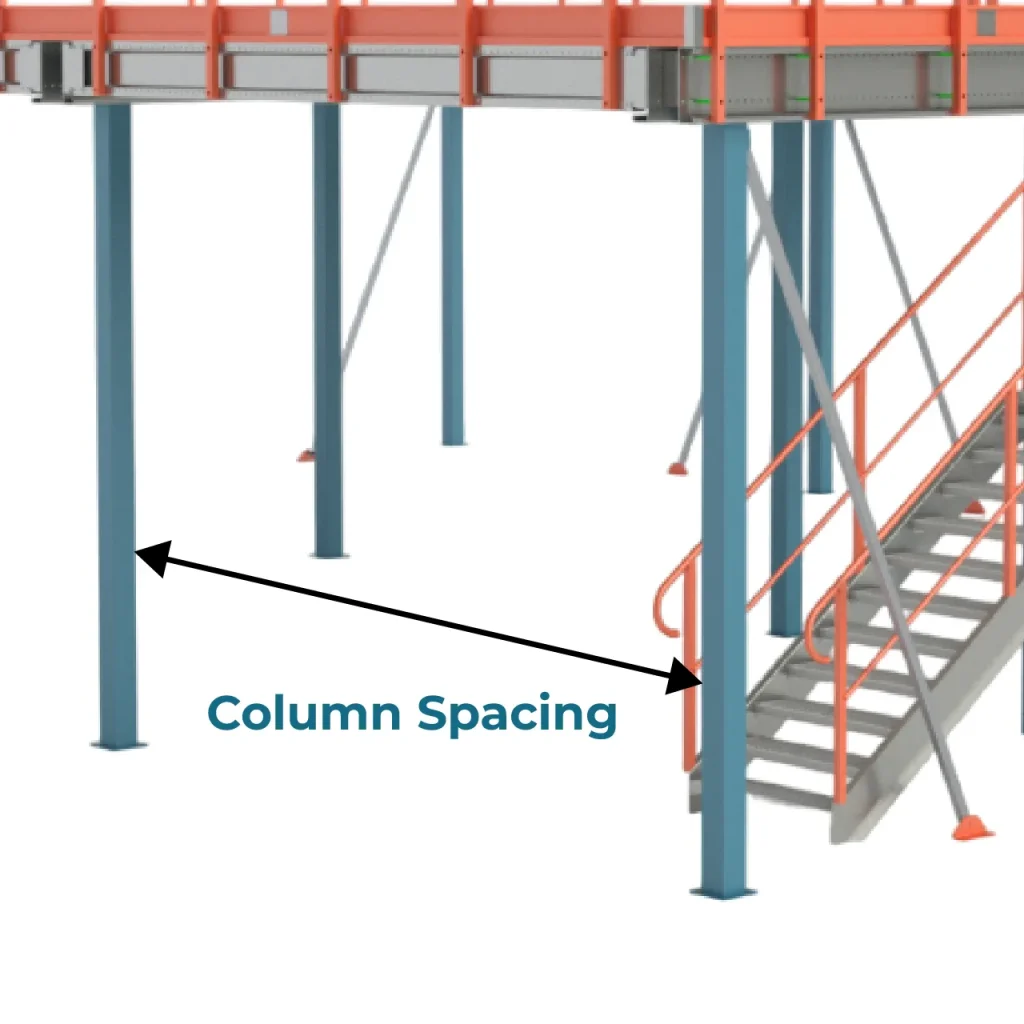
The closer the support columns are spaced, the stronger your mezzanine — but the more ground-level space you lose. Smart engineering can help balance load capacity with column layout. Ask us how to optimize this for your setup.
Access Points and Equipment
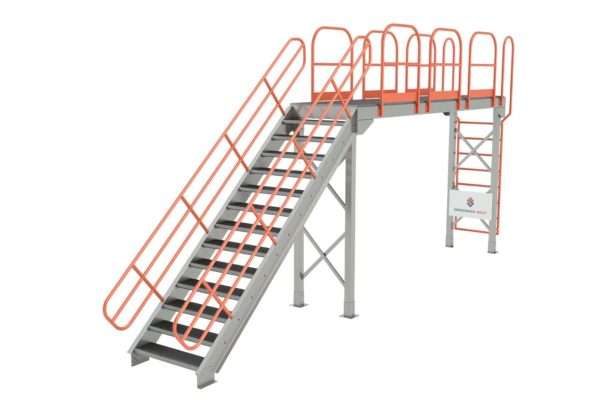
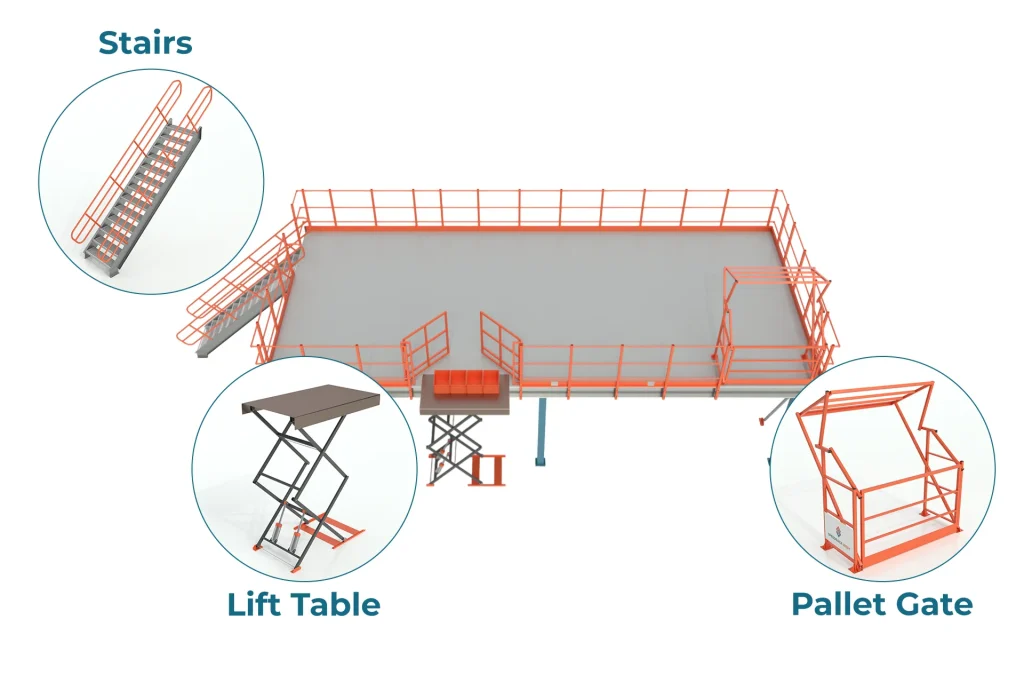
Stairs, lifts, and pallet gates are essential for functionality and safety, but they take up floor space. The same goes for fire exits, ceiling clearance, and aisle width requirements. That’s why in our earlier example we used an 80% usable space ratio — to account for these real-world constraints.
Height of Stored Materials
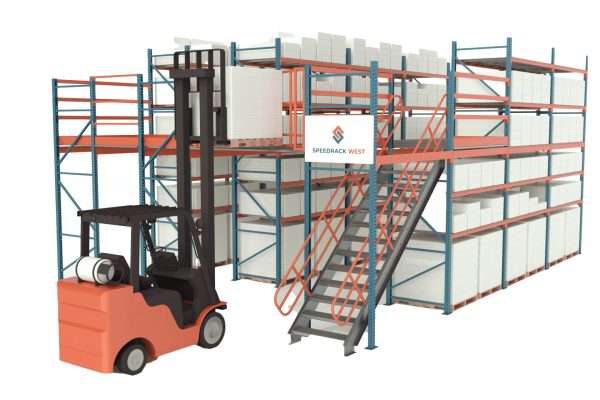
Storing tall items either under or on top of the mezzanine? That limits how many levels you can safely install. While a single-tier mezzanine might reclaim up to 100% of your original footprint, a two-tiersystem can potentially triple your usable space — but only in warehouses with very high clear heights.
Best Use Cases to Maximize Added Space
To truly benefit from a warehouse mezzanine, align it with the right applications and workflows:
Create dedicated zones across levels. Use the mezzanine to separate functions. For example, a logistics company might dedicate the upper level to storage, while keeping the ground floor clear for loading and unloading. You can even build mezzanine platforms along the docks, increasing storage capacity without encroaching on your main footprint.
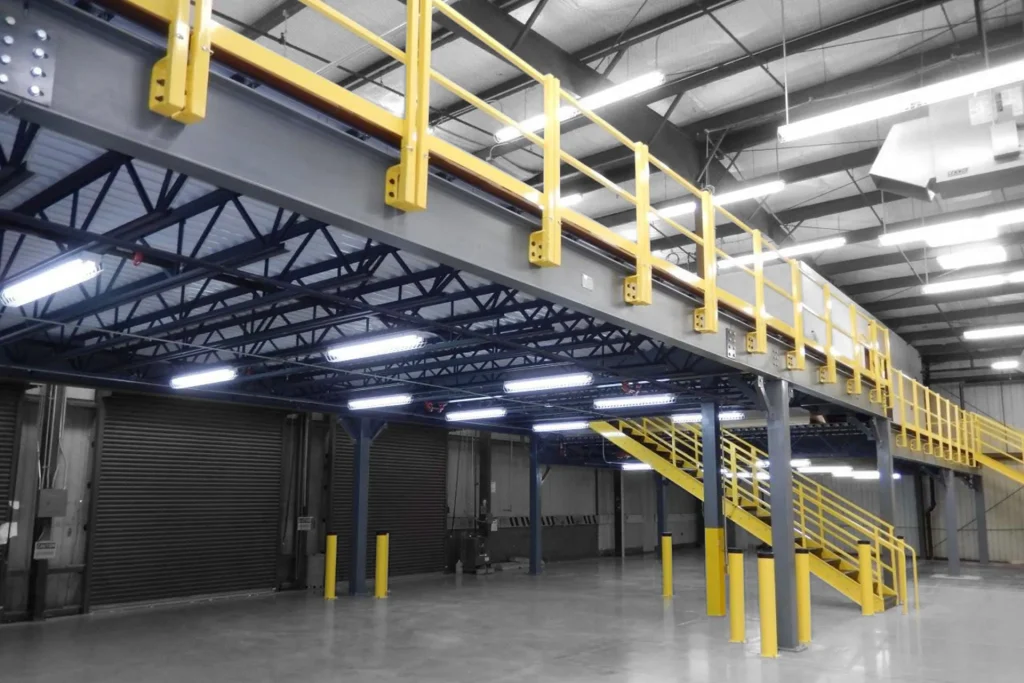
Manage seasonality and inventory turnover. Use mezzanine space to store slow-moving or seasonal inventory. This way, you’ll never have to tell a client, “Sorry, we don’t have space.” Their products stay organized and separate from high-turnover stock — helping you keep clients happy, products flowing, and revenue steady.
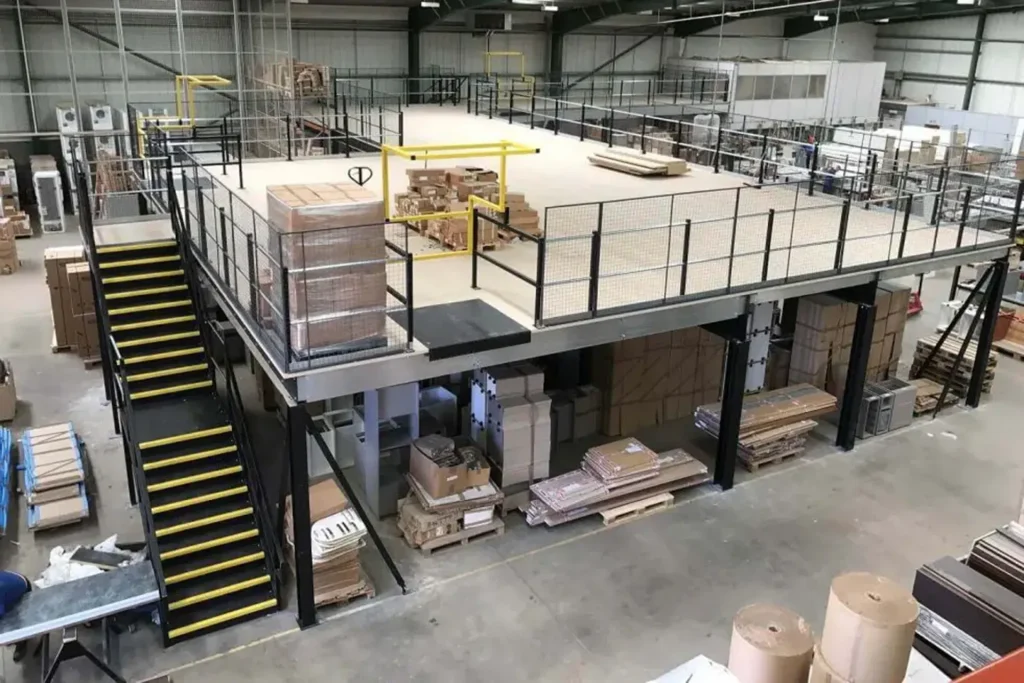
Improve operational clarity for your team. Add functional zones (e.g., packing, sorting, returns, office space) within the warehouse without cutting into inventory space. Clear separation helps your staff better understand warehouse processes and workflows at a glance.
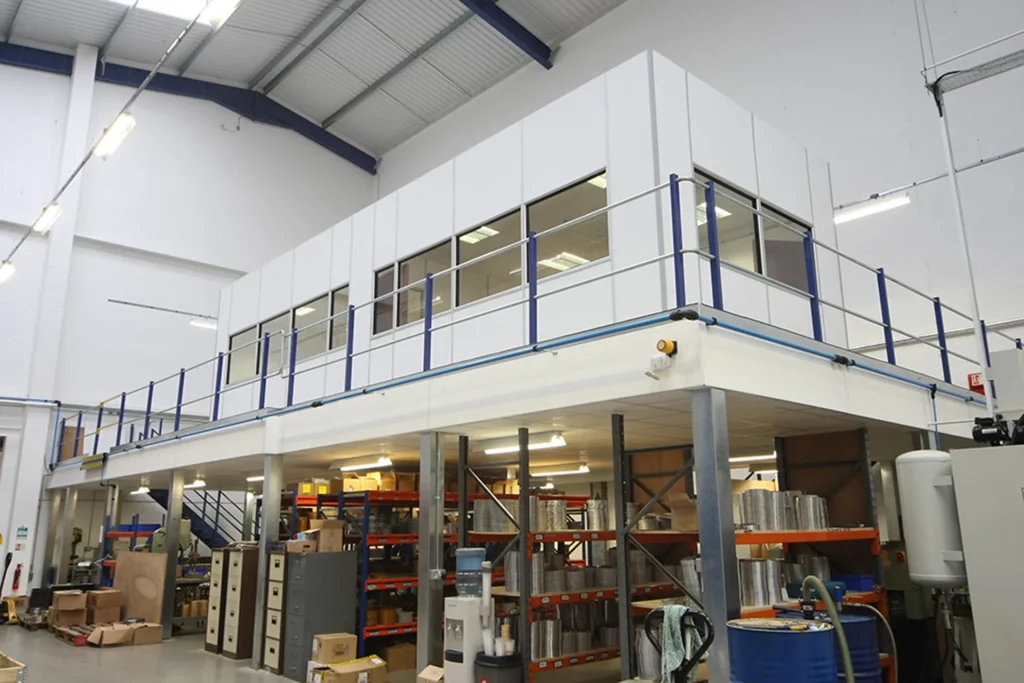
Diversify your sales strategy. Turn mezzanine space into a showroom, client meeting area, or demo zone — right inside your warehouse. Use vertical space not just for storage, but to give customers a hands-on way to interact with your products.
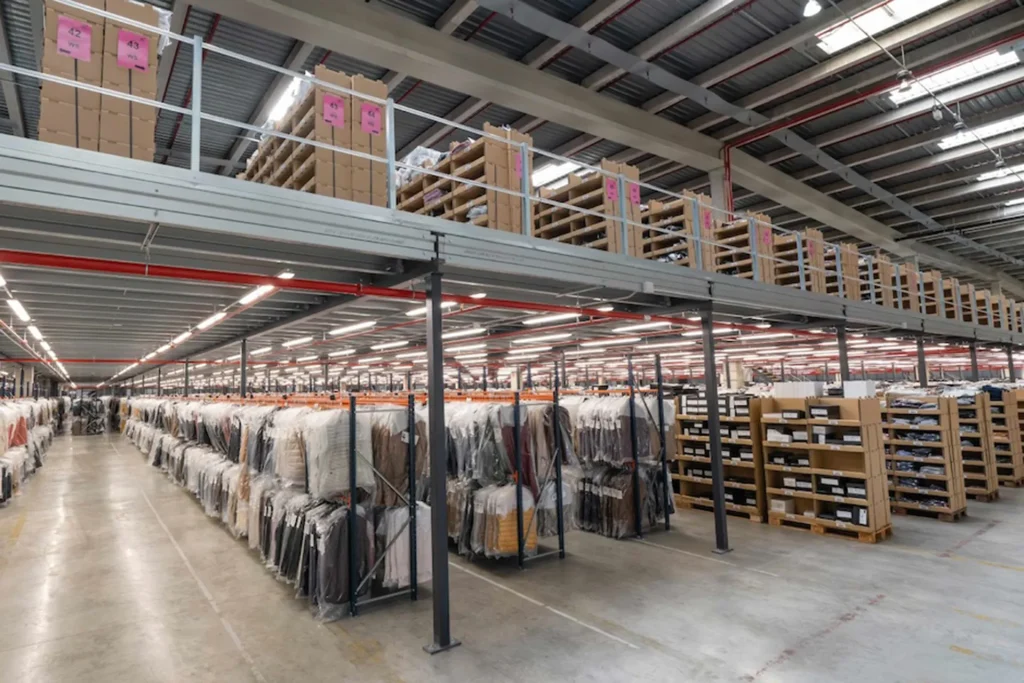
A well-designed mezzanine doesn’t just add square footage — it transforms how your business works.
What to Do Next
Adding a mezzanine isn’t just about building a floor — it’s about strategically maximizing your warehouse’s cubic volume. Your available space, team, workflow, inventory type, and local building regulations all factor into the right solution.
Ready to Rethink Your Warehouse Space?
Not sure if a mezzanine is the right move? Tell us what you’re storing, your clear height, and where the bottlenecks are. We’ll outline realistic mezzanine options and next steps so you can move forward with confidence.

Was this helpful?