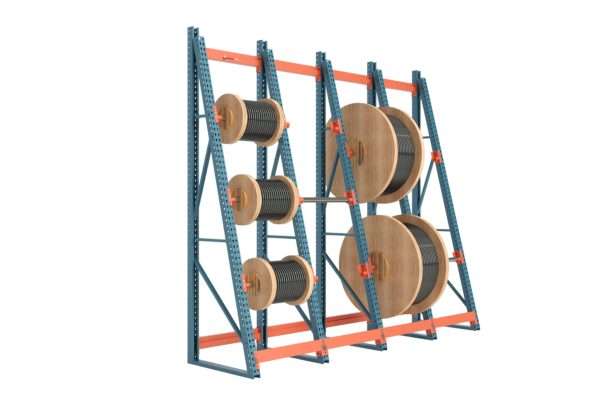
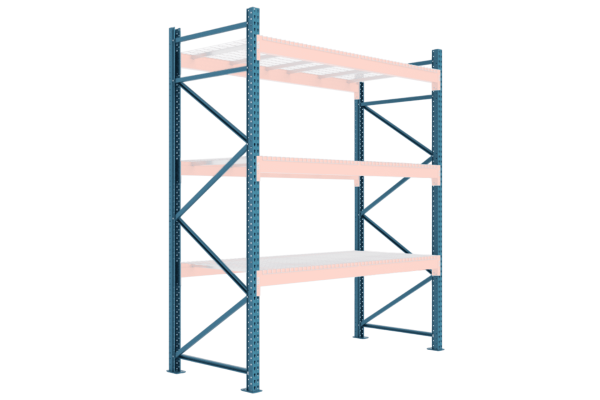


Pallet Rack Decking: Quick Overview
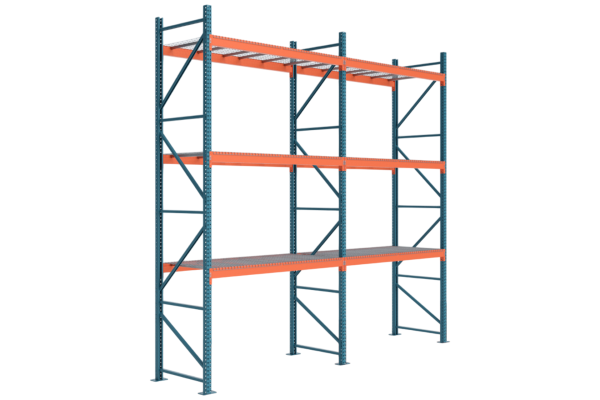
Storage rack decking is placed on beams of industrial steel storage racks to create a surface on which to place materials that can be on pallets, in containers, or in other configurations. For those looking for a quick recommendation, here’s a comparison of the different decking options based on key criteria such as load capacity, ventilation, fire code compliance, durability, and cost-effectiveness:
- Wire Mesh Decking
- Solid Steel Decking
- Punched Decking
- Bar Grating Decking
- Wood Decking
- Flanged Pallet Supports
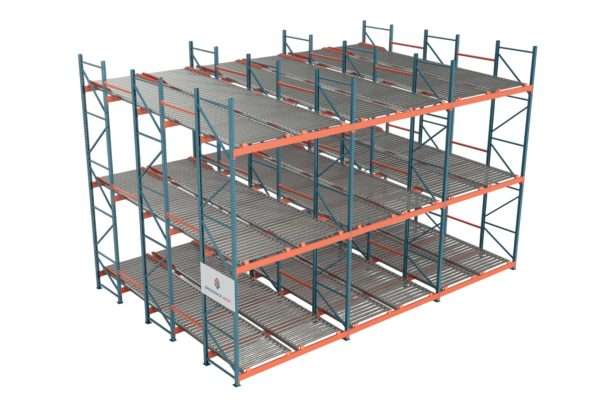
- Carton Flow Decking / Gravity Flow or Span-Track
- Pallet Flow Systems
- Particleboard Pallet Rack Decking / Timber Decking
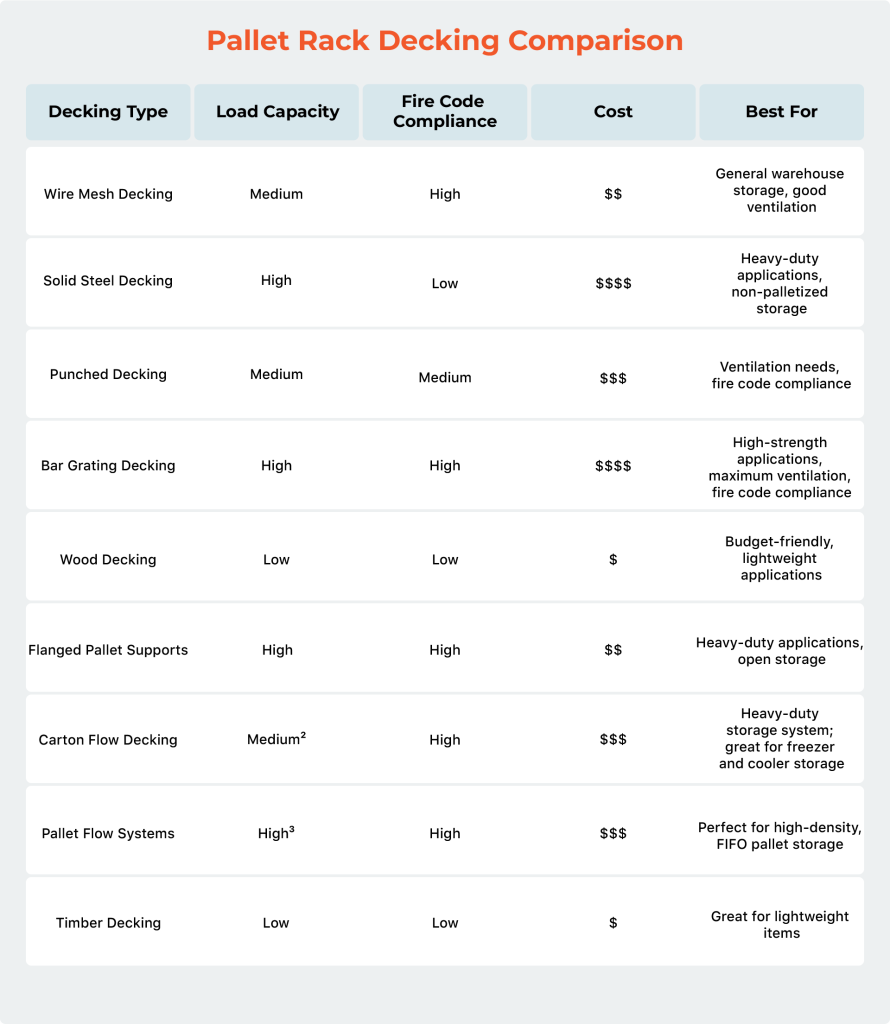
Read on for a more detailed analysis.
Which Type of Decking is Best for Warehouse Organization?
Wire Mesh Decking
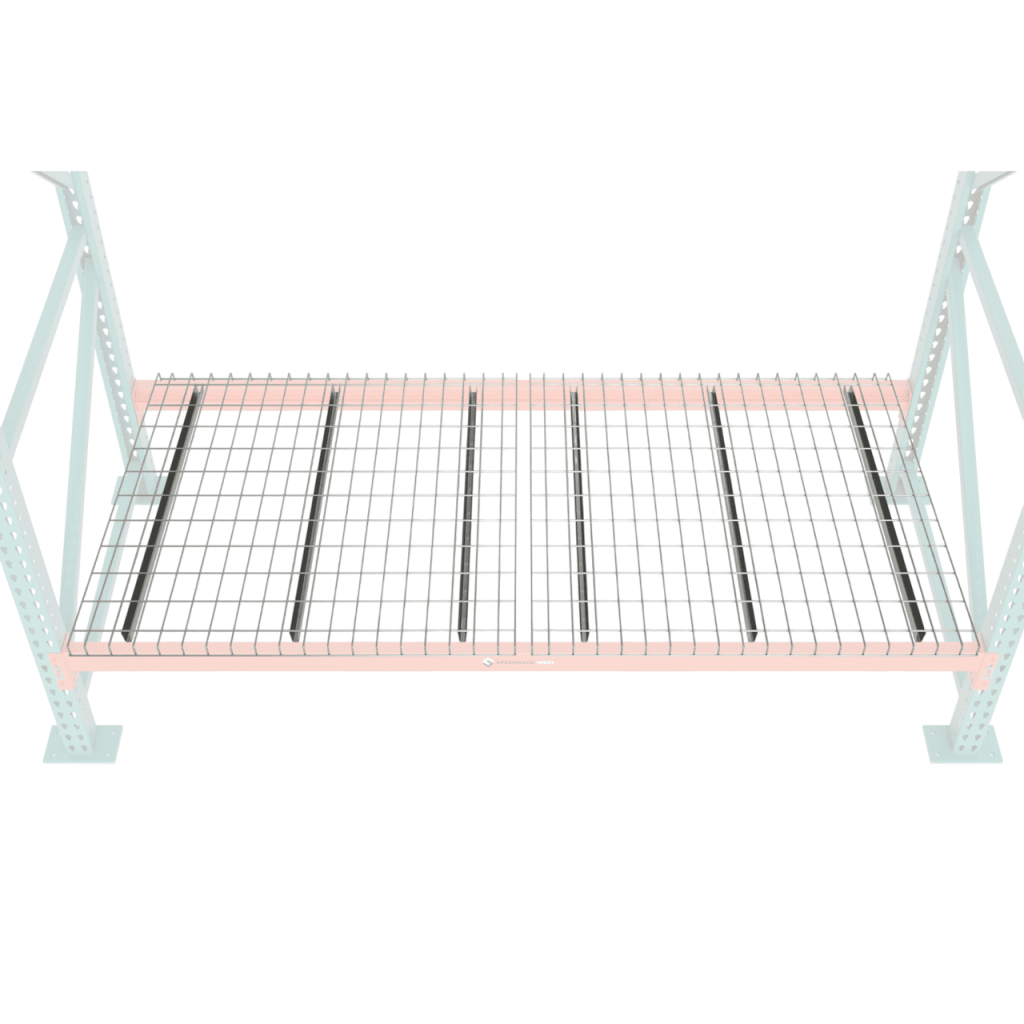
- Best for: General warehouse storage
- Advantages: Good balance of support, load capacity, fire code compliance, ventilation, affordability
- Disadvantages: Moderate weight capacity, not ideal for very heavy loads
- Common products stored: Pallets; boxes of electronics, textiles; plastic containers, packaged foods, toys, and automotive accessories
Is wire mesh decking the best option? It’s a solid all-around choice, but other options may be better for extreme weight loads. However, we believe this decking option offers the best balance of support, load capacity, and affordability.
Solid Steel Decking
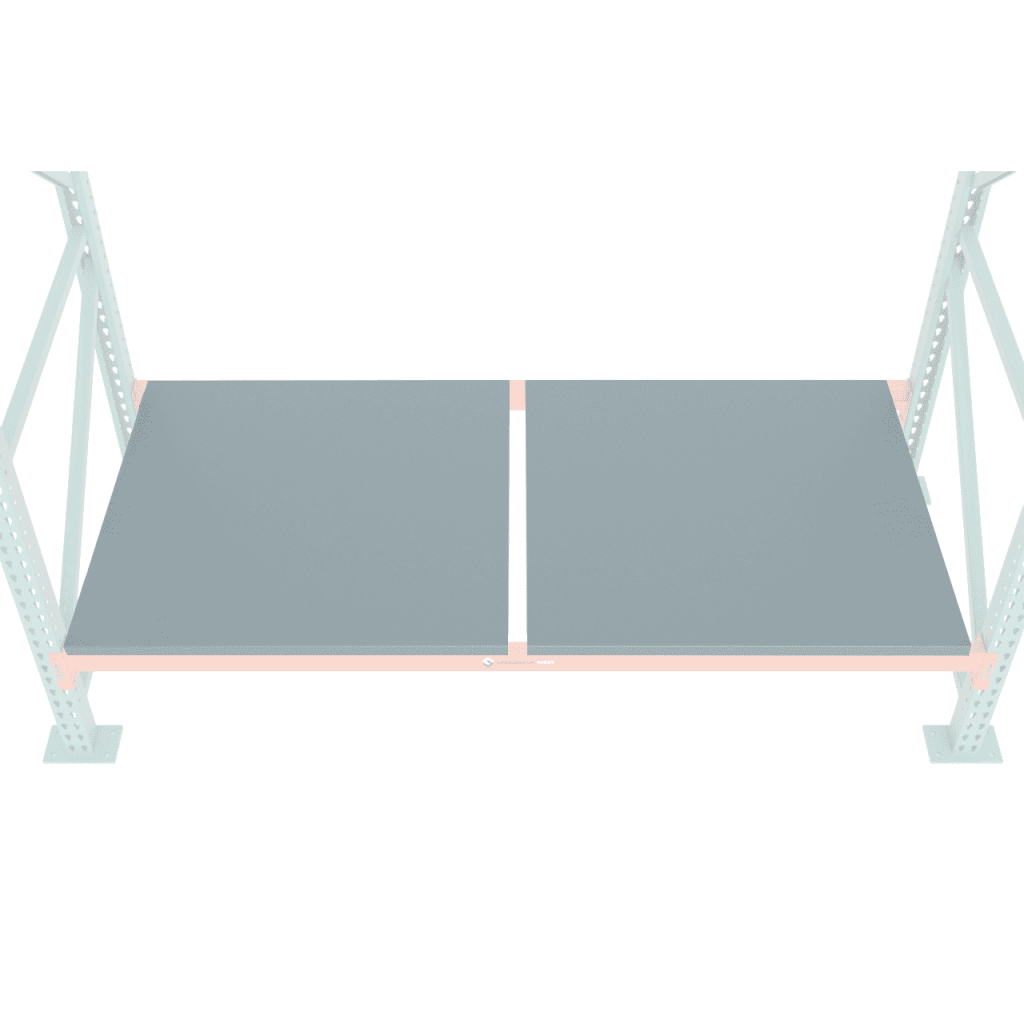
- Best for: Heavy-duty storage, non-palletized items
- Advantages: Extremely durable, high load capacity
- Disadvantages: Higher cost, no ventilation
- Common products stored: Metal parts, machinery, automotive components, certain construction materials, tooling, heavy hardware, castings, dies, engines, and large spare parts
Pallet rack decking for non-palletized storage? Yes, this is one of the top choices. Solid steel pallet rack decking can be customized to fit your specific dimensions, making it a versatile solution for any space. Whether you need to accommodate odd angles or unique layouts, solid steel decking can be tailored to meet your needs.
Punched Decking
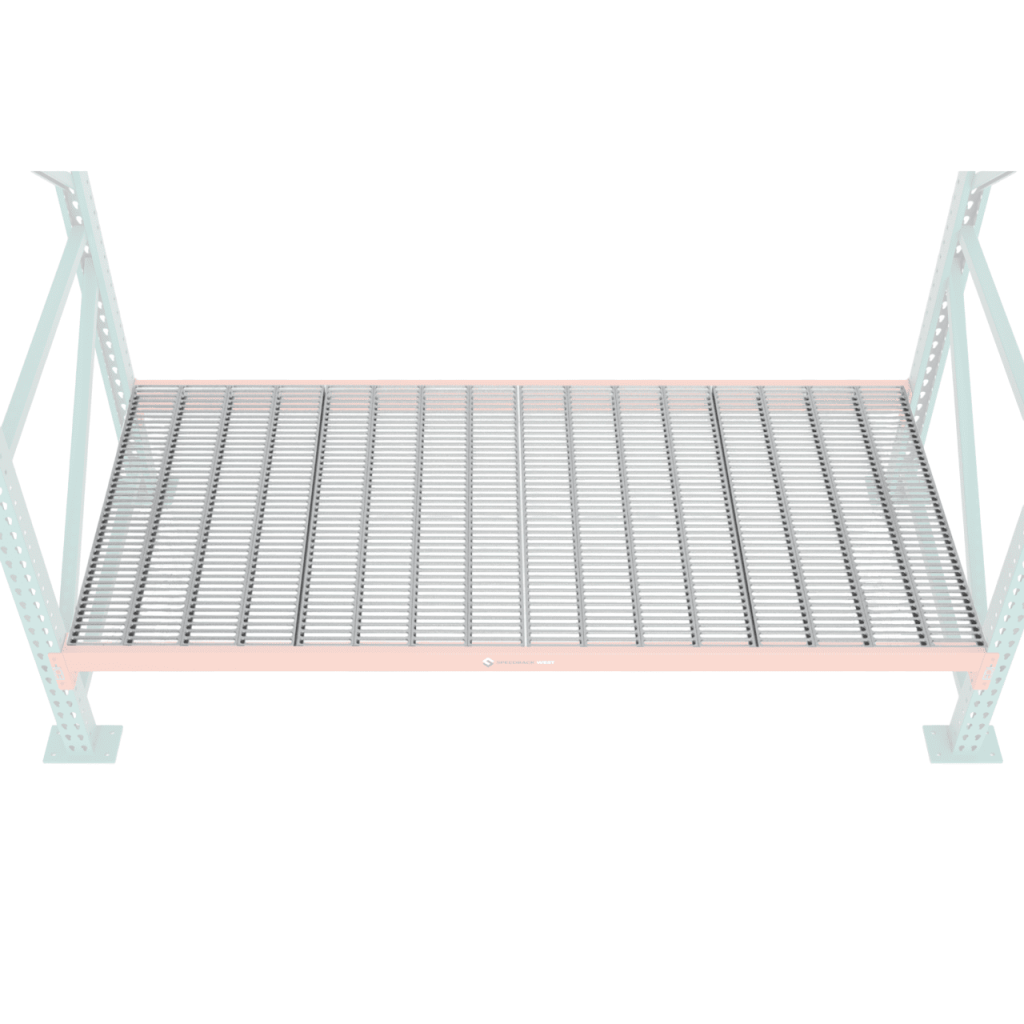
- Best for: Fire code compliance and ventilation
- Advantages: High strength, improved airflow
- Disadvantages: Higher cost than wire mesh
- Common products stored: Cartons, boxes of small electronics, mattresses, miscellaneous packaged goods, certain equipment parts, packaged consumer goods, and clothing
Are there punched decking alternatives? Sure, you can choose any type of ventilated steel decking or perforated rack decking, as well as airflow pallet rack decking. Punch Deck is available in various sizes and load capacities, making it a versatile solution for a wide range of applications. Additionally, Punch Deck can be combined with other models to achieve desired shelf coverage. These decks fit many common rack sizes and provide a smooth top surface that reduces hang-ups while ensuring fire safety compliance. With its uniformly strong surface and bright galvanized finish, Punch Deck is an ideal choice for storing items such as office records, furniture, mattresses, carpeting and flooring, auto parts, and bagged goods.
Bar Grating Decking
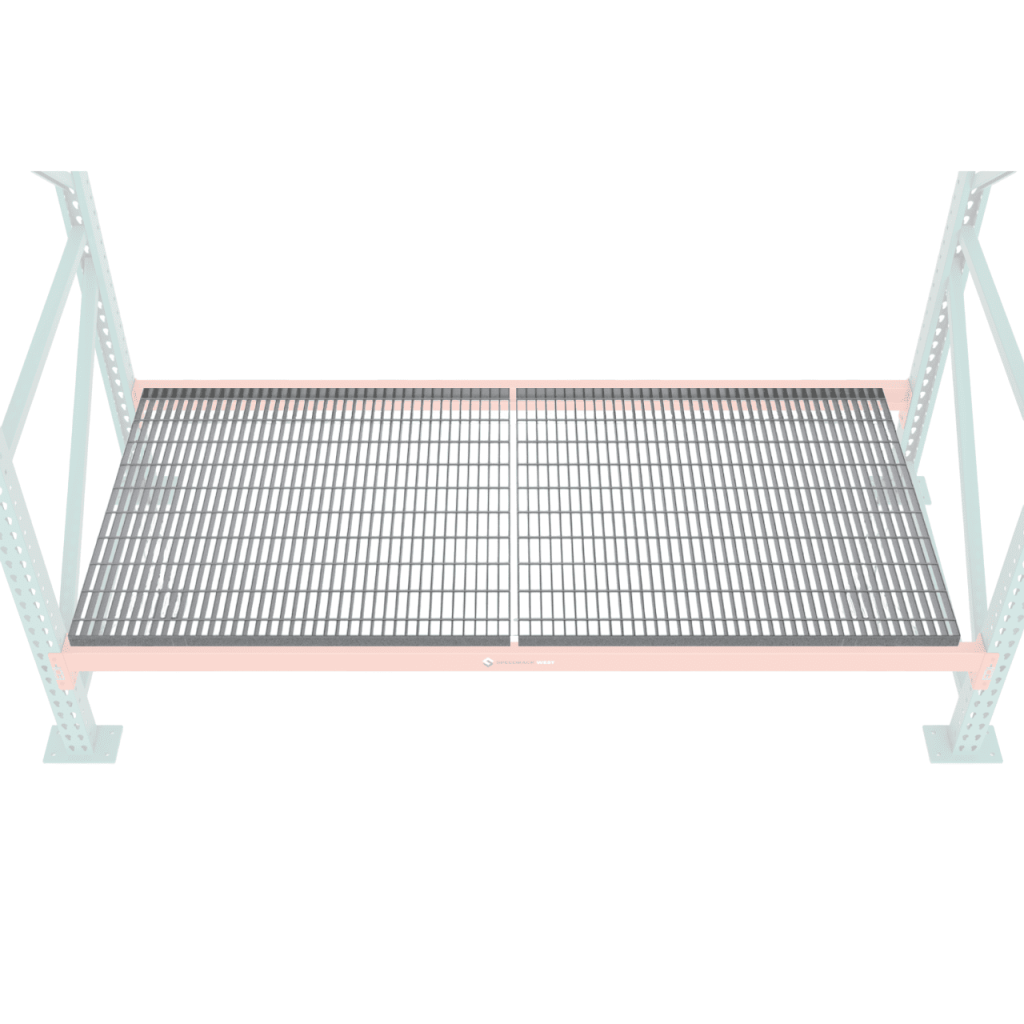
- Best for: Maximum ventilation and fire code compliance
- Advantages: High load capacity, excellent airflow
- Disadvantages: Expensive, not ideal for small item storage
- Common products stored: Products are designed to service applications ranging from light pedestrian traffic to heavy-duty vehicular loads. Palletized goods, large machinery components, cable reels, drums of chemicals, construction supplies, ventilation equipment, industrial supplies, containers, and anything with point loads.
Can I install industrial bar grating shelves myself, or should I hire a professional? Steel grating is easy to install and requires minimal upkeep. It comes in pre-fabricated panels that can be easily assembled on-site using standard tools. The installation process is simple, which means you can have your project up and running in no time. Once installed, steel grating requires little attention apart from periodic cleaning.
Wood Decking
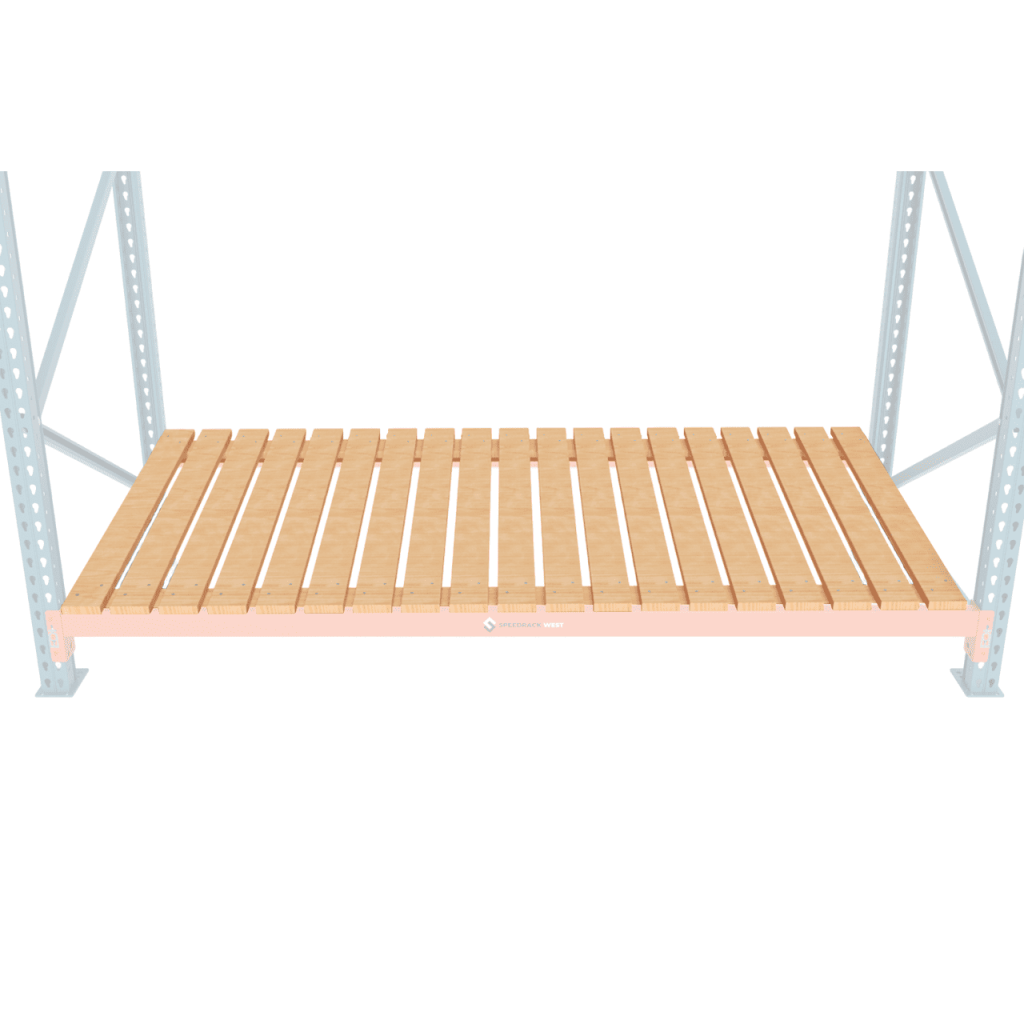
- Best for: Budget-conscious applications
- Advantages: Low cost, easy replacement
- Disadvantages: Low durability, fire risk
- Common products stored: Cartons, small parts, retail products, fabrics, promotional items, seasonal decorations, craft supplies, packaged foods, stationery, and lightweight household goods.
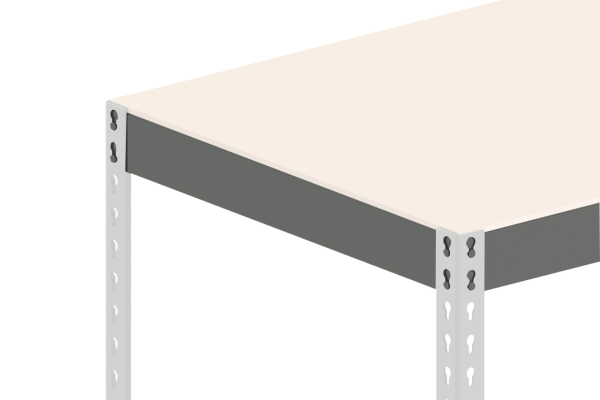
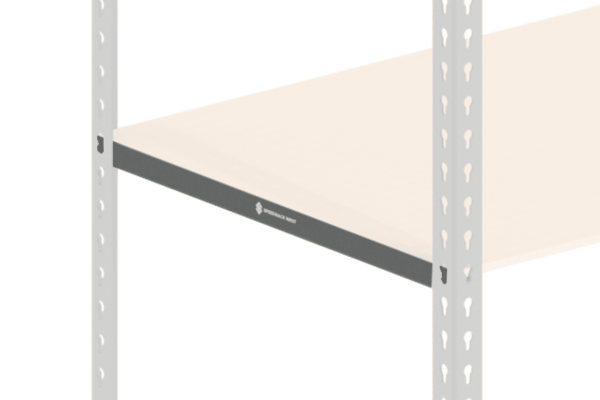
Can wood decking shelves be customized? Absolutely! They can be designed to fit any racking system. Plus, it’s more affordable than other decking options, making it an excellent choice for businesses looking to maximize storage space without breaking the bank.
Flanged Pallet Supports
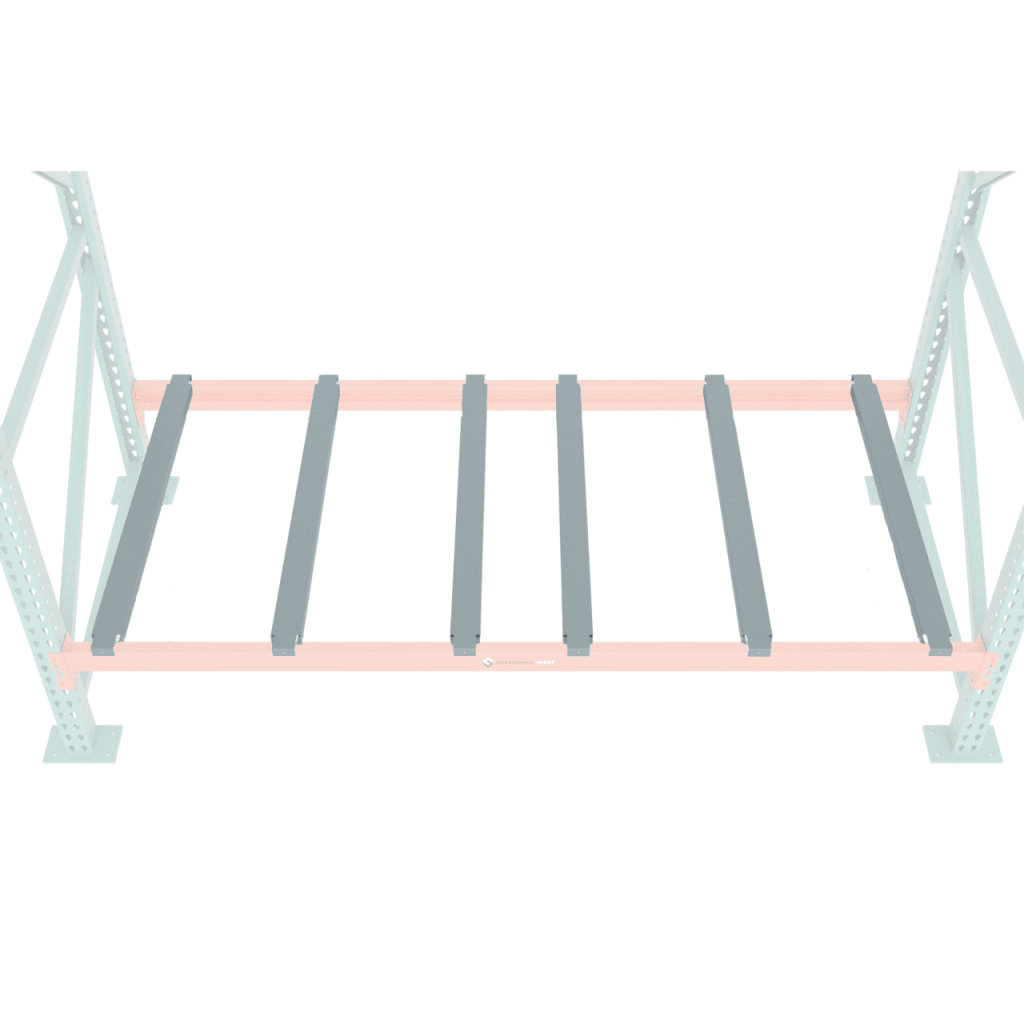
- Best for: Heavy-duty storage without full decking
- Advantages: Cost-effective alternative to decking, high-weight capacity
- Disadvantages: Not suitable for non-palletized loads
- Common products stored: Palletized materials, heavy equipment, bundled goods, large components, machinery parts, stacked materials, industrial supplies, construction materials, containers of engine parts, heavy retail inventory
How do pallet bars for racking improve loading operations? Pallet bars provide additional support, giving forklift operators more confidence when placing pallets at high elevations, leading to faster and more efficient loading. They reduce the risk of pallets falling or shifting, minimizing accidents and damage to goods.
Pallet Flow Systems
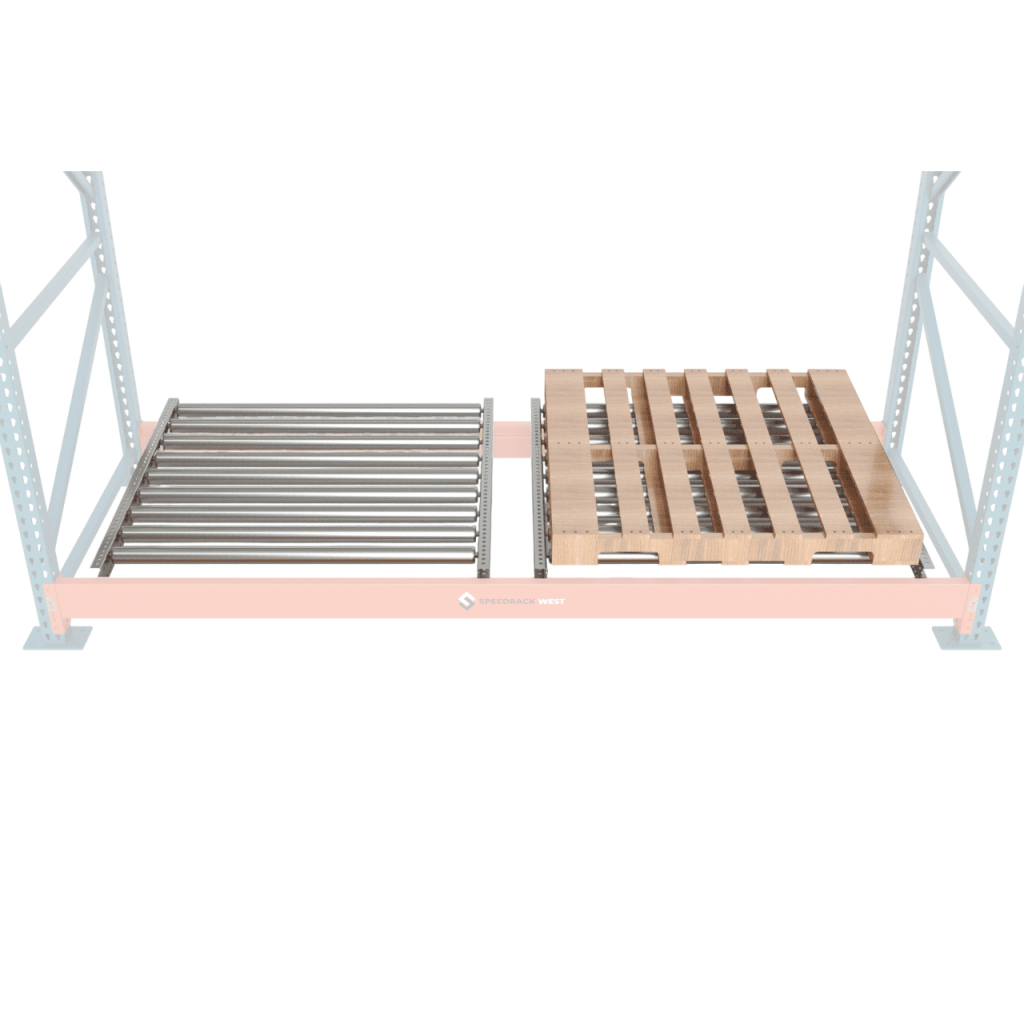
- Best for: High-density, FIFO pallet storage
- Advantages: Maximizes space and improves picking efficiency
- Disadvantages: Higher cost, requires precise pallet quality
- Common products stored: Palletized inventory in cold storage, food distribution, high-turnover goods
Is pallet flow decking ideal for your warehouse? Absolutely—if you’re aiming for first-in, first-out inventory rotation, this system offers exceptional space utilization and efficiency. It reduces handling times and labor costs by using gravity to move pallets.
Timber Decking
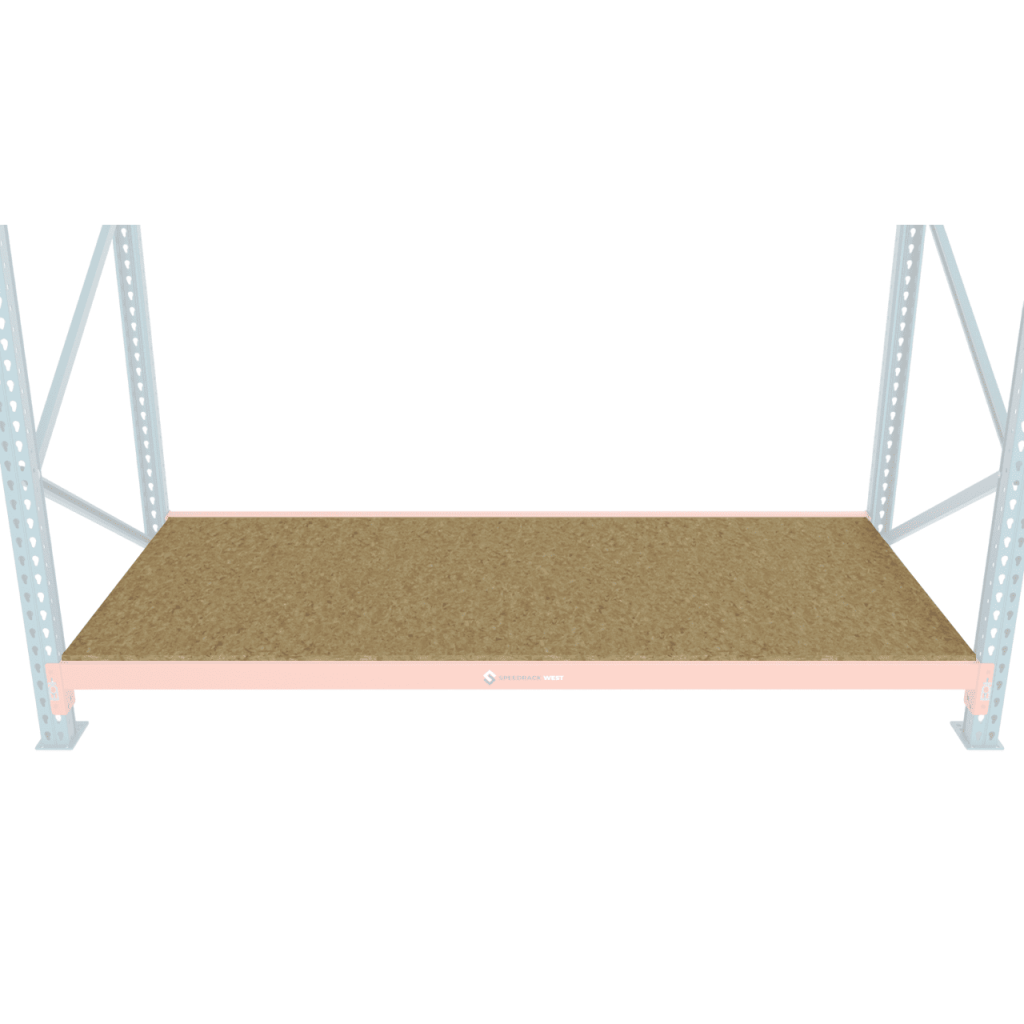
- Best for: Lightweight, low-cost storage
- Advantages: Budget-friendly, easy to install
- Disadvantages: Moisture-sensitive, flammable, lower load capacity
- Common products stored: Seasonal goods, textiles, small packaged items, promotional displays
Is timber decking a smart long-term choice? It depends. While affordable, it’s not ideal for high-humidity environments or heavy loads. It’s often chosen for temporary or low-risk applications where fire compliance isn’t a concern.
Carton Flow Decking
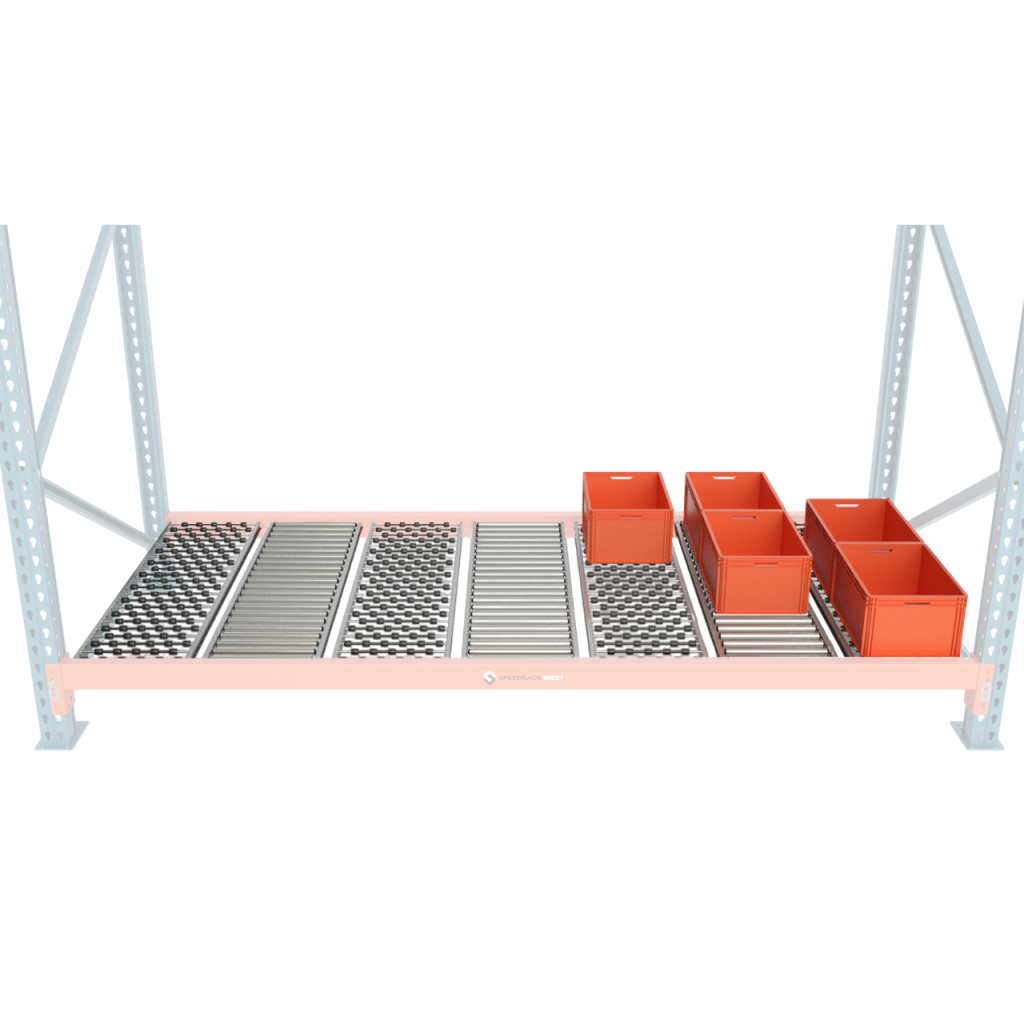
- Best for: Case picking and order fulfillment
- Advantages: Reduces picker travel time, supports lean operations
- Disadvantages: Not suited for palletized loads, more complex installation
- Common products stored: Packaged goods, retail items, pharmaceuticals, electronics
Does carton flow fit into your warehouse strategy? If you’re running a high-volume picking operation, this is one of the most efficient systems available. It streamlines access to SKUs and optimizes labor for small item storage.
Best Pallet Rack Decking Options
Load Capacity: Let’s Find the Right Decking for Your Needs
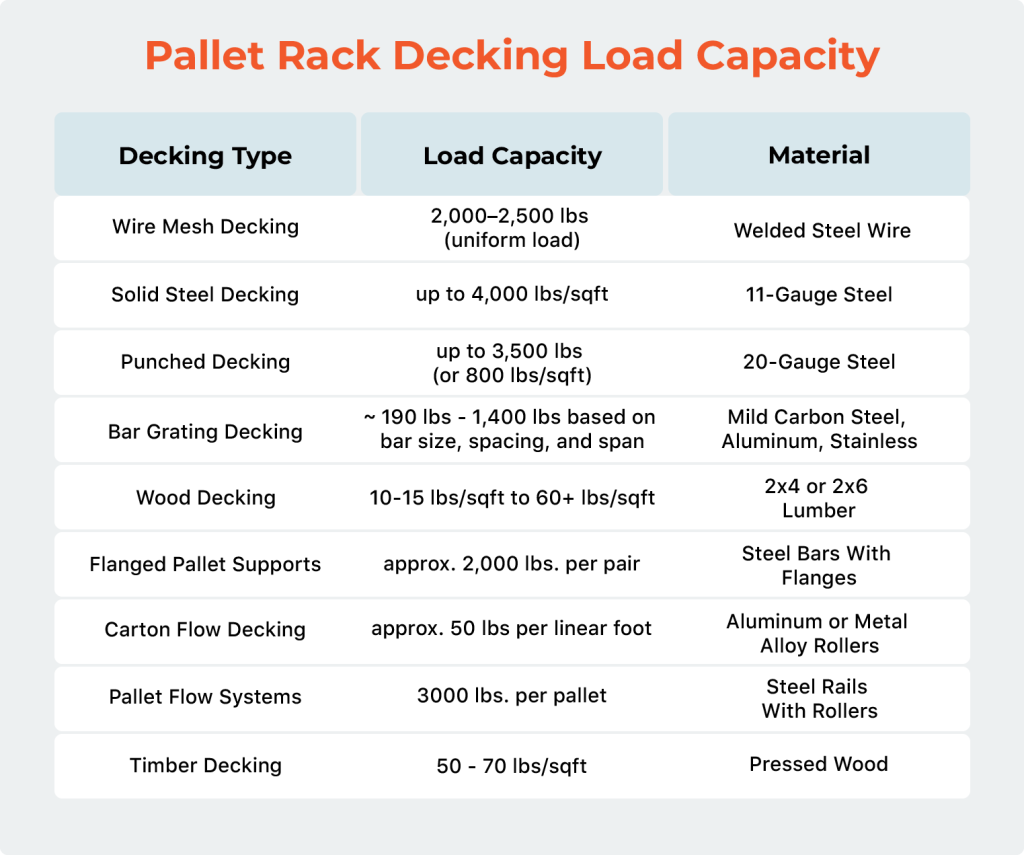
Here’s a detailed look at how each decking option performs in terms of load capacity and durability.
If you need to store heavy-duty loads, consider solid steel decking or bar grating decking. These are among the strongest warehouse storage options, offering high load capacities and smooth surfaces for easier handling.
Speedrack West offers two types of solid steel decking: one manufactured in-house using 11-gauge steel (up to 4,000 lbs/sqft uniform distributed load capacity, which remains constant regardless of size), and another from WWMH (with a uniform distributed load capacity of up to 4,000 lbs.).
Metal bar grating is produced by assembling a series of equally spaced metal bars connected by cross members. It is available in three common materials: mild carbon steel, 6000-series aluminum, and 300-series stainless steel.
Steel bar grating is manufactured from ASTM A-1011 mild carbon steel and comes in three distinct types⁴: Type “W” welded bar grating, Type “SL” swage-locked grating, and Type “DT” dovetail pressure-locked grating. Available finishes include bare steel, painted, hot-dip galvanized, or specialty coatings. The load capacity of steel bar grating varies depending on several factors, including:
- Bearing bar size (e.g., 3/4″ x 1/8″, 1-1/2″ x 1/8″, etc.)
- Bar spacing (e.g., 19-space, meaning 1-3/16″ spacing)
- Unsupported span (the distance between supports)
- Load type (uniformly distributed load vs. concentrated load)
For example, for the steel bar grating with a 1-1/2″ x 1/8″ bearing bar size:
- Max Pedestrian Span: 5′-10″
- Approximate Weight: 7.2 lbs/ft²
- Section Properties:
- Sx (Section Modulus): 0.474 in³
- Ix (Moment of Inertia): 0.355 in⁴
- Load Capacities for Unsupported Spans:
- 2′-0″ span: 1,421 lbs/sqft (uniform load)
- 3′-0″ span: 632 lbs/sqft (uniform load)
Steel grating manufacturers provide load tables specifying the maximum weight each type of grating can safely support, taking into account the size, shape, and spacing of the bars. To ensure safety and optimal performance, always consult these load tables when selecting a steel grate for your application.
Punch Deck—also known as safety grating, corrugated decking, Grate-Lock, or Pro-Deck 50—is a versatile metal decking option with a uniform distributed load capacity of up to 3,500 lbs. or 800 lbs/sqft. Like bar grating and wire mesh decking, it allows water to flow through, making it a popular choice for fire safety compliance. The load capacity varies depending on the size. These capacities apply to standard Pro-Deck 50 decks⁵, which are made from 20-gauge steel. However, it can be stronger Pro-Deck options if needed, built specifically for the application.
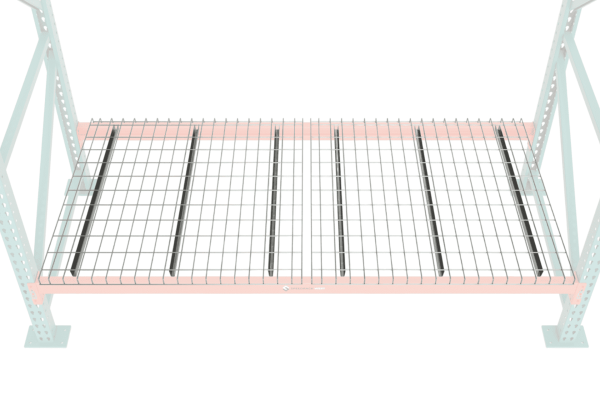
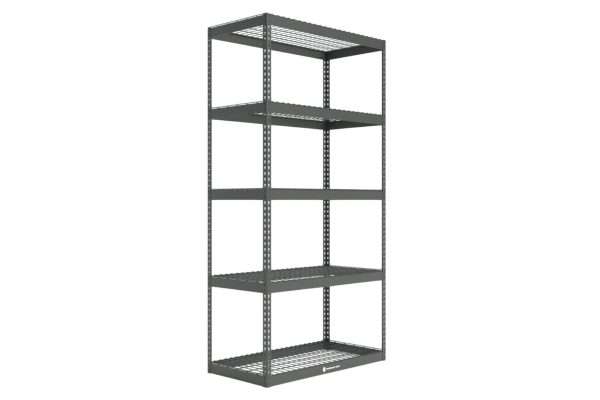
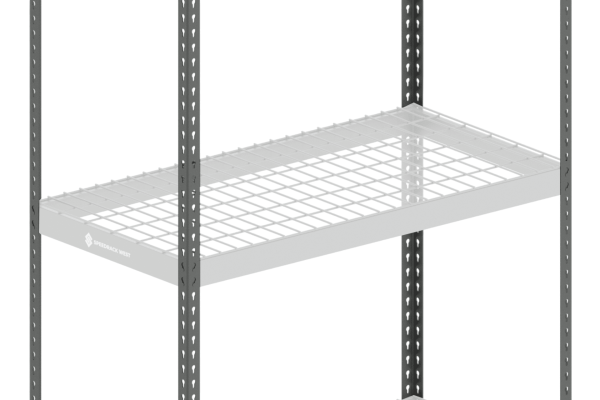
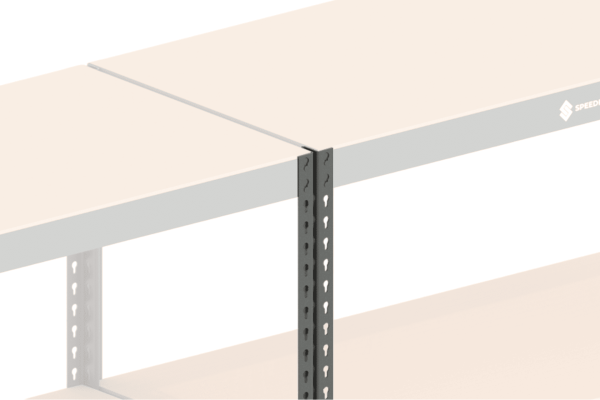
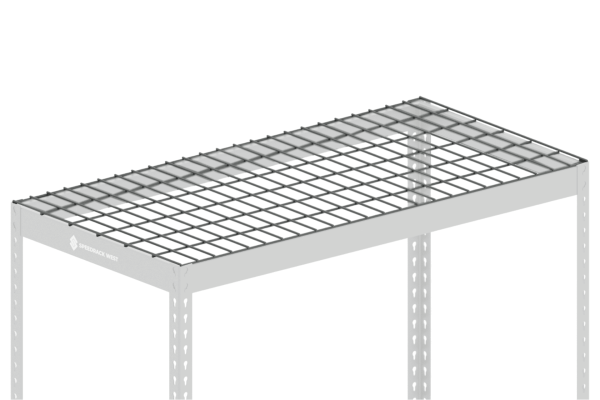
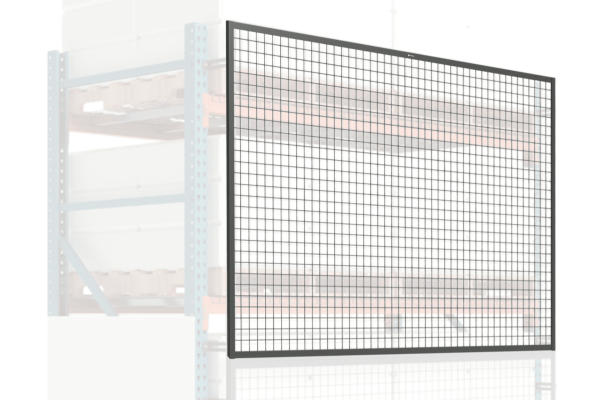
For the best value, we recommend wire mesh decking as a pallet rack decking material. It sits directly on the beams, covering the full rack length while providing visibility of stored items. Most wire decking manufacturers comply with ANSI MH26.2 2017 standards, which define load capacity as the “maximum uniformly distributed static load⁶, independent of the support system.” Capacity: 2500 lbs. (uniform distributed load, and only 2000 lb. capacity for 60″ deep style).
If you’re storing lightweight products, wood decking—typically made from 2x4s or 2x6s—can be a budget-friendly option. However, for heavier loads, a more durable solution is required. Load capacity: from 10-15 lbs/sqft⁷ to more than 60 lbs/sqft, based on plywood thickness, grade, and span. If you’re considering wood decking, we strongly recommend spending a bit more on wire mesh decking. The cost difference is minimal, but the benefits in terms of safety and durability are significant.
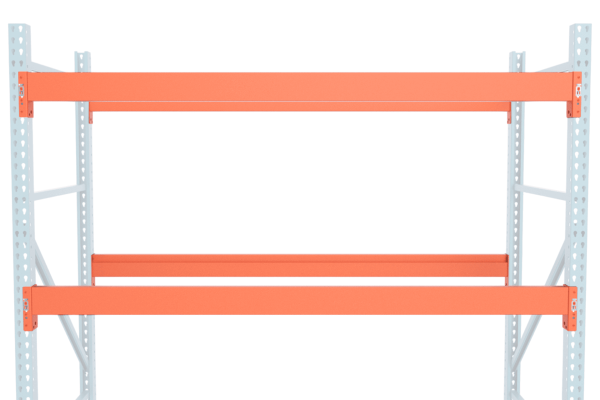
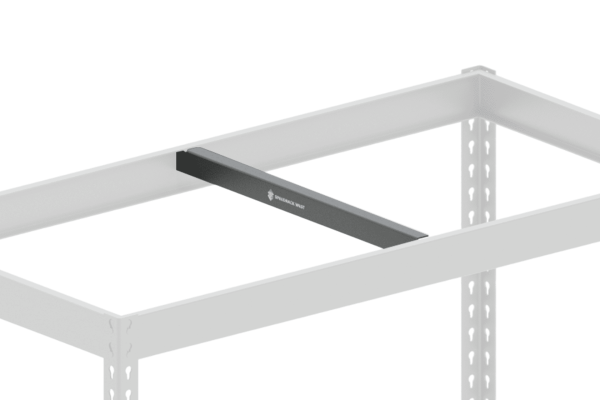
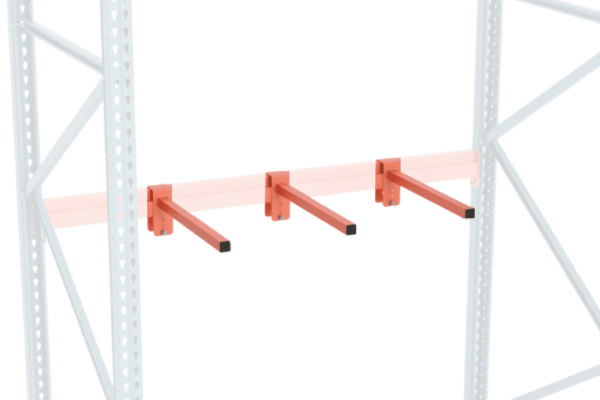
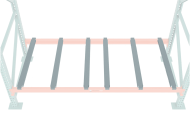
Metal flanged pallet supports (also called cross bars) resemble 2x4s but provide greater strength while eliminating fire hazards—similar to wire mesh decking. Though more expensive than plywood, they offer long-term durability. Pallet supports can also be placed underneath wire mesh decking for added strength. Double-flanged pallet rack cross bars are particularly useful for heavy-duty inventory that requires extra support. Capacity: approximately 2,000 lbs capacity per pair, based on length.
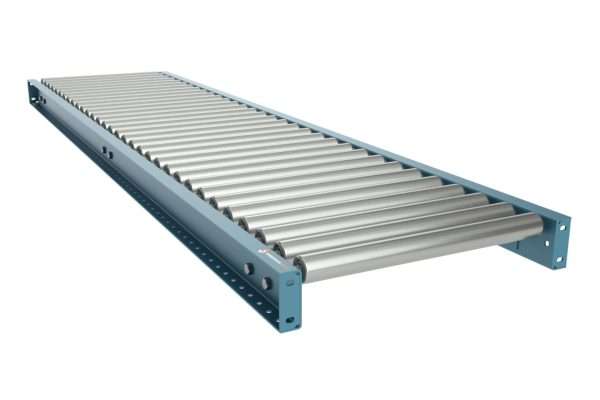
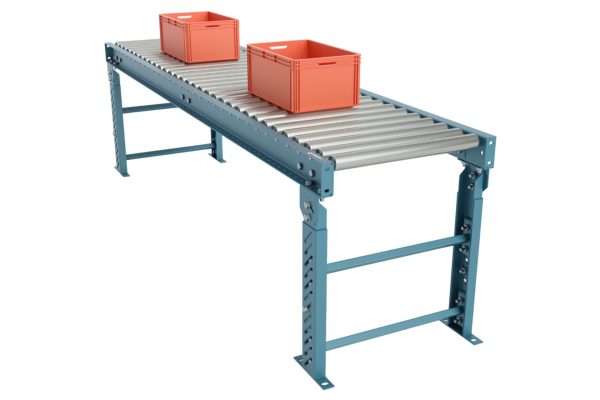
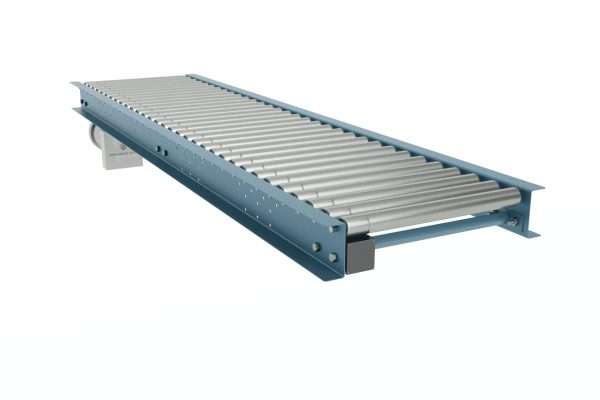
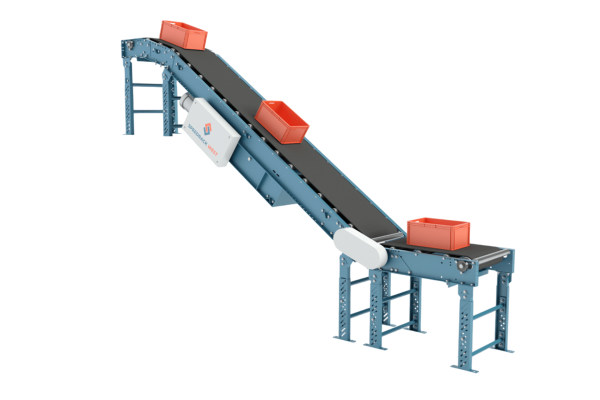
Carton Flow decking (also called Gravity Flow or Span-Track) is typically installed with an incline to allow for packages to roll to the front of the bay automatically. This saves up to 75% of labor cost and 80% of picker travel time. Carton flow decking is accessible in multiple styles, sizes, and materials of rollers (aluminum and metal alloy) that influence their load capacity. Typically, it is about 50 lbs per linear foot.
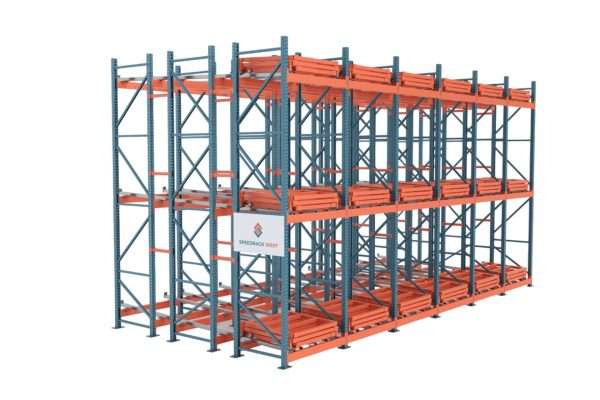
Pallet Flow systems enable loading pallets from one end of the rack and allow them to move gently to the other end on an incline. This design is perfect for high-density, FIFO (first in, first out) pallet storage and increases operational efficiency. Analyzing pallet flow rack capacity requires assessing pallet weight, ceiling height, floor layout, and structural limits. Beam capacity—typically 3,000 lbs. per pallet—totals 6,000 lbs. per level for two pallets. Pitch and beam spacing also affect stability and system performance.
Particleboard Pallet Rack Decking is also referred to as Timber Decking. It is a cost-effective option for lightweight items. However, it’s vulnerable to moisture damage and may warp or rot over time. It’s also a fire hazard and might not comply with local fire safety codes, making it unsuitable for many modern warehouses. Timber strength varies—pressure-treated handles about 50 lbs/sqft; cedar/redwood up to 70 lbs/sqft.
Fire Code Approval: Which Decking Keeps You Compliant?
A common question is: Which pallet rack decking is best for my products if my operations must meet strict fire safety regulations?
The answer depends on your load type, but three options typically provide the best fit due to their airflow and sprinkler penetration: bar grating decking, punched decking, and wire mesh decking.
Since these types allow sprinkler water to flow freely and are non-flammable, wire mesh decking is a mandated choice in many facilities across the U.S. It also meets OSHA and many local fire code standards.
If you’re looking for a decking option that has been approved by Factory Mutual (FM) for open shelving in racks, then punch decking is where you want to be. Punchdeck style shelving has been granted FM Approval on both Punch Deck and Punch Deck Plus options. This means that these options have passed rigorous fire hazard testing and are safe to use in your warehouse. One of the key benefits of using punch deck shelving with FM approval is its ability to allow overhead sprinklers to reach every level of a rack system. Punched decking features a 50% open surface area, helping it comply with NFPA 13 fire and sprinkler codes.
Because of these fire safety advantages, fire inspectors often prefer these decking types.
Cost-Effectiveness: Is a Lower Price the Best Choice?
Bar grating is one of the most expensive decking options, but its versatility makes it a worthwhile investment. It is also one of the best choices for storage applications that require high load capacity or concentrated point loads. It provides an excellent combination of strength and durability, making it ideal for storing oversized or irregularly shaped items.
Investing in solid steel pallet rack decking can also help lower long-term costs by reducing maintenance expenses. Unlike other decking materials, solid steel requires little upkeep and cleaning—there’s no need to replace worn-out boards or repair damage caused by moisture or pests. Additionally, its resistance to rust and corrosion eliminates the need for costly protective coatings or treatments, making it a reliable and cost-effective choice for warehouse operations.
Flanged pallet supports are another cost-effective solution, but they may not be suitable for all types of loads. They are often combined with wire mesh decking to expand their usability.
Wood decking is a great choice if you enjoy DIY projects and are working with a tight budget. You can easily cut the planks yourself, and wood is more affordable than steel.
It is up to you to decide which option is the most suitable for your business.
Summary: Which Decking Wins?
Picking the best pallet rack decking comes down to factors like load capacity, fire code compliance, budget, and specific storage needs. Here’s a quick breakdown:
- For general warehouse storage: Wire Mesh Decking
- For heavy-duty loads: Solid Steel Decking or Bar Grating Decking
- For ventilation & fire code compliance: Bar Grating Decking or Punched Decking
- For a budget-friendly option: Wood Decking or Flanged Pallet Supports
- For FIFO pallet rotation and high-density storage: Pallet Flow Systems
- For lightweight storage with low upfront cost: Timber Decking
- For high-efficiency case picking: Carton Flow Decking
Take the time to find the best fit for your storage setup!
From wire mesh to steel and bar grating, we’ll help you choose the best fit for your load and code requirements.
FAQ: Frequently Asked Questions
Q1: What is the best alternative to wire mesh decking?
A: It depends on your application. Solid steel decking is best for heavy loads, while bar grating decking is great for fire code compliance and ventilation.
Q2: Is wire mesh decking the most cost-effective option?
A: Generally, yes. However, wood decking is even cheaper, but it has durability concerns.
Q3: Which pallet rack decking is best for my products?
A: Consider load weight, ventilation, and compliance needs. Wire mesh decking works for general use, while solid steel decking is better for heavy-duty applications.
Q4: Can I use wood decking instead of wire mesh decking?
A: You can, but keep in mind that wood decking is less durable, prone to fire hazards, and not suitable for heavy-duty applications.
Q5: Should I use flanged pallet supports instead of decking?
A: If you store only pallets and don’t need a solid surface, flanged pallet supports can be a cost-effective alternative.
Used Resources
Products, discussed in the article
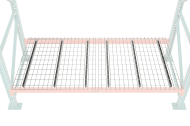

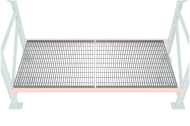
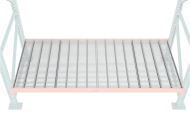
Wire Mesh Decking
Steel wire panels that sit on beams. They allow light, air, and sprinkler water flow, while providing clear visibility. Ideal for safety and fire-code compliance.
Pallet Supports
(Crossbars)
Heavy-duty steel bars placed between beams to support pallets directly. Fire-resistant and cost-effective.
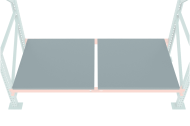
Solid Steel Decking
Smooth, continuous steel planks (6″ or 12″ wide) with boxed edges. Heavy-duty, non-flammable, and easy to slide loads.
Punch Deck
Corrugated perforated metal decking that prevents water pooling and complies with fire codes.

Was this helpful?