
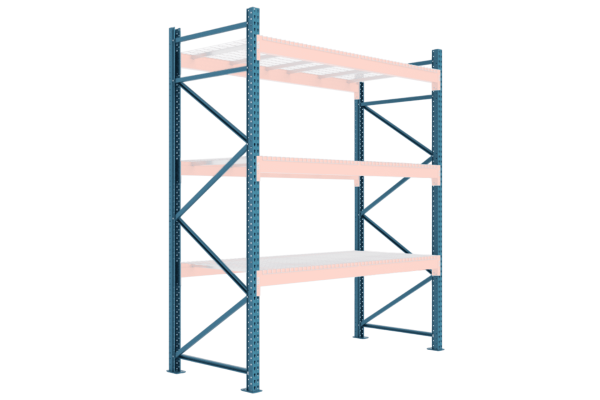
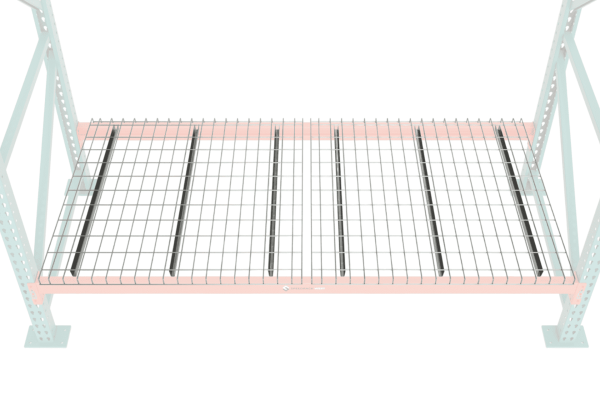
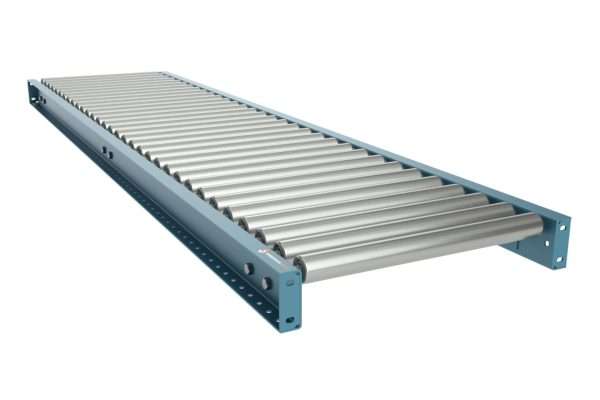
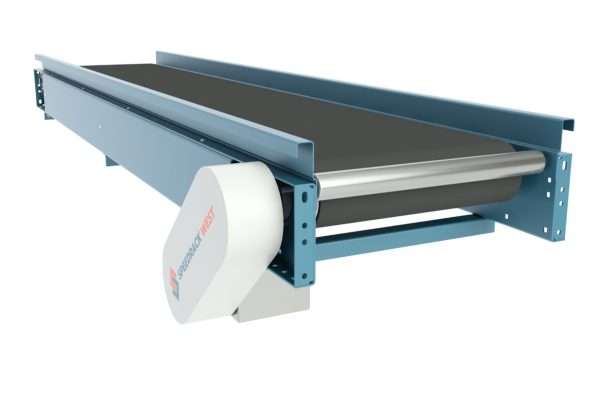

When Mixing Used and New Racking Can Work
If you’re at the stage of deciding between used and new pallet racking, take a look at our article Used vs New Pallet Racking: Pros, Cons, and Key Differences. But if you’re considering — or need to consider — mixing components, keep in mind that combining used and new pallet racks isn’t always a disaster waiting to happen. In some cases, it’s perfectly fine — if you know what you’re doing. Here are the scenarios where combining used and new racking can work without major issues:
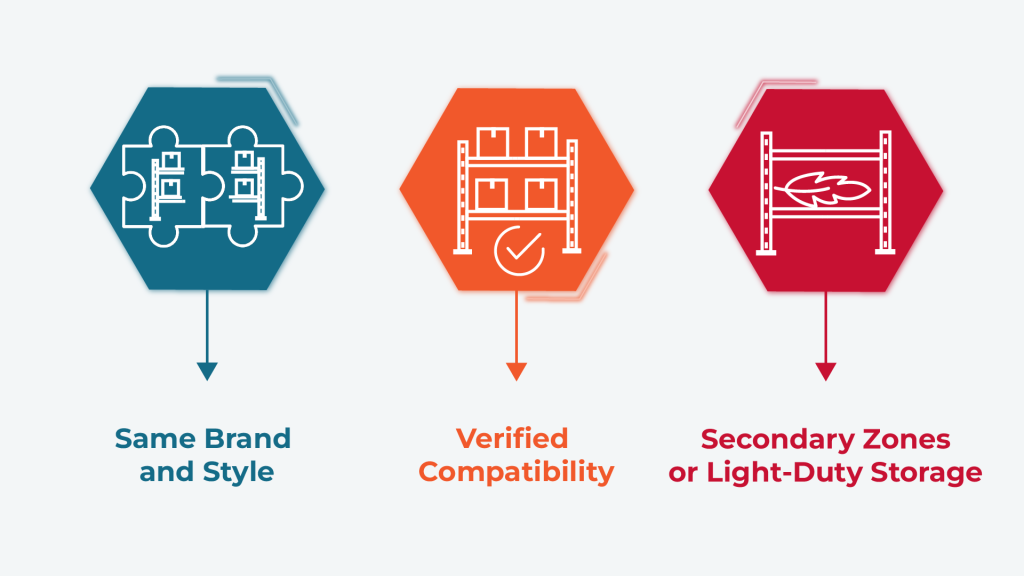
1. Same Brand and Style
If your used and new pallet racks are from the same manufacturer and series, you’re usually in the clear. For example, sticking with the same brand’s teardrop or structural style means the components are designed to lock together properly. Same-brand mixing reduces the risk of mismatched connectors or frames, keeping your setup safe and stable.
2. Verified Compatibility
Some third-party components are cross-compatible, but don’t just take a wild guess. You need confirmation from a racking expert to ensure the beams, frames, and connectors play nice together. Check out our list of manufacturers to see what’s commonly used in the U.S. and whether your components might align.
3. Secondary Zones or Light-Duty Storage
Mixing can be okay in non-critical areas of your warehouse, like light-pick zones or backstock storage. These areas don’t handle heavy loads or constant traffic, so the risks of minor incompatibilities are lower. Just make sure the setup still meets basic safety standards.
Are you wondering if it’s even safe to use used pallet racks at all? We’ve given a thorough answer to this in our article Is Used Pallet Racking Safe to Use in a Warehouse? Take a look and see for yourself.
When Mixing Pallet Rack Components Is a Bad Idea
Not every mix is a good one. Combining used and new pallet racks can go south fast if you’re not careful. Here are the red flags to watch for:
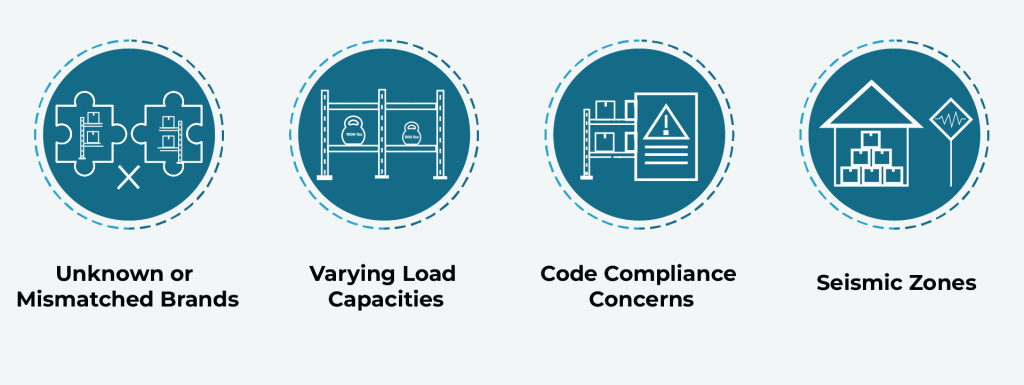
1. Unknown or Mismatched Brands
If you don’t know the brand of your used racks or you’re mixing different manufacturers, you’re asking for trouble. Beams from one brand often won’t seat properly in another brand’s frames, creating a serious safety risk. A loose connection can lead to a rack collapse, and nobody wants that kind of mess.
2. Varying Load Capacities
Used pallet racks might look fine, but hidden damage like bends, rust, or structural wear can compromise their load capacity. Pairing them with new components rated for higher loads is a recipe for failure. Without proper inspection, you can’t be sure the used parts can handle the weight.
3. Code Compliance Concerns
Mixing brands often voids engineering stamps, which are critical for passing warehouse inspections. If your setup doesn’t meet local building codes, you could face fines or be forced to tear it down. Don’t risk it just to save a few bucks.
4. Seismic Zones (California, PNW, etc.)
In high-seismic areas like California or the Pacific Northwest, mixing brands is a major no-no. Engineers and inspectors are extra strict about rack compatibility in these zones to ensure your setup can withstand earthquakes. Mixing components here almost always leads to serious safety risks. Just take a look at the real-world examples we’ve highlighted in our article Red Flags When Buying Used Pallet Racks.
Common Mistakes to Avoid When Mixing Racks
Even if you think you’ve got mixing figured out, it’s easy to trip up. Here are the most common mistakes warehouse managers make when combining used and new pallet racks:
- Assuming “close enough” fits are safe. Just because two components look similar doesn’t mean they’re compatible. Always verify exact specs.
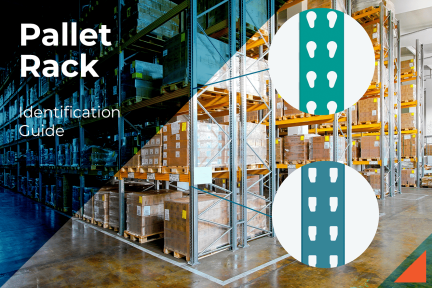
- Mixing teardrop with boltless or structural frames. These systems use entirely different connection methods and aren’t designed to work together.
- Ignoring beam length, step depth, or connector types. Small mismatches can lead to unstable racks or unsafe load distribution.
Repainting used parts to hide wear. Fresh paint might look good, but it can conceal rust or structural wear. Always inspect thoroughly before use. See our guide on How to Choose Used Pallet Racks and Avoid Mistakes.
Unsure if your racks match?
Send us what you’ve got—we’ll confirm what works, flag risks, and guide you to a safe, code-compliant setup.
Products, Discussed in the Article


Was this helpful?